Dr. Alejandro Quiroz · Facial Plastic Surgery
The deep plane facelift.
This is the operation I have spent my career on. Not a list of lifts, one operation, refined across more than 3,000 facelifts. It repositions the structure of the face instead of pulling its surface, which is why a deep plane facelift can look like nothing was done at all, only that time moved back.
What it is
What is a deep plane facelift?
A deep plane facelift lifts the skin and the deeper support layer of the face, the SMAS, as one connected unit, and repositions them together over the tissue beneath. Working in that plane, I release the retaining ligaments that hold an aging face down, then suspend the structure where it once sat. Because the skin moves with the structure instead of being pulled across it, the closure carries no tension, and the result reads as rested rather than tight. You have likely seen the faces that make people afraid of this operation. So have I. Most of them are the work of skin pulled tight to do a job that belongs to the structure beneath it.
- Procedure
- Deep plane rhytidectomy, face and neck
- Anesthesia
- Planned and monitored by a board-certified anesthesiologist, Dra. Nadiezhda Garcia Bonilla (CNCA, CONACEM)
- Time in surgery
- Commonly 3 to 5 hours, depending on complexity and what is combined
- Incisions
- Along the hairline and the natural creases of the ear
- Social recovery
- Commonly 2 to 3 weeks
- Longevity
- Commonly 10 to 12 years in published revision data
- Where
- A Quad A (AAAASF) accredited surgical center in Tijuana
- For
- Patients traveling from across the United States
Why it matters who does it
A technique is only as good as the hands that perform it.

The deep plane is not a beginner's operation. It asks for a precise knowledge of where the facial nerve runs, which ligaments to release, and how far to move the structure so the face still looks like itself. I have performed more than 3,000 facelifts over 37 years. I trained with Bruce Connell in California, one of the surgeons who shaped the modern face and neck lift, and I have been board certified in plastic and reconstructive surgery in Mexico since 1984, certification number 293. That was 6 years before Hamra gave the deep plane its name. I have also held an active California physician and surgeon license, number A 42463, since 1986. I built my practice around this one operation, because doing one thing for a long time is how you become good at it.
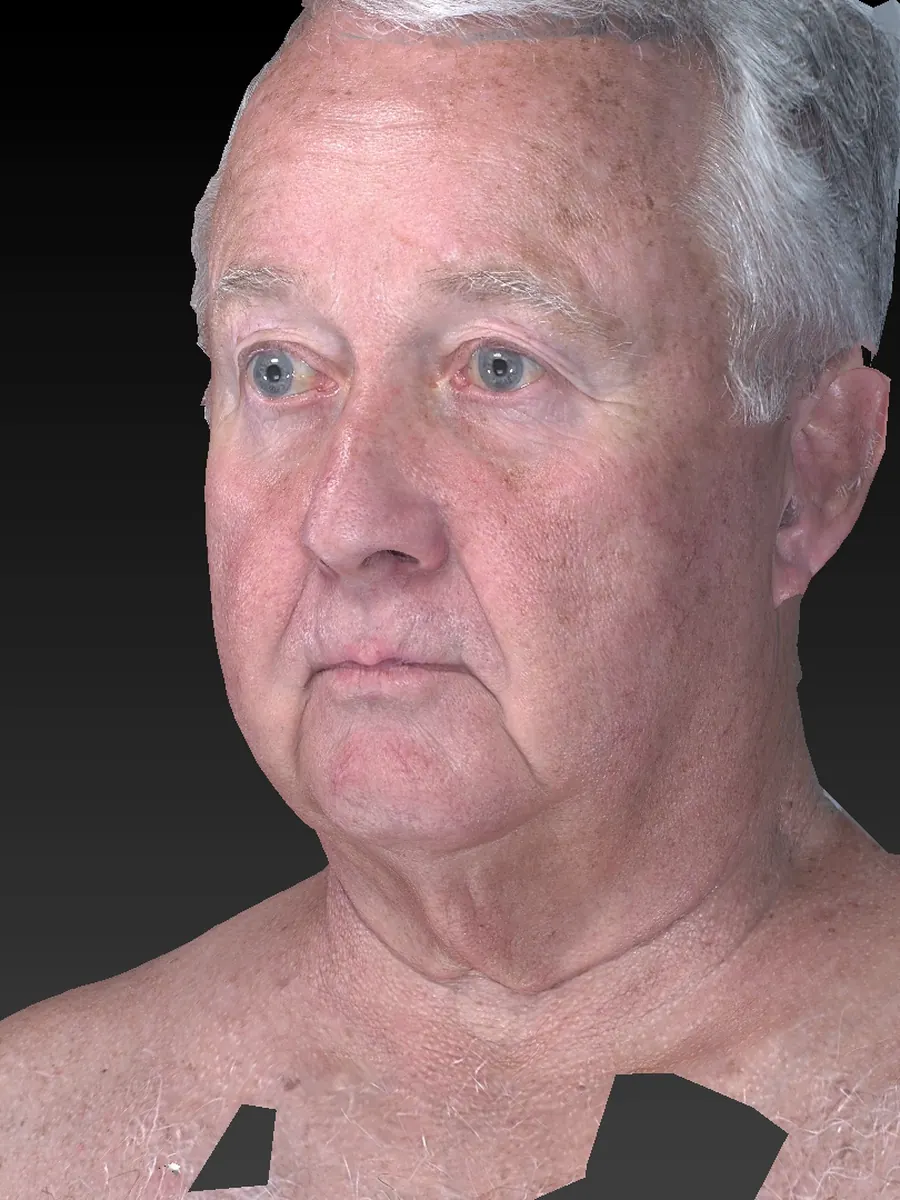
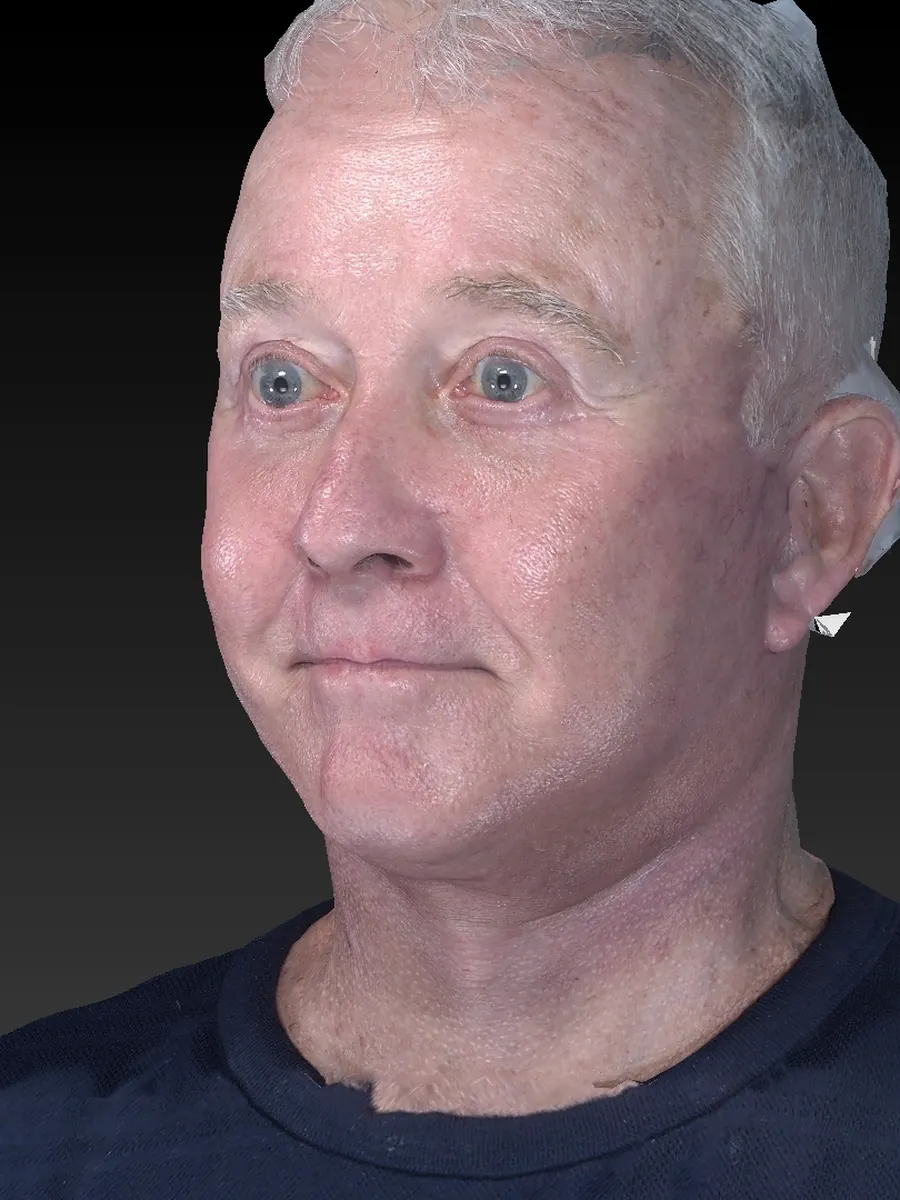
A before and after, shown as rotating three-dimensional captures. Individual results vary.
How it works
How is a deep plane facelift performed?
Step by step, here is what the operation actually does.
- 01
The incision is placed along the hairline and the natural folds of the ear, where it heals as a fine line that sits in shadow.
- 02
The skin and the SMAS are lifted together as one layer, down to the plane beneath the muscle, which keeps the skin's own blood supply intact. 1
- 03
The retaining ligaments that anchor the aging face, at the cheekbone and along the jaw, are released, so the structure can move freely. 1
- 04
The connected layer is lifted and suspended where it belongs, restoring the midface and the jawline, softening the deep folds beside the mouth, and returning the cheek's fat pad to its place. 1
- 05
The skin is redraped and closed without tension, because the lift is held by the deeper layer, not by the skin. 1
- 06
The deep plane lifts structure but does not resurface the skin, so a CO2 laser or a chemical peel can be added in the same setting to treat sun damage, fine lines, and texture. Whether it is included, and how deep, is decided case by case. Individual results vary.
Results
About a decade,
held by structure, not skin.
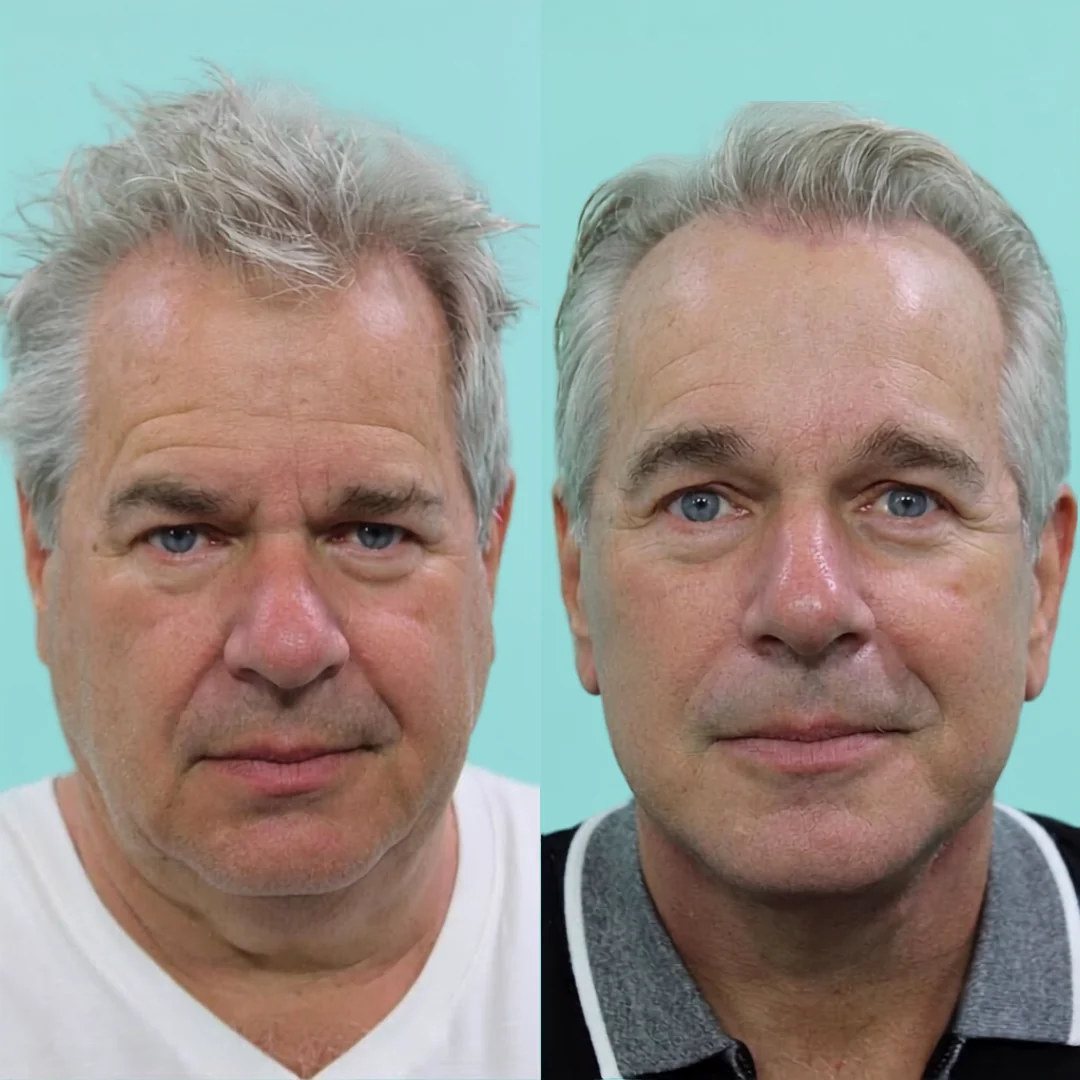 BeforeAfter
 The surgeon's own answer
There is no single number. Skin quality decides more than the calendar does, above all how much sun it has seen.
More results
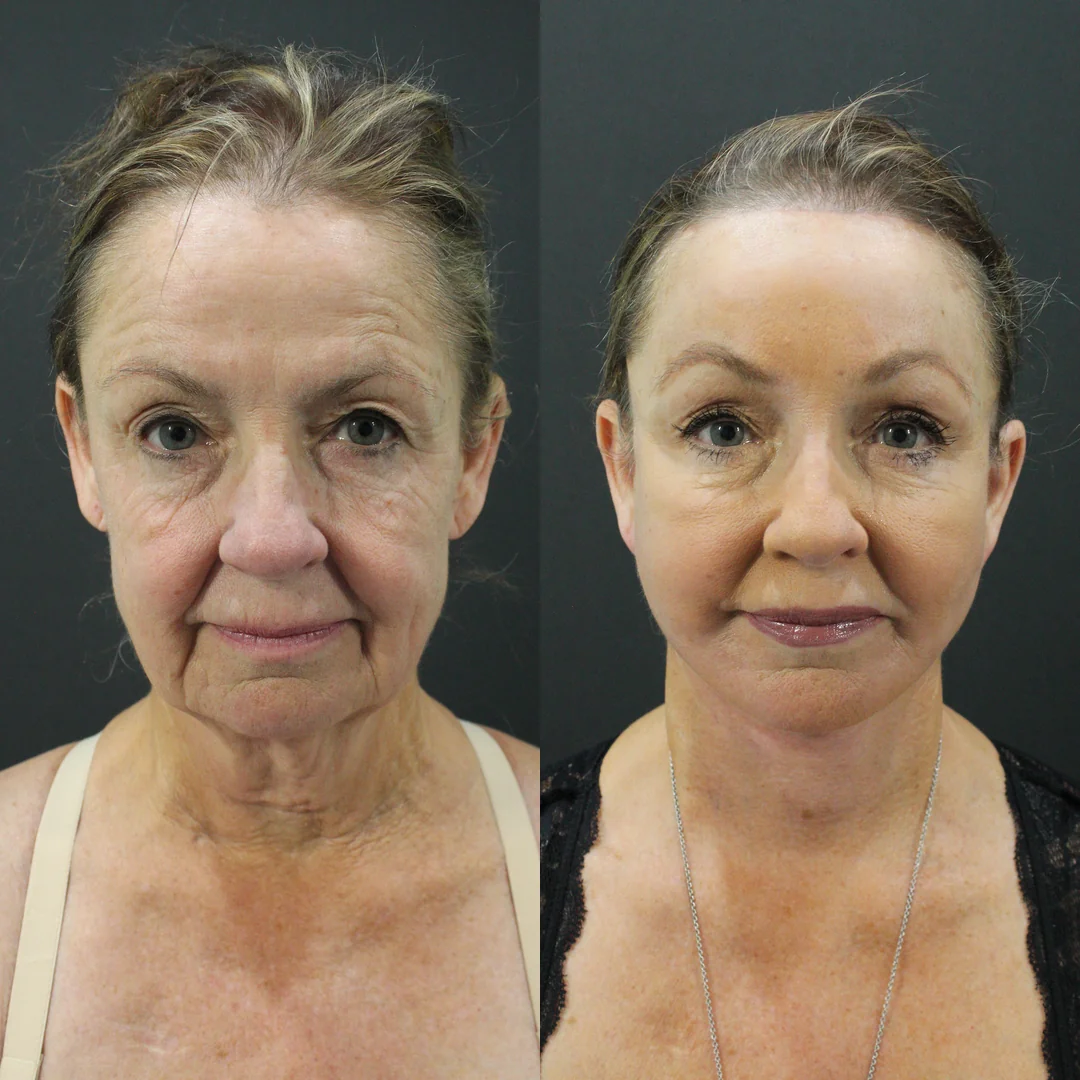 BeforeAfter
 Dr. Quiroz, on this case
Face, Neck and Brow Lift
This patient had a deep plane facelift with a neck lift and a brow lift. The heavy brow was raised, the midface and jawline repositioned in the deep plane, and the loose neck redraped over rebuilt structure. Shown from the front and in three quarter view. Individual results vary.
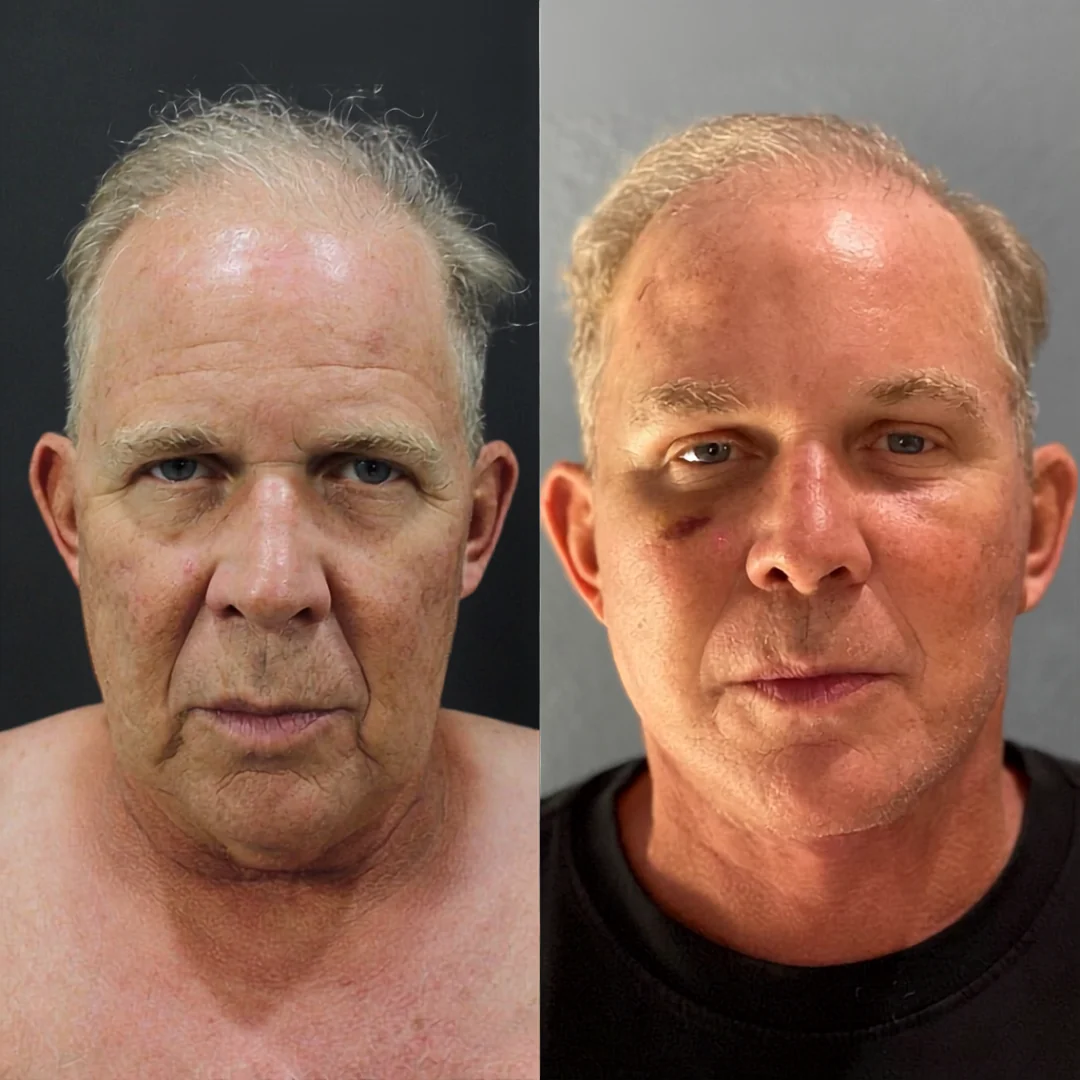 BeforeAfter
 Dr. Quiroz, on this case
Face, Neck and Brow Lift
This gentleman had a deep plane facelift with a neck lift and a brow lift. The brow was lifted off the eyes, the deep structure of the face and neck released and repositioned as one unit, and the skin redraped without tension. Individual results vary.
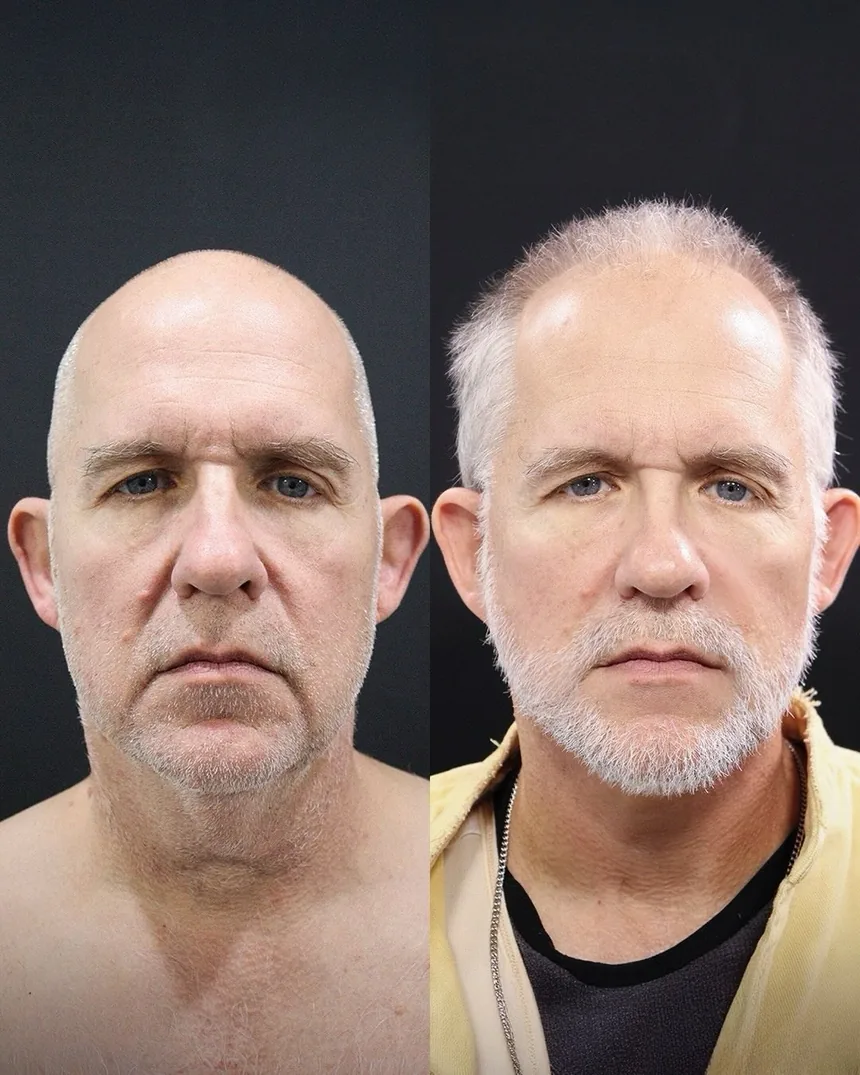 BeforeAfter
 Dr. Quiroz, on this case
Lower Face and Neck Lift
In this patient I performed a deep plane lower face and neck lift, nothing else. The deeper structure was released and carried back as one unit, and the skin settled without tension. Shown at ten months, when swelling no longer flatters the result. Individual results vary.
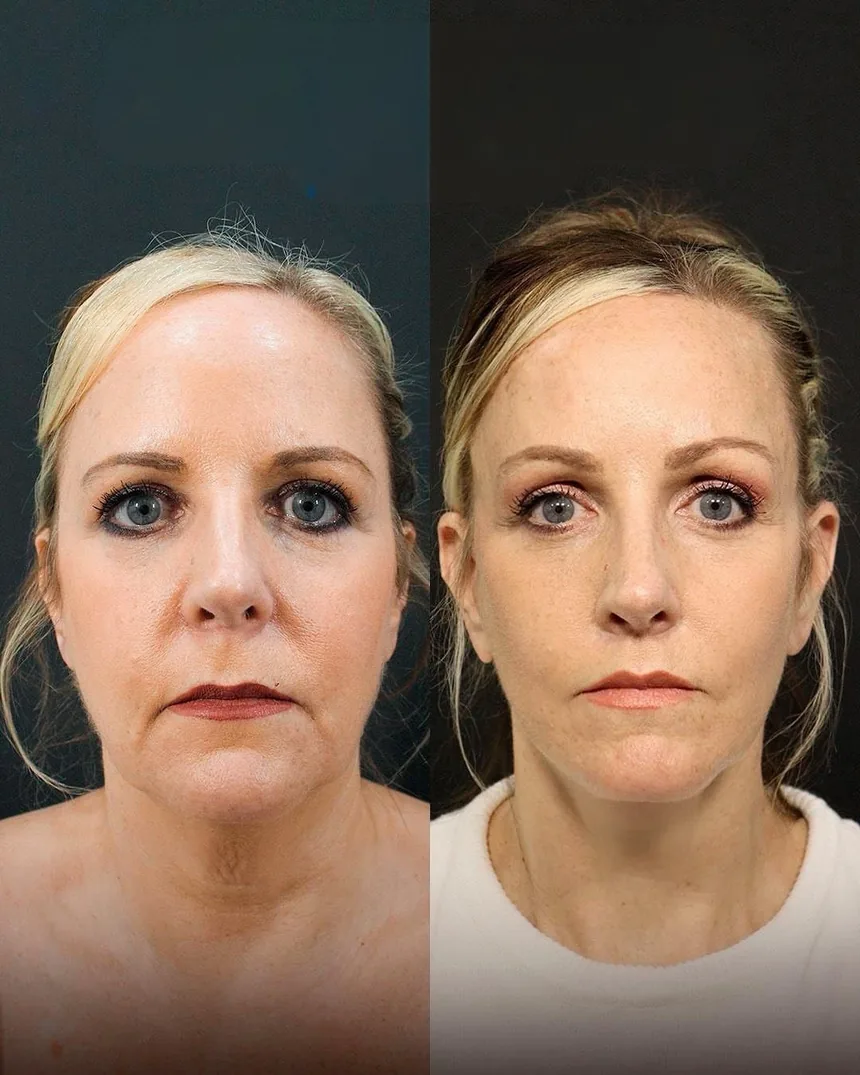 BeforeAfter
 Dr. Quiroz, on this case
Face, Neck and Brow Lift + Lip Enhancement and Fat Transfer to Lips
In this patient I combined the deep plane face and neck lift with a brow lift and fat transfer to the lips, so the upper face and the mouth kept pace with the new jawline. Shown at one year. Individual results vary.
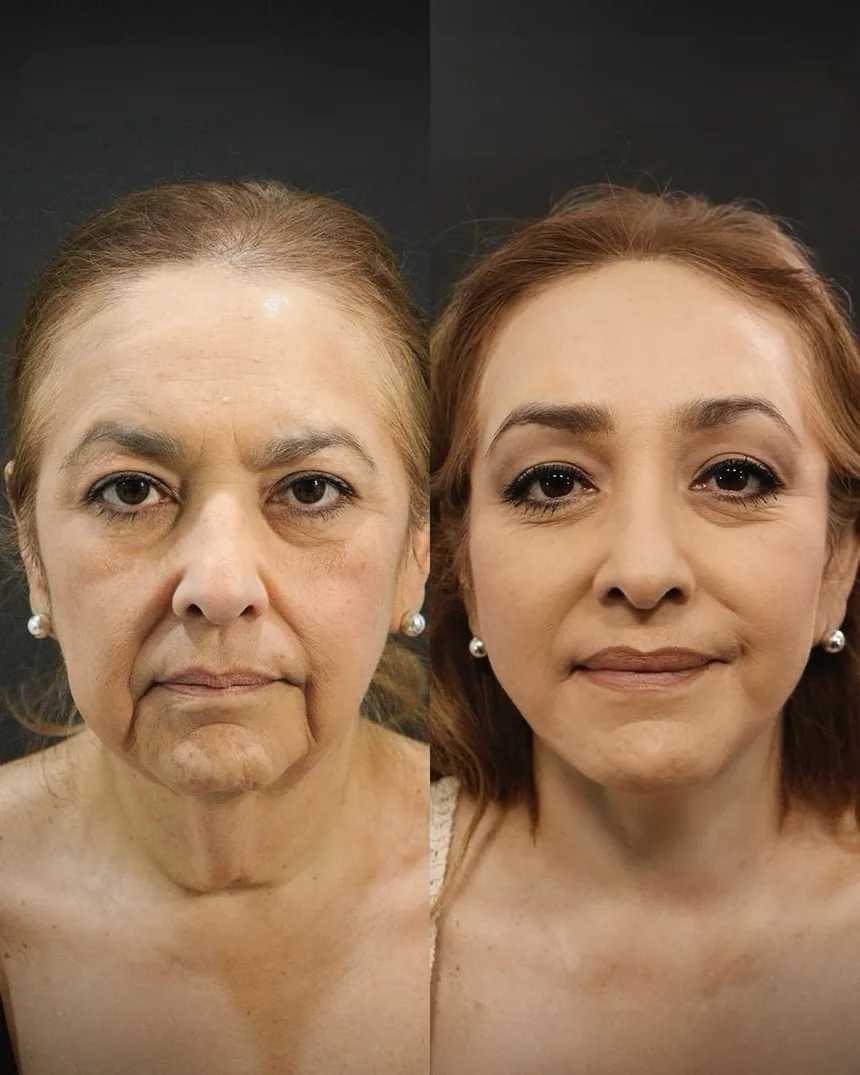 BeforeAfter
 Dr. Quiroz, on this case
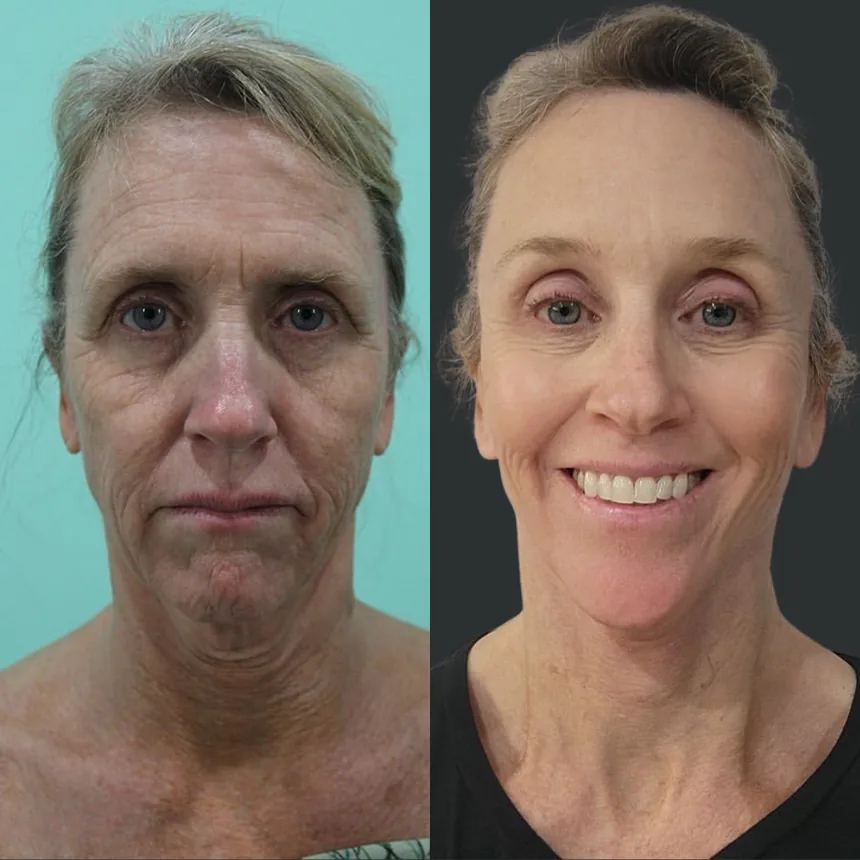
Face and Neck + Upper Eyelid Surgery
In this patient I paired the deep plane face and neck lift with upper eyelid surgery. The lift repositions structure, and the eyelids open the gaze. Neither can do the other's work. Shown at nine months. Individual results vary.
 BeforeAfter
 Dr. Quiroz, on this case
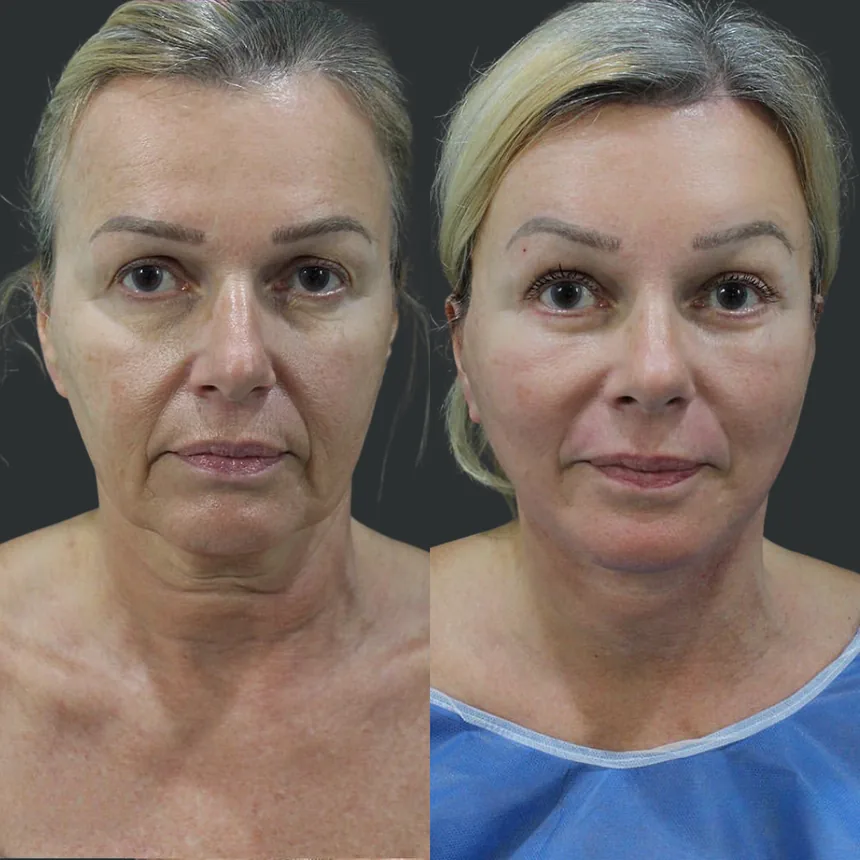
Face and Neck Lift + Brow Lift
In this patient I performed a deep plane face and neck lift with a brow lift. The brow had descended along with the midface, and lifting one without the other would have left the face out of balance. Shown at nine months. Individual results vary.
 BeforeAfter
 Dr. Quiroz, on this case
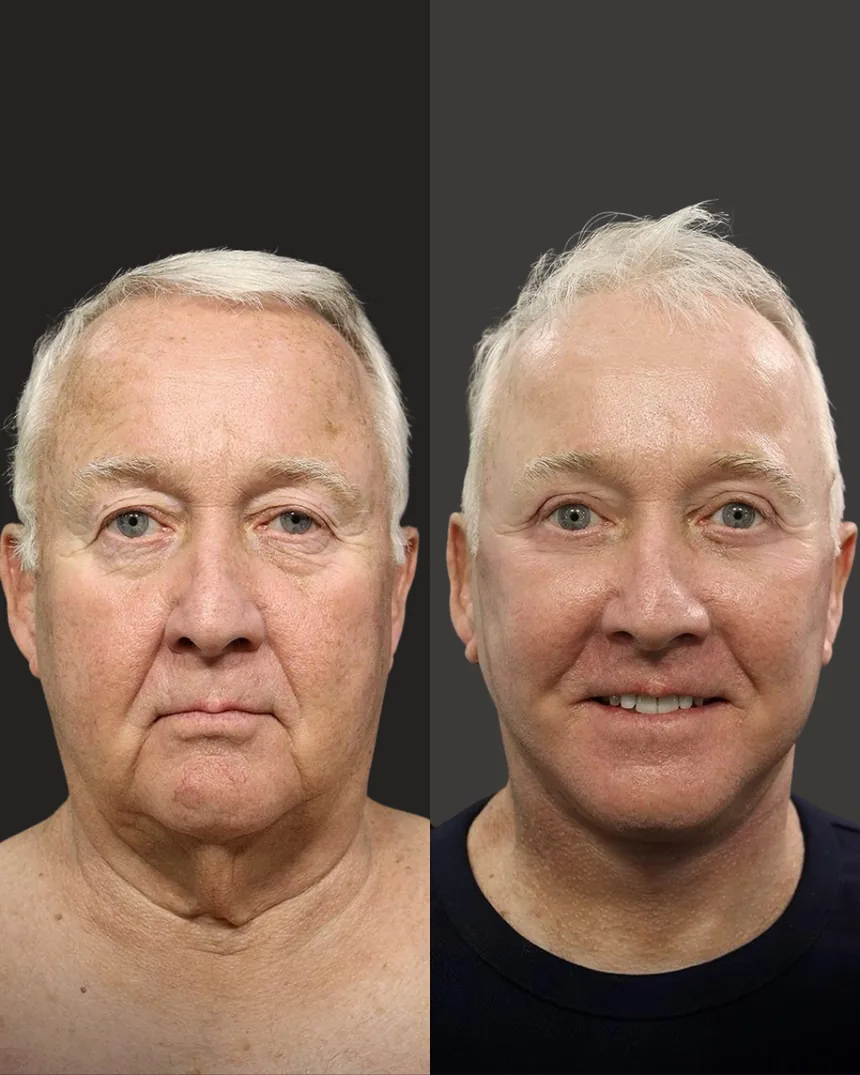
Face, Neck and Brow Lift + Lower Eyelid Surgery + Dermabrasion
In this patient I combined the deep plane face and neck lift with a brow lift, lower eyelid surgery, and dermabrasion, structure and surface in one setting. Shown at one month, with swelling still settling. Individual results vary.
 BeforeAfter
 Dr. Quiroz, on this case
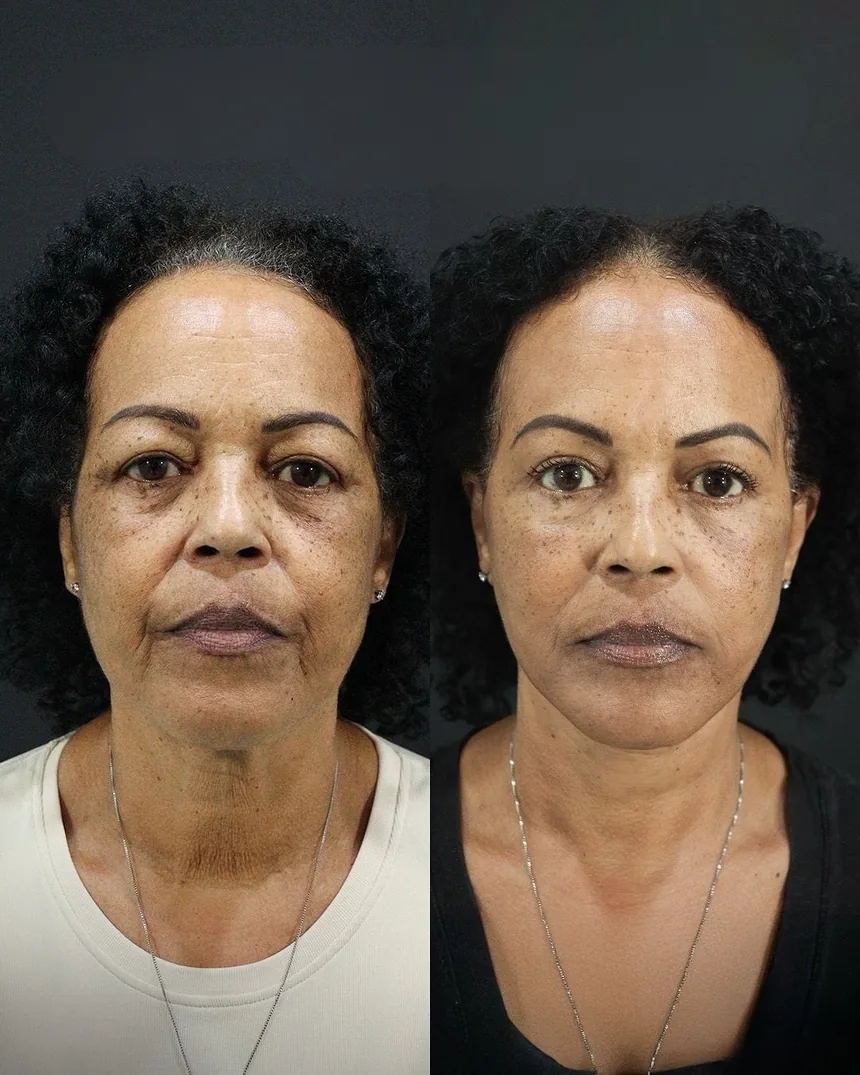
Face and Neck Lift, Eyelid Surgery and CO2 Laser
In this patient I performed a deep plane face and neck lift with eyelid surgery and CO2 laser resurfacing. The lift cannot change the quality of the skin itself. The laser does that work. Shown at two months, still early. Individual results vary.
 BeforeAfter
 Dr. Quiroz, on this case
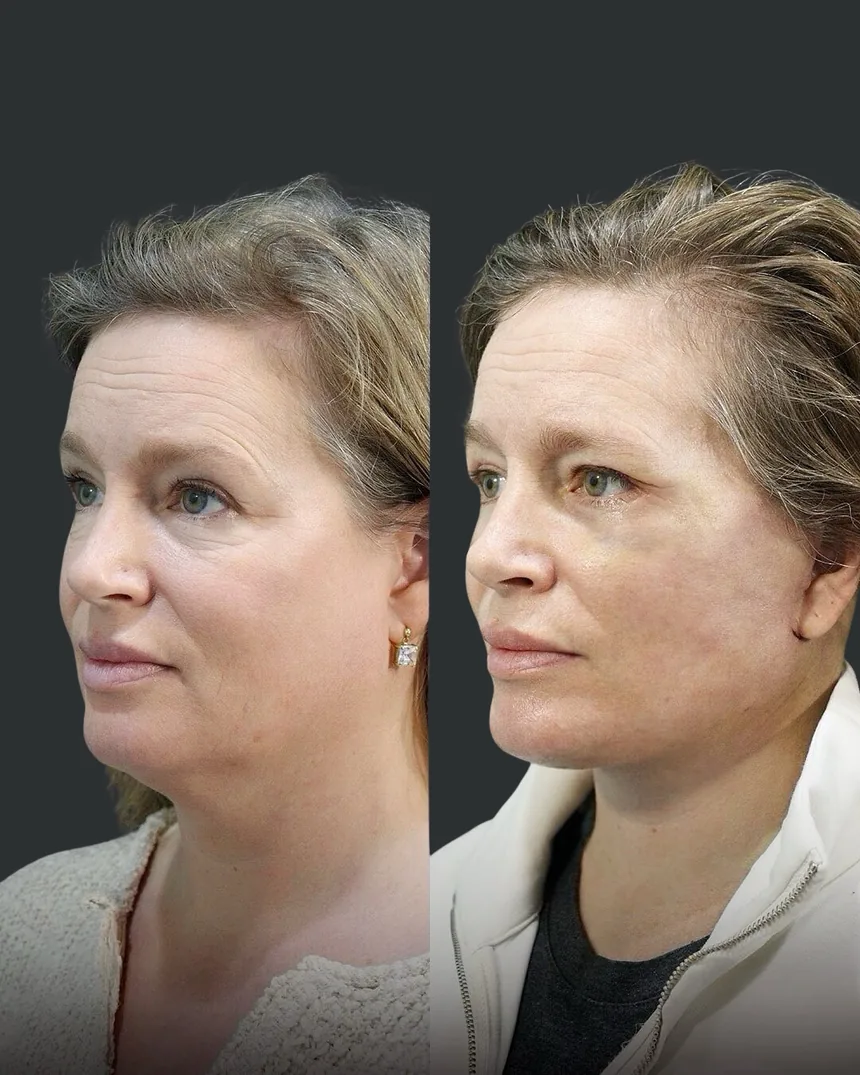
Face and Neck Lift + Upper Eyelid Surgery
In this patient I performed a deep plane face and neck lift with upper eyelid surgery. At four months the deeper swelling has mostly settled and the jawline is holding its new line. Individual results vary.
 BeforeAfter
 Dr. Quiroz, on this case
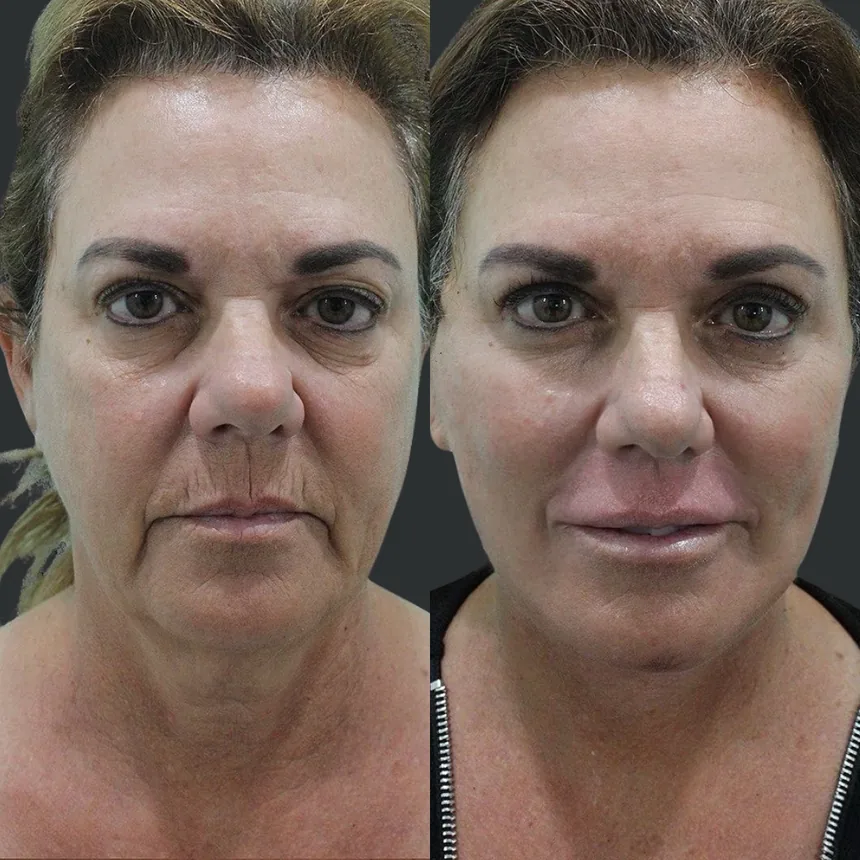
Face and Neck Lift + Lower Eyelid Surgery
In this patient I performed a deep plane face and neck lift with lower eyelid surgery. Shown at two weeks, deliberately, because this is what an early recovery actually looks like before the result refines. Individual results vary.
 BeforeAfter
 Dr. Quiroz, on this case
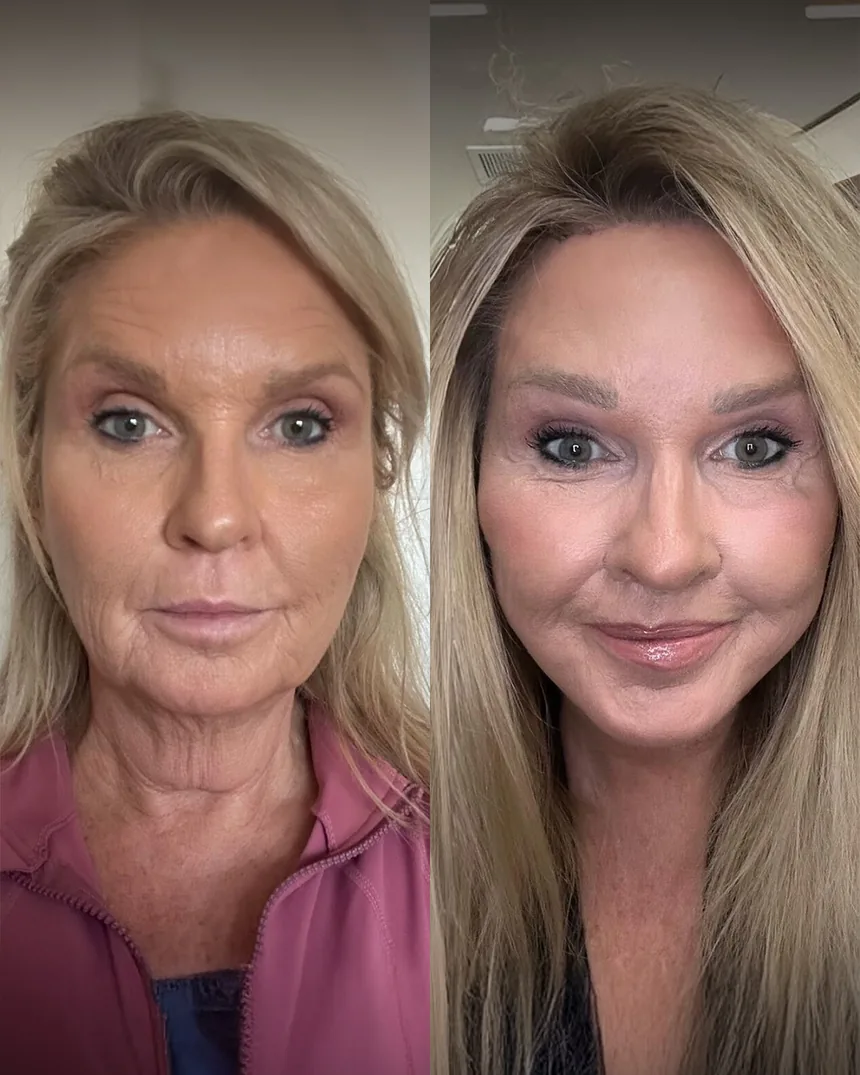
Face and Neck Lift, Fat Transfer To Lips + Dermabrasion
In this patient I performed a deep plane face and neck lift with fat transfer to the lips and dermabrasion. At two weeks the redness of resurfacing is still present, and that is expected. Individual results vary.
 BeforeAfter
 Dr. Quiroz, on this case
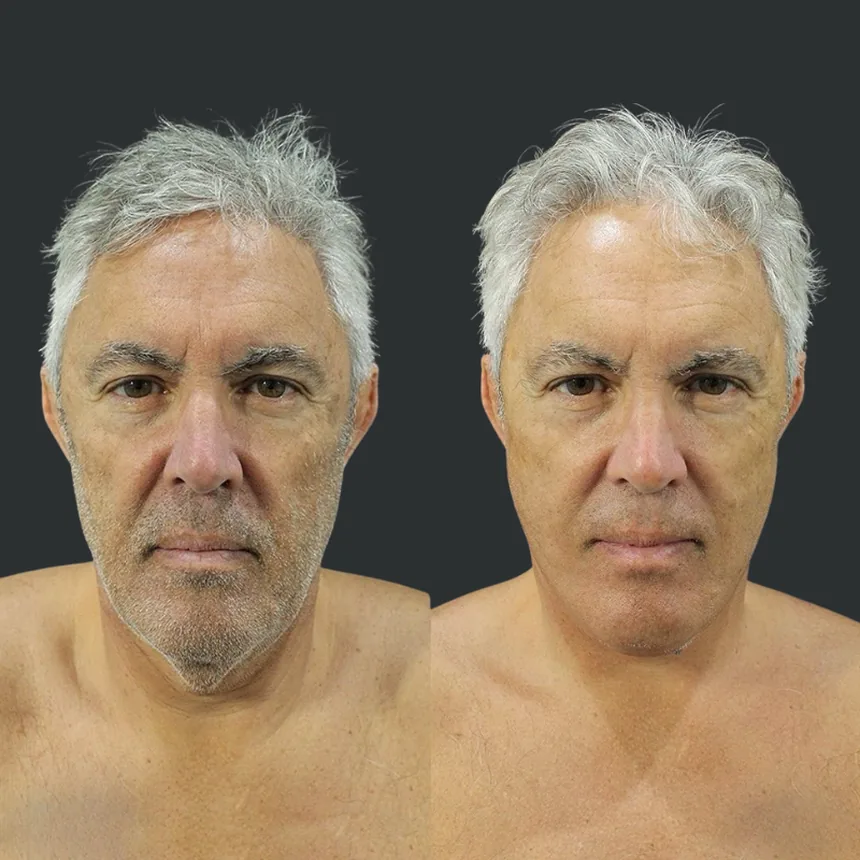
Face, Neck and Brow Lift + CO2 Laser
In this patient I combined a deep plane face and neck lift with a brow lift and CO2 laser resurfacing. Shown at two weeks, before the skin has finished healing from the laser. Individual results vary.
 BeforeAfter
 Dr. Quiroz, on this case
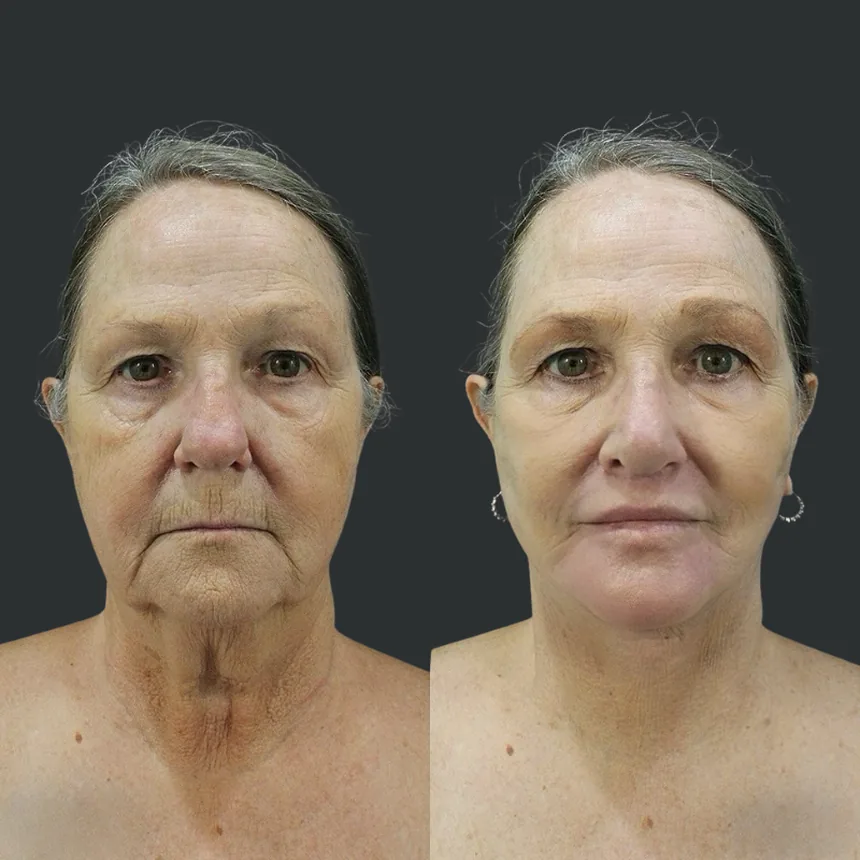
Face and Neck Lift
In this patient I performed a deep plane face and neck lift alone. One operation, no additions. Shown at one month, with some swelling still present. Individual results vary.
 BeforeAfter
 Dr. Quiroz, on this case
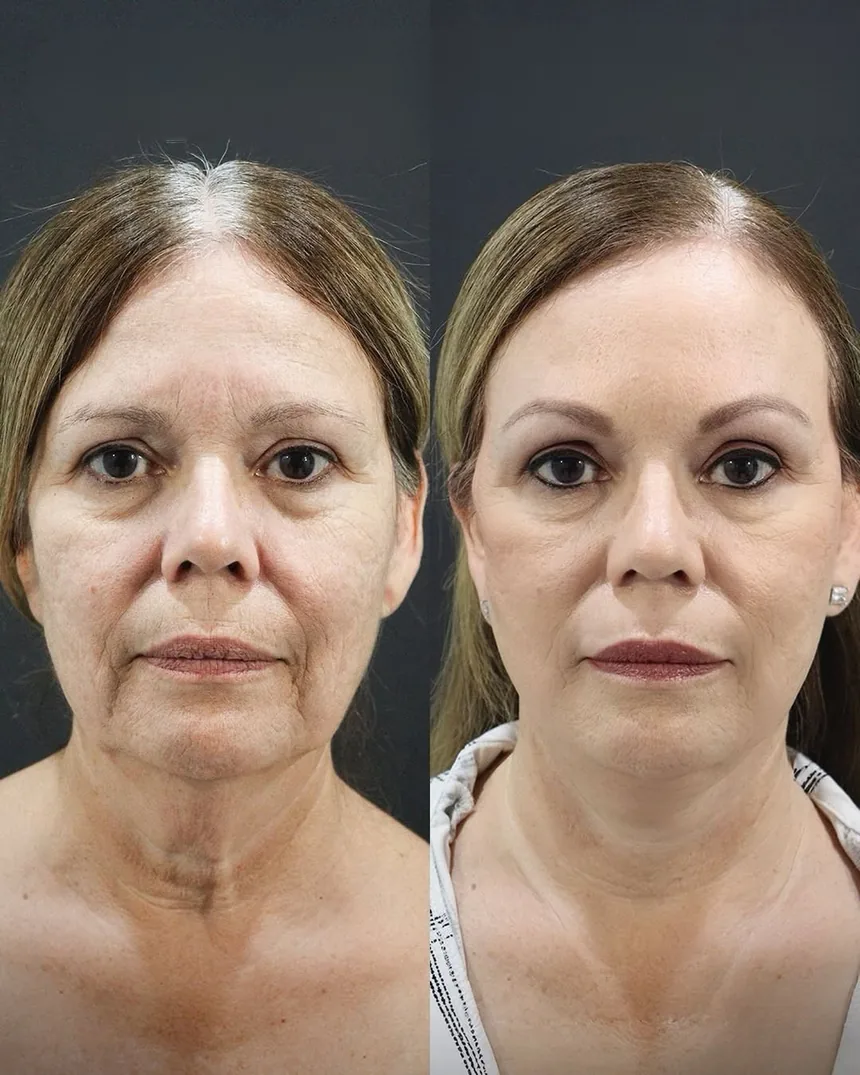
Face, Neck, Rhinoplasty, Fat Transfer to Lips + Lip Lift and Dermabrasion
In this patient I performed a deep plane face and neck lift together with rhinoplasty, a lip lift, fat transfer to the lips, and dermabrasion. The more that is combined, the more judgment matters about what a face can carry in one setting. Shown at one month. Individual results vary.
 BeforeAfter
 Dr. Quiroz, on this case
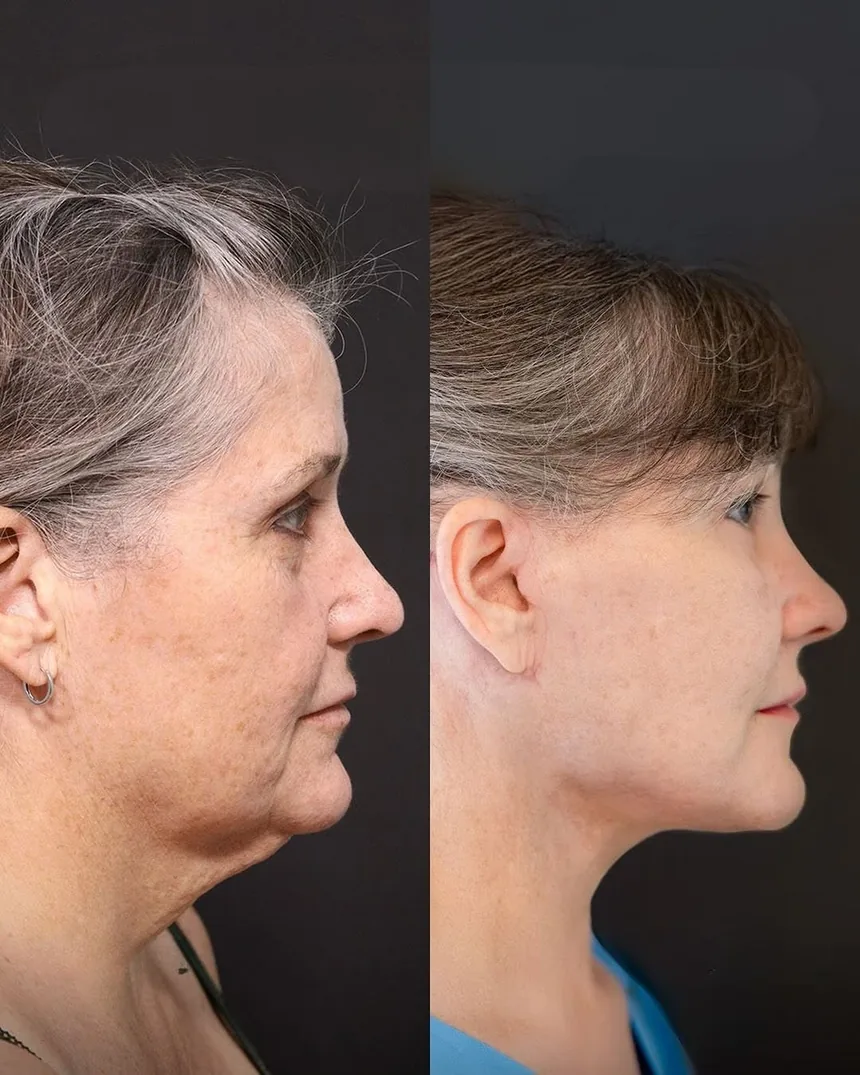
Face and Neck Lift and Upper Lip Dermabrasion
In this patient I performed a deep plane face and neck lift with dermabrasion of the upper lip. The lift does not erase the vertical lines of the mouth. The dermabrasion addresses those. Shown at five months. Individual results vary.
 BeforeAfter
 Dr. Quiroz, on this case
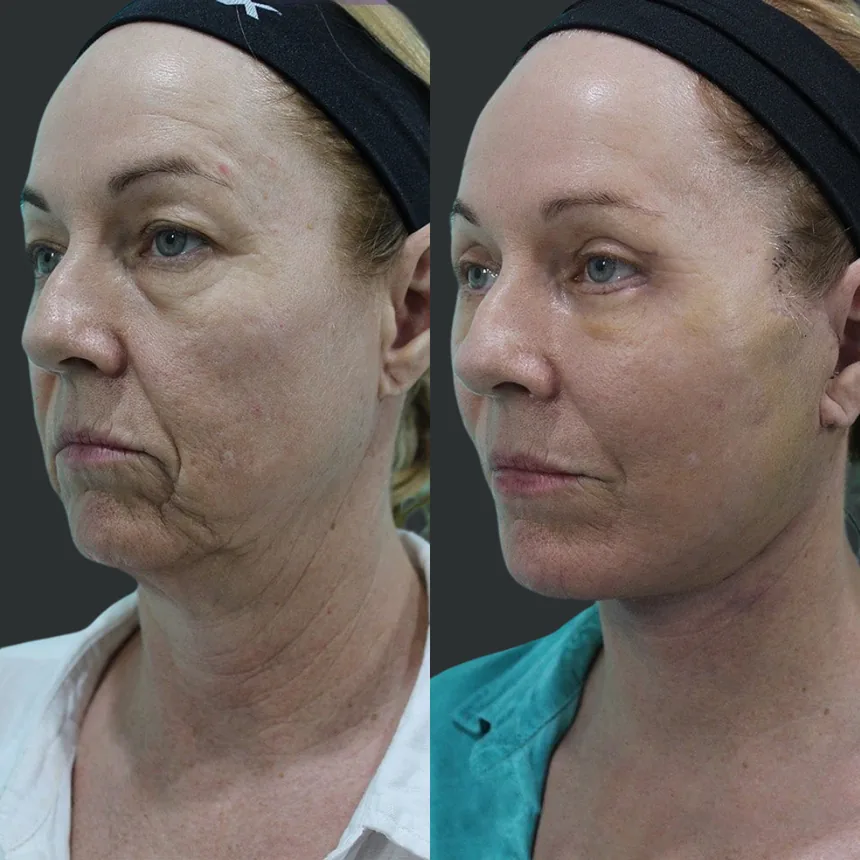
Face and Neck Lift + Lower Eyelid Surgery
In this patient I performed a deep plane face and neck lift with lower eyelid surgery. The jawline and the neck carry the structural change, and the eyelids soften what the years did around the gaze. Shown at three months. Individual results vary.
 BeforeAfter
 Dr. Quiroz, on this case
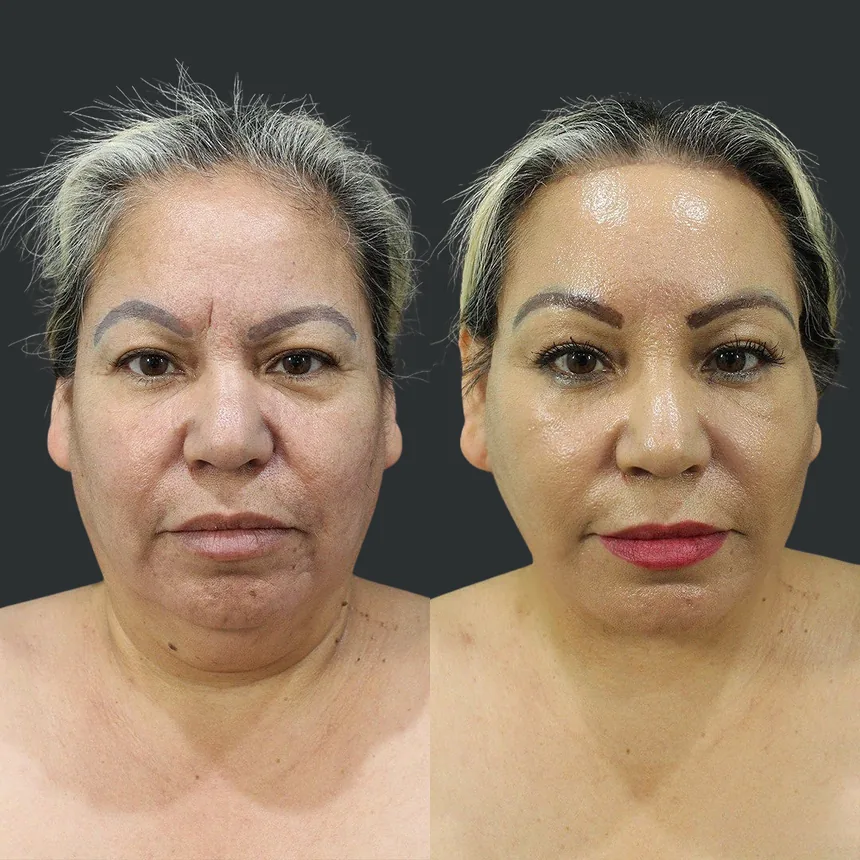
Face and Neck Lift
In this patient I performed a deep plane face and neck lift. Shown at three weeks, when most patients are socially presentable but the final shape has not arrived. Individual results vary.
 BeforeAfter
 Dr. Quiroz, on this case
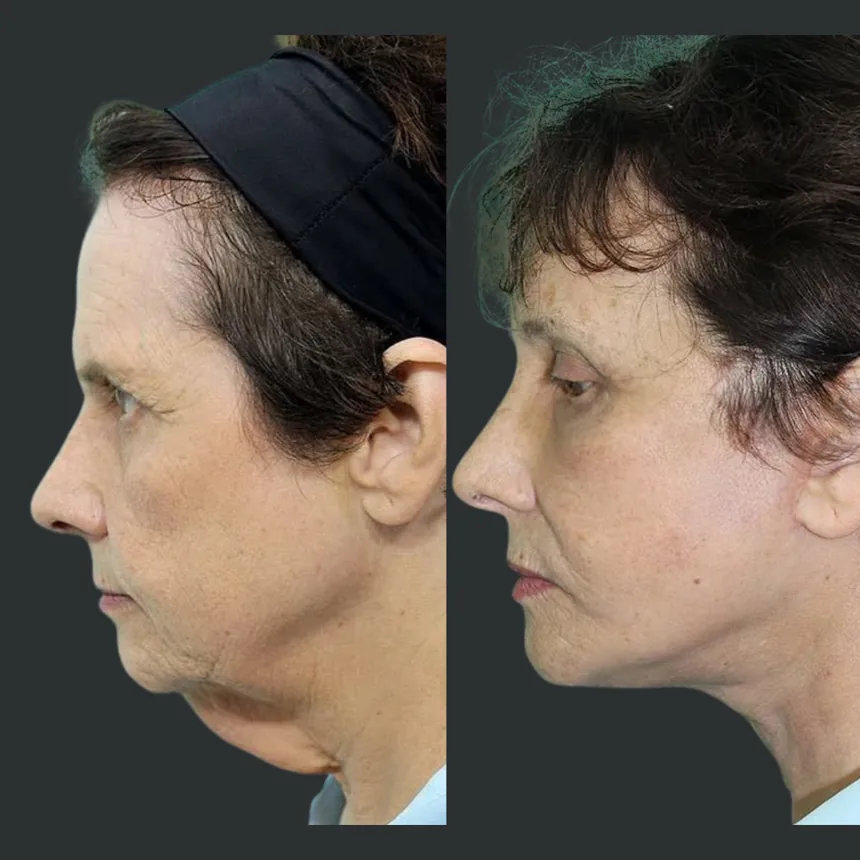
Face and Neck Lift + Brow Lift
In this patient I performed a deep plane face and neck lift with a brow lift, planned together so the upper and lower face would come back in step. Shown at two months. Individual results vary.
 BeforeAfter
 Dr. Quiroz, on this case
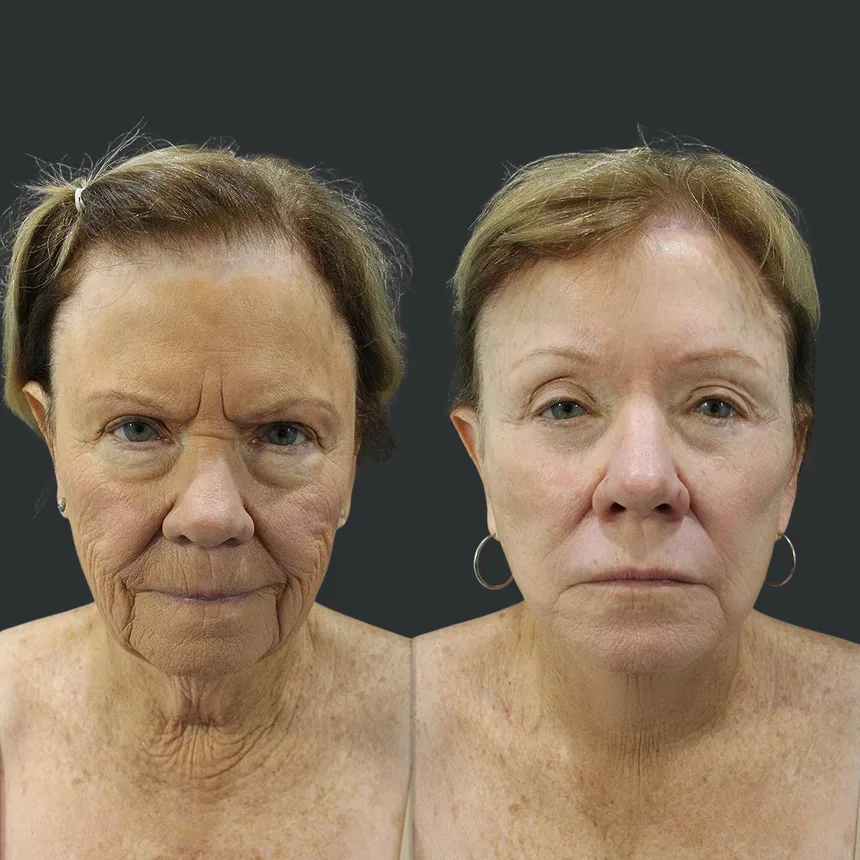
Face and Neck Lift
In this patient I performed a deep plane face and neck lift. The neck sets the line the jaw is read against, which is why I so often treat them as one. Individual results vary.
 BeforeAfter
 Dr. Quiroz, on this case
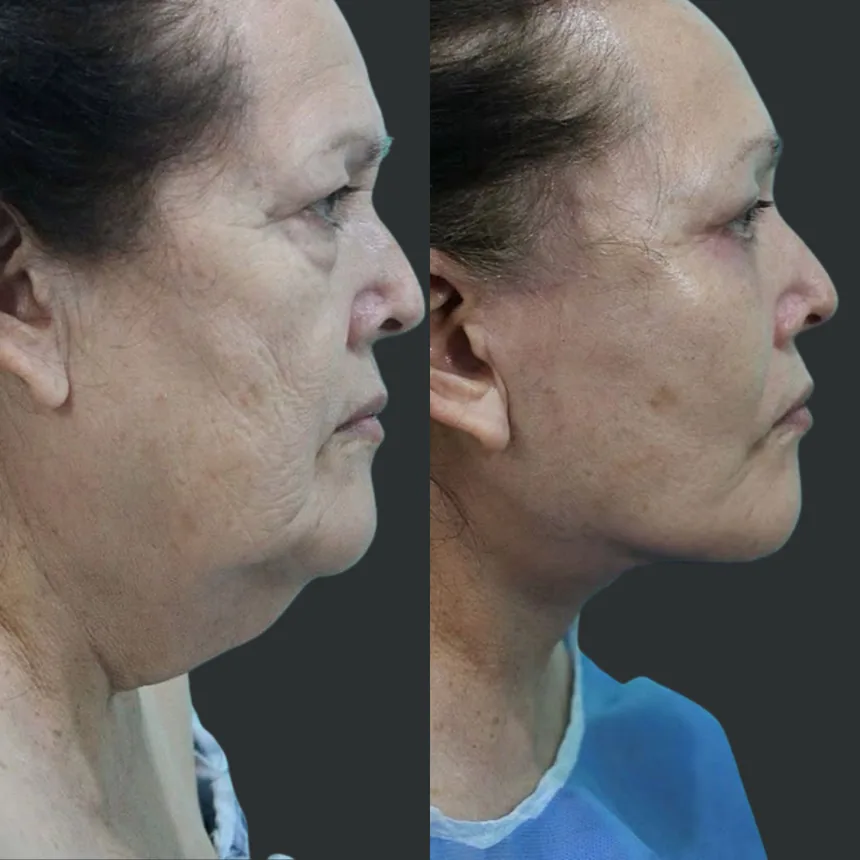
Face, Neck and Brow Lift, Lower Eyelid + Fat Transfer to lips and Dermabrasion
In this patient I combined the deep plane face and neck lift with a brow lift, lower eyelid surgery, fat transfer to the lips, and dermabrasion. Structure first, then surface, in a single plan. Individual results vary.
 BeforeAfter
 Dr. Quiroz, on this case
Face, Neck Lift and Lower Eyelid Surgery
In this patient I performed a deep plane face and neck lift with lower eyelid surgery. Shown at one month, the midface still settling into place. Individual results vary.
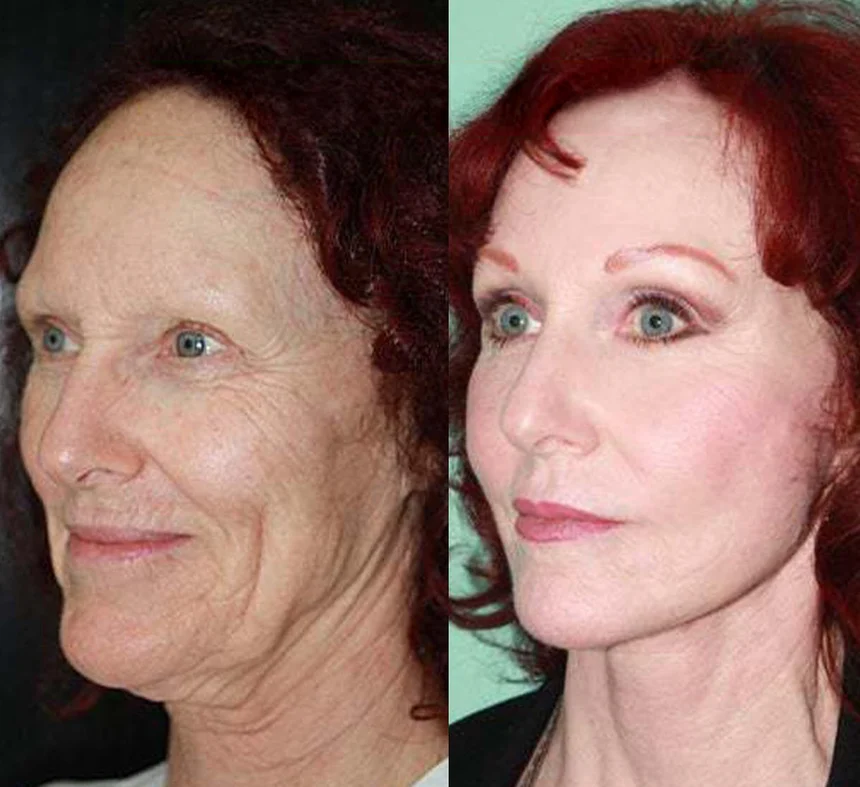 BeforeAfter
 Dr. Quiroz, on this case
Face and Neck Lift
In this patient I performed a deep plane face and neck lift. An older case, photographed in the standards of its day, and kept in the archive because it argues across the decades: the jawline rebuilt, the neck cleaned, and unmistakably the same woman. Individual results vary.
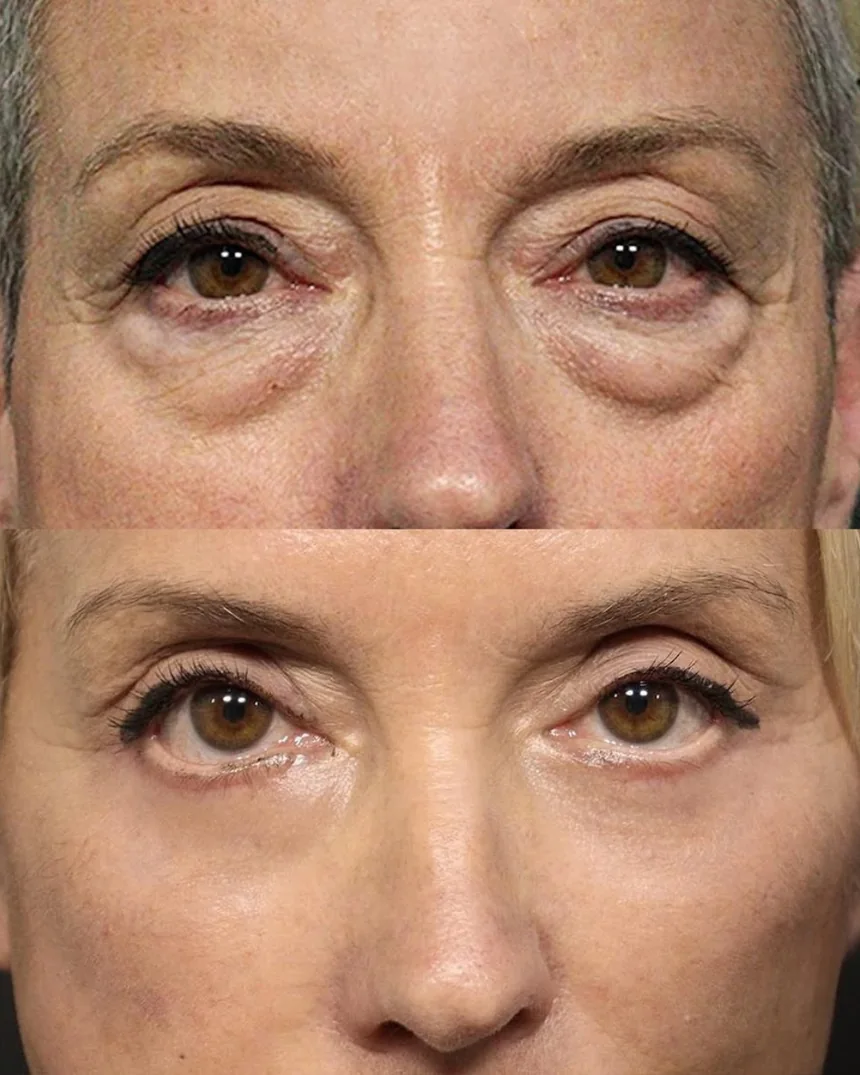 BeforeAfter
 Dr. Quiroz, on this case
Lower Blepharoplasty
A lower blepharoplasty on its own. The tired, shadowed lower lids are corrected without touching the rest of the face, so the eyes read rested rather than changed. Photographed with consent. Individual results vary.
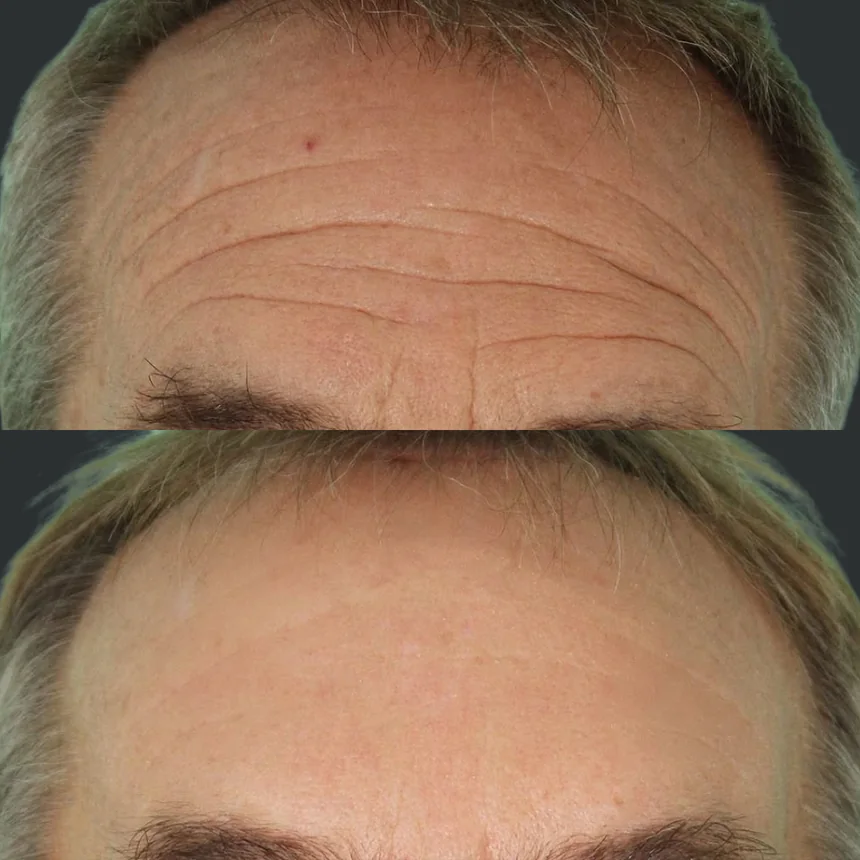 BeforeAfter
 Dr. Quiroz, on this case
Brow Lift
A brow lift performed on its own. The heavy, descended brow is lifted off the eyes and reset, opening the upper face without pulling at the skin. Photographed with consent. Individual results vary.
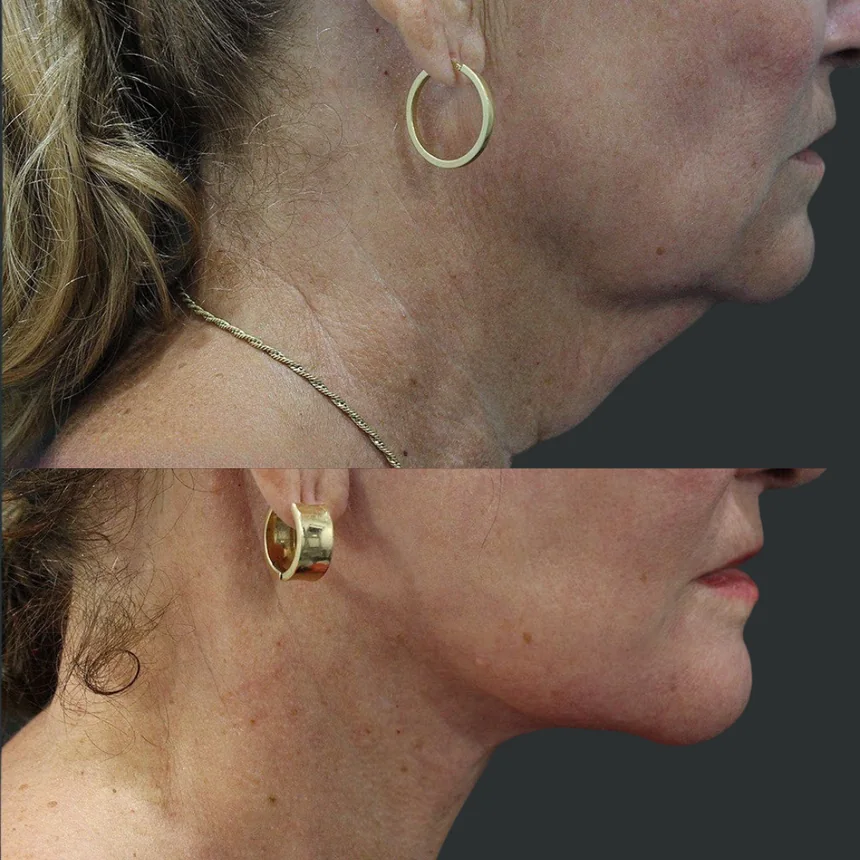 BeforeAfter
 Dr. Quiroz, on this case
Neck Lift
A neck lift performed on its own, without a full facelift, at seven months. The loose skin and the slackened platysma are addressed to restore a clean line from the chin to the neck. Photographed with consent. Individual results vary.
Real cases, photographed with patient consent. Most are shown with the time since surgery, and the earliest are still settling. Individual results vary.
See the full results galleryThe difference
Deep plane, SMAS, mini, and thread: what actually changes.
These are not marketing names. The difference between them is anatomy, which is why the results and the longevity differ. Two comparisons go deeper: deep plane versus SMAS and mini facelift versus deep plane.
| Technique | What it moves | How long it commonly lasts | Best suited for |
|---|---|---|---|
| Thread lift | Sutures placed under the skin | Months, temporary | Very early change, a brief delay |
| Mini facelift | Skin, with limited reach | 3 to 5 years | Minor sagging |
| SMAS facelift | Skin and the SMAS, near the surface | 5 to 10 years | Moderate aging |
| Deep plane facelift | Skin and SMAS together, repositioned over the deep tissue | 10 to 12 years | Jowls, midface descent, neck |
The deeper layer is fibrous, and once set it tends to hold where it is placed. Skin is elastic and drifts back, which is why a surface lift tends to relax sooner. Longevity figures are commonly cited ranges. Individual anatomy and aging matter most. 4
Candidacy
Are you a candidate for a deep plane facelift?
If your aging is still early, a smaller procedure may serve you better. If you have a medical condition that is not controlled, or a recovery plan that is not safe yet, the right answer is to wait. You will hear that from me directly, in the first conversation. I would rather lose a case than perform the wrong one.
A deep plane facelift is for moderate to advanced aging of the lower face and neck: jowls, a softening jawline, deep folds beside the mouth, a midface that has flattened and descended, and early banding in the neck. The best candidates are in good health, do not smoke, and want to look like a rested version of themselves rather than a different person. That is not vanity. The face is how the world reads you, and most of the patients I see simply want it to read the way they feel. 9 If the change came from major weight loss rather than from age alone, that face follows its own logic, and I wrote about it separately: the facelift after weight loss.
What it addresses, and what completes it
What a deep plane facelift treats, and what often goes with it.
On its own, the deep plane addresses the lower two-thirds of the face and the neck. The eyes, the brow, and the quality of the skin age on their own timeline, so the operation is often combined with other procedures in the same setting.
Commonly combined
Recovery
What is deep plane facelift recovery like, week by week?
Recovery is more predictable than most people fear, and it follows a pattern.
The first days are spent close to the surgical team in Tijuana, through suture removal. The rest of recovery happens at home, with scheduled follow-ups with me and a 24/7 line to certified physicians for anything that does not look right.
- Days 1 to 4
Swelling and bruising build and peak. You rest with your head elevated. Sutures stay in.
- Day 7
Sutures come out. The face still looks operated on, and that is expected.
- Week 2
Bruising fades. Most patients start to feel like themselves again.
- Weeks 3 to 4
Most return to desk work and social life, with residual swelling that makeup can cover.
- Weeks 4 to 6
Strenuous exercise is cleared.
- Months 2 to 3
Subtle swelling continues to settle.
- Months 3 to 12
The last of the swelling resolves and the result refines. Subtle change can continue for up to a year.
Recovery figures are typical, not a promise. Individual results vary. 3 9
Risks, honestly
Is a deep plane facelift safe? The real risks, and how we manage them.
In important ways, the deep plane is among the safer facelift techniques. Because the skin stays attached to the deeper layer, its blood supply is preserved, and skin healing problems occur in under 1 percent of cases, lower than with older methods. Facial nerve injury occurs in under 1 percent of cases in published series, and permanent injury is reported in fewer than 1 in 1,000. The closure carries no tension, which protects both the skin and the scar. 3 8
Every operation carries risk, and a surgeon who tells you otherwise is not being honest. A deep plane facelift involves the skin, the blood vessels, the nerves, the deeper tissue, and anesthesia. The most common early issue is a hematoma, a collection of blood under the skin. The others worth understanding are temporary numbness or weakness, infection, delayed healing, scarring, and some asymmetry as the face settles. 6 7
Three things matter most for safety, and the deep plane here has all three.
- 01
The experience of the surgeon
37 years, more than 3,000 facelifts, one operation.
- 02
The accreditation of the facility
A Quad A accredited center, with a board-certified anesthesiologist.
- 03
Choosing the right patient
Some faces should not have this operation, and part of my job is saying no. Follow-up does the rest: a 24/7 line and the warning signs we teach you before you leave. 9
Cost
How much does a deep plane facelift cost?
A deep plane face and neck lift with Dr. Quiroz commonly runs $11,000 to $13,000 all-in: surgery, operating room, anesthesia, pre-op labs and EKG, hospital nights before and after surgery, medication, and round-trip border transport. The US average facelift is about $20,000 and a US deep plane about $25,700 (RealSelf). You receive a detailed, itemized quote after a photo review and a consultation, so the figure is yours before anything is scheduled. If you want the number for your own face, the photo review is where it starts.
A lower number should never come from a lower standard.
The figure here is lower because the cost of operating in Tijuana is lower, not because anything in the operation, the facility, or the aftercare is reduced. 10
What the figure includes
- 01
The surgeon's fee
The surgeon you consult is the surgeon who operates.
- 02
The accredited operating room
A Quad A (AAAASF) accredited surgical center.
- 03
The board-certified anesthesiologist
Dra. Nadiezhda Garcia Bonilla (CNCA, CONACEM), a physician, present for every case and monitoring you for the whole operation.
- 04
Pre-op labs and an EKG
The pre-operative workup that clears you for surgery.
- 05
Hospital nights, before and after surgery
The night before surgery and the night after, under nursing care, in the accredited facility. Continued recovery at the Recovery Boutique is a separate line on your quote.
- 06
Medication
The medication for your recovery.
- 07
Round-trip border transport
Transport to and from the border for your surgery.
- 08
The surgery and the aftercare
Scheduled follow-ups after you return home, and a line that stays open. The exact figure depends on what is combined.
Traveling from the United States
What it is like to come from the United States for surgery.
Most patients cross from San Diego, about 15 minutes from the border. The surgeon you consult is the surgeon who operates. Surgery is performed in a Quad A accredited center with a board-certified anesthesiologist. You recover the first days close to the team, then travel home to scheduled follow-ups and a line that stays open. Safety is planned before surgery is scheduled, not reassured after.
In her own words
A real patient who made the same trip you are weighing.
She sat down with us twice, once before her surgery and once after, and walks through all of it: the coordinator who arranged the crossing, the time in consultation, the accredited facility, and the weeks of recovery at home. Not only the operation, but everything around it.
Common questions
Questions patients ask me about the deep plane facelift.
Is a deep plane facelift worth it?
For the right candidate, it treats what smaller procedures leave in place, the deep structure of the face, and the result commonly lasts 10 to 12 years. Whether it is worth it depends on your goals, your anatomy, and your health, which is what a consultation is for.
How painful is the recovery?
Most patients describe tightness and pressure more than pain, controlled with medication in the first days. Swelling and bruising, not pain, are the main reason for downtime.
Am I too old for a deep plane facelift, at 60 or 70?
There is no upper age limit. Patients in their 60s and 70s are among the most common candidates. Candidacy depends on your health and the degree of facial aging, not the number itself. Because the deep plane repositions structure rather than pulling skin, the result reads natural at 60 or 70. Individual results vary.
Is a deep plane facelift performed for men?
Yes. A deep plane facelift is performed for men as well as women. Planning accounts for the beard and the male hairline, so the incisions stay hidden and the result looks natural and unoperated. Candidacy is judged the same way for everyone: overall health and the degree of facial aging, not gender or age.
Will the scars be visible?
Incisions follow the hairline and the natural creases of the ear. They commonly heal as fine lines that sit in shadow and are difficult to notice once settled. Healing varies from person to person.
Am I asleep during the surgery?
That depends on the anesthesia plan built for you. It is planned and monitored by a board-certified anesthesiologist, Dra. Nadiezhda Garcia Bonilla (CNCA, CONACEM), a physician present for every case. The approach is chosen for your health and for the length of the operation. You will know your exact plan before surgery is scheduled.
How long does a deep plane facelift last?
Commonly 10 to 12 years, because the result is held by repositioned structure rather than tightened skin.
Is the deep plane always better than a SMAS facelift?
No. A well-performed SMAS facelift is right for some patients. The deep plane is chosen when repositioning the deeper structure better matches your anatomy and aging.
Can a deep plane facelift be redone later?
Yes. Years later, as the face continues to age, a deep plane result can be refreshed, though most patients do not need it for well over a decade.
How soon can I fly home?
Most patients stay close to the team through suture removal around day seven, then travel home. The exact timeline depends on your recovery.
Is Dr. Quiroz board-certified in the United States or Mexico?
Dr. Quiroz is board certified in plastic and reconstructive surgery in Mexico (CMCPER No. 293, since 1984) and has held an active California physician and surgeon license since 1986 (Medical Board of California, No. A 42463). American Board of Plastic Surgery certification is a separate United States credential and should not be assumed.
Sources
- S1Hamra ST. The deep-plane rhytidectomy. Plastic and Reconstructive Surgery. 1990;86(1):53-61.
- S2Mitz V, Peyronie M. The superficial musculo-aponeurotic system (SMAS) in the parotid and cheek area. Plastic and Reconstructive Surgery. 1976;58(1):80-88.
- S3Hohman MH, Raggio BS, Patel BC. Deep Plane Facelift. StatPearls, NCBI Bookshelf. Updated January 2026.
- S4Levin M, Frankel A. Thirty Years of Deep Plane Facelifts: Characterizing Outcomes and Longevity. Facial Plastic Surgery and Aesthetic Medicine. 2026.
- S5Khoury S, Almubarak Z, Khan H, Boldt G, Villemure-Poliquin N, Nichols AC. The Deep Plane versus SMAS Facelift: A Systematic Review and Meta-Analysis. Aesthetic Plastic Surgery. 2025;49(21):5895-5903.
- S6Sinclair NR, Coombs DM, Kwiecien G, Zins JE. How to Prevent and Treat Complications in Facelift Surgery, Part 1: Short-Term Complications. Aesthetic Surgery Journal Open Forum. 2021.
- S7Gupta V, Winocour J, Shi H, Shack RB, Grotting JC, Higdon KK. Preoperative Risk Factors and Complication Rates in Facelift: Analysis of 11,300 Patients. Aesthetic Surgery Journal. 2016.
- S8Jacono AA, Alemi AS, Russell JL. A Meta-Analysis of Complication Rates Among Different SMAS Facelift Techniques. Aesthetic Surgery Journal. 2019;39(9):927-942.
- S9American Society of Plastic Surgeons. Facelift risks and safety, recovery, and choosing-a-surgeon patient guidance.
- S10RealSelf patient-reported cost data and American Society of Plastic Surgeons statistics for facelift surgery in the United States, 2026.
The face is not something you order from a menu.
Most patients do not come to me asking for a younger face. They ask for their own face, rested, the one they stopped recognizing in the mirror. If you are considering a deep plane facelift, the next step is not a booking. It is a conversation, with an honest read on whether this is the right operation for your face, and for you.