Dr. Alejandro Quiroz · Facial Plastic Surgery

Deep plane vs SMAS.

Every page on this comparison is written by a surgeon selling one of the two, including this one: Dr. Quiroz operates deep plane. So this page holds itself to a harder standard. It cites the meta-analyses with their caveats attached, gives the studies that found no difference their own section, and tells you plainly where a SMAS lift is the right answer. The evidence, argued fairly, decides more than the label does.

The two operations

What is the actual difference between deep plane and SMAS?

Both are structural facelifts, and both descend from the same anatomy: the SMAS, the muscular sheet beneath the facial skin, defined by Mitz and Peyronie in 1976. The difference is what each operation does about it. 5

The SMAS lift

Tighten
the layer.

The skin is lifted separately, and the SMAS layer beneath it is folded, trimmed, or sutured tighter. The face is firmed where the surgeon plicates. It is faster, less invasive beneath the surface, and in the right early face, enough.

Where it stops: the ligaments anchoring the descended midface stay anchored, and part of the result rides on tension.

The deep plane

Release, then
reposition.

One dissection plane under the SMAS. The retaining ligaments that hold the descended face down are released, and skin, fat, and muscle travel back together as a single composite unit, described by Hamra in 1990. Nothing rides on skin tension. 6

Where it costs: a longer operation, deeper dissection, and more demanded of the surgeon performing it.

Before the numbers, the surgeon

Dr. Quiroz walks every technique patients ask about, threads to mini to SMAS to deep plane, at the same table where he plans them: what each one does, where each one stops, and why the repair belongs in the deep layers. 3 minutes, subtitled.

The evidence

What the data actually say, both directions.

Two meta-analyses landed in 2025, pooling nearly 14,000 patients between them. They favor the deep plane where deep plane surgeons say they do, and they carry two honest footnotes most pages leave out: the comparison is pooled rather than head-to-head, and the deep plane’s overall complication rate ran higher, not lower.

The caveat, attached

Both analyses pool single-arm studies; only one included study compared the techniques directly, and the authors themselves write that limited comparative data preclude definitive conclusions. Read every number on this page, ours included, with that sentence attached. 2

Deep plane versus SMAS facelift, pooled data. In each row the deep plane figure is listed first, the SMAS figure second.
Patient satisfaction, pooled across 21 studies 94.4%vs87.8% Deep plane vs SMAS, 2,896 patients, in a 2025 meta-analysis. Read the caveat below before you let this number decide anything: these are pooled single-arm figures, not a head-to-head trial. 1
Overall complication rate, same analysis 17.2%vs10% The number deep plane pages do not quote: pooled complications ran higher for the deep plane, attributed to its more extensive dissection. Most complications in both groups were minor and temporary. 1
Hematoma, pooled across 47 studies 3%vs2% 10,766 patients in a second 2025 meta-analysis. Nerve injury rates were similar between techniques, mostly temporary, permanent injury rare in both. 2

Where the advantage is most consistent: the midface, the area a surface technique reaches last and the deep plane is built for. Where the honesty cuts the other way: more dissection means more surgery, and the technique demands more of the hands performing it. 2 Whichever technique the examination indicates, every case is run with a board-certified anesthesiologist present: Dra. Nadiezhda Garcia Bonilla (CNCA, CONACEM).

The other side

The studies that found no difference.

A deep plane surgeon quoting these is rare, which is the point of quoting them. They are real, they are careful, and they keep this page honest.

The surgeon matters more than the label. The evidence keeps saying so.

The twin studies

8 sets of identical twins, 4 different facelift techniques, and the conclusion in the authors’ own words: no one technique produced a superior result when performed on the appropriate patient. The italics are the finding. 3

The split-face trial

Standard technique on one side of the face, extended on the other, randomized. At 6 and 12 months, observers could not reliably tell the sides apart, and the authors concluded the added surgery was not warranted in the average patient. Again, the italics. 4

What both actually teach

The qualifiers carry the meaning: appropriate patient, average patient. Early, mild descent is served by more than one technique. The deep plane’s documented advantage lives at the harder end, the fallen midface, the heavy nasolabial fold, the neck, which is where most patients who travel for surgery actually are.

Read them as a buying guide

The studies say choose the surgeon, not the slogan. Dr. Quiroz performs the whole menu, mini to deep plane, so the technique on your quote is a diagnosis, not a default. And when your face genuinely needs less, you will be told exactly that.
Who each suits

Which facelift is right for me?

A SMAS-type lift serves well when

  • Descent is early and mostly along the jawline
  • The midface still holds its position
  • The neck needs refinement rather than repair
  • A shorter operation is a medical priority

The deep plane earns its keep when

  • The midface has descended and the nasolabial fold has deepened
  • Jowls have broken the jawline
  • The neck needs structural repair, not tightening
  • A prior lift has relaxed and skin cannot be asked again

Longevity on this site stays consistent: deep plane commonly described as 10 to 12 years, surface lifts 5 to 10, from the technique literature rather than controlled trials, which mostly do not exist. What is measured: at 5.5 years, about three quarters of facelift patients still look younger than before surgery. 7

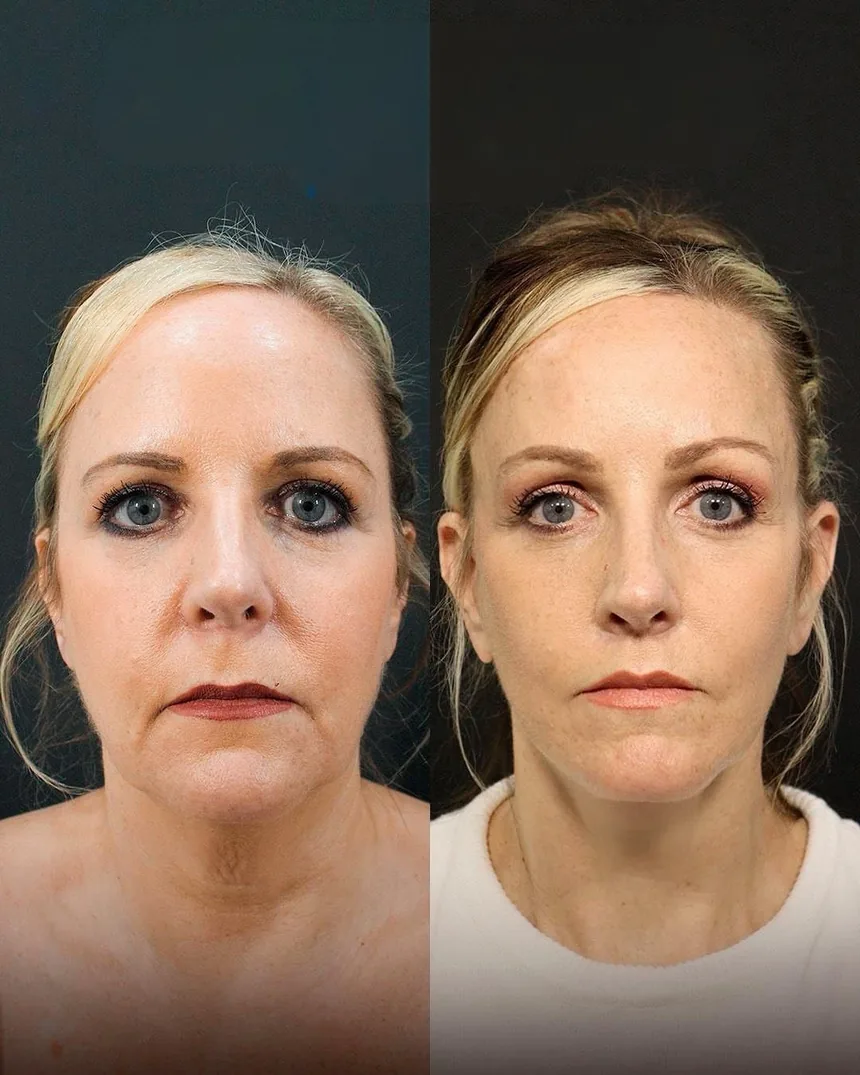
Before and after a deep plane face, neck and brow lift by Dr. Quiroz, shown at 1 year. Individual results vary.
Shown at 1 year: a descended midface and neck, corrected structurally. Real patient, photographed with consent.
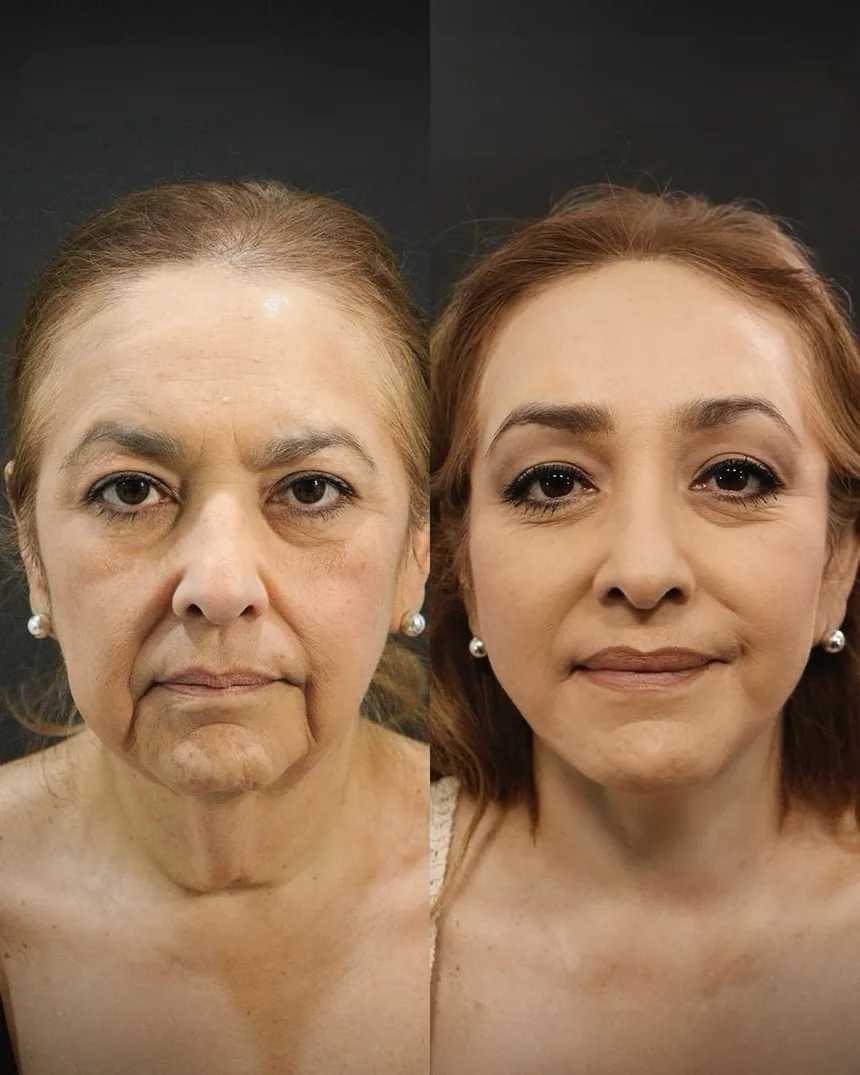
Before and after a deep plane face and neck lift with upper eyelid surgery by Dr. Quiroz, shown at 9 months. Individual results vary.
Shown at 9 months: the midface repositioned, the eyes opened, no tension anywhere. Real patient, photographed with consent.
The deep plane, in full depth

Common questions

Deep plane vs SMAS, asked plainly.

Which is better, a deep plane or SMAS facelift?

The honest answer is that it depends on the face, and anyone who answers otherwise before examining you is selling, not diagnosing. The pooled evidence gives the deep plane an edge in patient satisfaction and midface correction, at the cost of a somewhat higher pooled complication rate. The twin and split-face studies found little visible difference when the right technique met the right patient. Dr. Quiroz operates deep plane because of what it does for the midface and the neck, and because it is the technique he trained in under Bruce F. Connell, but the examination decides whether your face needs it.

Is a deep plane facelift more dangerous than SMAS?

Named precisely: pooled data show a somewhat higher overall complication rate for the deep plane, 17.2 versus 10 percent, most of it minor and temporary, while nerve injury rates are similar between the two techniques, overwhelmingly temporary, with permanent injury rare in both. The deep plane works nearer the facial nerve branches and demands more of the surgeon, which is why the technique matters less than the hands performing it.

What is the actual difference between deep plane and SMAS?

Where the work happens. A SMAS lift tightens the muscular layer beneath the skin by folding or trimming it, with the skin lifted separately. The deep plane goes underneath that layer: it releases the ligaments that anchor the descended face and repositions skin, fat, and muscle together as one composite unit. Nothing is left relying on skin tension, which is why the deep plane result reads rested rather than tight.

How long does a deep plane facelift last vs SMAS?

On this site the figures stay consistent: deep plane commonly described as 10 to 12 years, SMAS 5 to 10. Honesty requires the footnote: those spans come from the technique literature and clinical convention, not from controlled long-term trials, which mostly do not exist. What is documented is that at 5.5 years, about three quarters of facelift patients still look younger than before surgery, and that structures relax before repositioned foundations do. Individual results vary.

Is the deep plane worth the extra cost?

When your face needs what it does, yes: the midface, the nasolabial area, and the neck are where the deep plane earns its keep, and where the pooled evidence shows its advantage. When a face has early, mild descent that a well-performed SMAS lift would serve, the honest advice is that the extra surgery is not automatically the better purchase. That judgment is the consultation. For scale: a deep plane face and neck lift with Dr. Quiroz commonly runs $11,000 to $13,000 all-in, against a US average facelift of about $20,000 and a US deep plane about $25,700 (RealSelf).

Did the twin studies really show no difference?

Close to it, and this page cites them on purpose. In 8 sets of identical twins operated with 4 different techniques, no single technique produced a superior result when performed on the appropriate patient. In a randomized split-face study, observers could not detect differences between a standard and an extended technique at 1 year. The honest conclusions: technique choice matters most at the extremes of aging, and the surgeon matters more than the label.

Why does Dr. Quiroz operate deep plane?

Lineage and diagnosis. He trained in fellowship under Bruce F. Connell, whose face and neck work shaped the structural school, and has performed more than 3,000 facelifts across 37 years. Most of his patients arrive with the midface descent and neck laxity where the deep plane advantage is documented, and where a surface lift leaves the problem underneath untouched.

Does a SMAS facelift look less natural?

Not necessarily, and the claim that it always does is marketing. A well-judged SMAS lift on the right face looks natural. What reads as pulled is skin doing structural work on any face whose descent outran it, whatever the label on the operation. Natural is a property of matching technique to anatomy, and of restraint.

Sources

  1. S1Khoury S, Almubarak Z, Khan H, et al. The Deep Plane versus SMAS Facelift: A Systematic Review and Meta-Analysis. Aesthetic Plastic Surgery. 2025;49:5895-5903. PMID 40801931. 21 studies, 2,896 patients.
  2. S2Vayalapra S, et al. Comparing the Safety and Efficacy of SMAS and Deep Plane Facelift Techniques: A Systematic Review and Meta-analysis. Annals of Plastic Surgery. 2025;95(5):582-589. PMID 40600822. 47 studies, 10,766 patients.
  3. S3Antell DE, Orseck MJ. A comparison of face lift techniques in eight consecutive sets of identical twins. Plastic and Reconstructive Surgery. 2007;120(6):1667-1673. PMID 18040204.
  4. S4Ivy EJ, Lorenc ZP, Aston SJ. Is there a difference? A prospective study comparing lateral and standard SMAS face lifts with extended SMAS and composite rhytidectomies. Plastic and Reconstructive Surgery. 1996;98(7):1135-1143. PMID 8942899.
  5. S5Mitz V, Peyronie M. The superficial musculo-aponeurotic system (SMAS) in the parotid and cheek area. Plastic and Reconstructive Surgery. 1976;58(1):80-88. PMID 935283.
  6. S6Hamra ST. The deep-plane rhytidectomy. Plastic and Reconstructive Surgery. 1990;86(1):53-61. PMID 2359803; and Composite rhytidectomy, 1992;90(1):1-13. PMID 1615067.
  7. S7Jones BM, Lo SJ. How long does a face lift last? Objective and subjective measurements over a 5-year period. Plastic and Reconstructive Surgery. 2012;130(6):1317-1327. PMID 23190814.

Written and medically reviewed by Dr. Alejandro Quiroz, board certified in plastic and reconstructive surgery, CMCPER No. 293. Last reviewed July 2026.

The surgeon, and the place

Every recommendation here is worth exactly as much as the surgeon behind it.

Dr. Alejandro Quiroz operating at VIDA Wellness & Beauty in Tijuana

The surgeon

Dr. Alejandro Quiroz

Board certified in plastic and reconstructive surgery since 1984 (CMCPER No. 293), an active California physician and surgeon license held since 1986, and fellowship training under Bruce F. Connell. 37 years, more than 3,000 facelifts. The surgeon you consult is the surgeon who operates.

The full record, with registries
VIDA Wellness & Beauty in Zona Rio, Tijuana

The facility

VIDA Wellness & Beauty

The first Quad A (formerly AAAASF) accredited surgical facility in Mexico, licensed by COFEPRIS, 15 minutes from the San Diego border. Dra. Nadiezhda Garcia Bonilla, a board-certified anesthesiologist, is present for every case, and recovery happens in the on-site Recovery Boutique with nursing around the clock.

The facility and anesthesia

The label does not lift a face. The diagnosis does.

If a page has already sold you a technique before anyone examined you, it skipped the step that decides the result. The honest order is the other way around, and it starts with a conversation: your questionnaire and photos studied first, then a call by phone or video, then an itemized quote, in that order.

Request a Consultation

Or keep reading: what a facelift costs in Mexico, itemized how the safety checks out