Dr. Alejandro Quiroz · Facial Plastic Surgery

Eyelid surgery.

Blepharoplasty, an eyelid lift, is surgery that removes or repositions the excess skin and fat that make eyes read as tired: the upper lid, the lower lid, or both. The eyes are where the world looks first when it reads a face, and where age writes first. The people asking if you slept are not wrong about what they see. They are wrong about what it means.

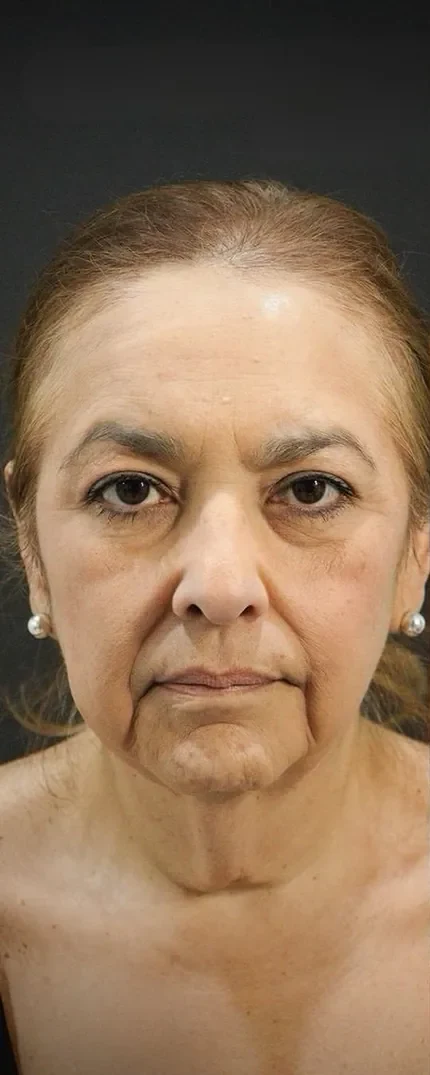
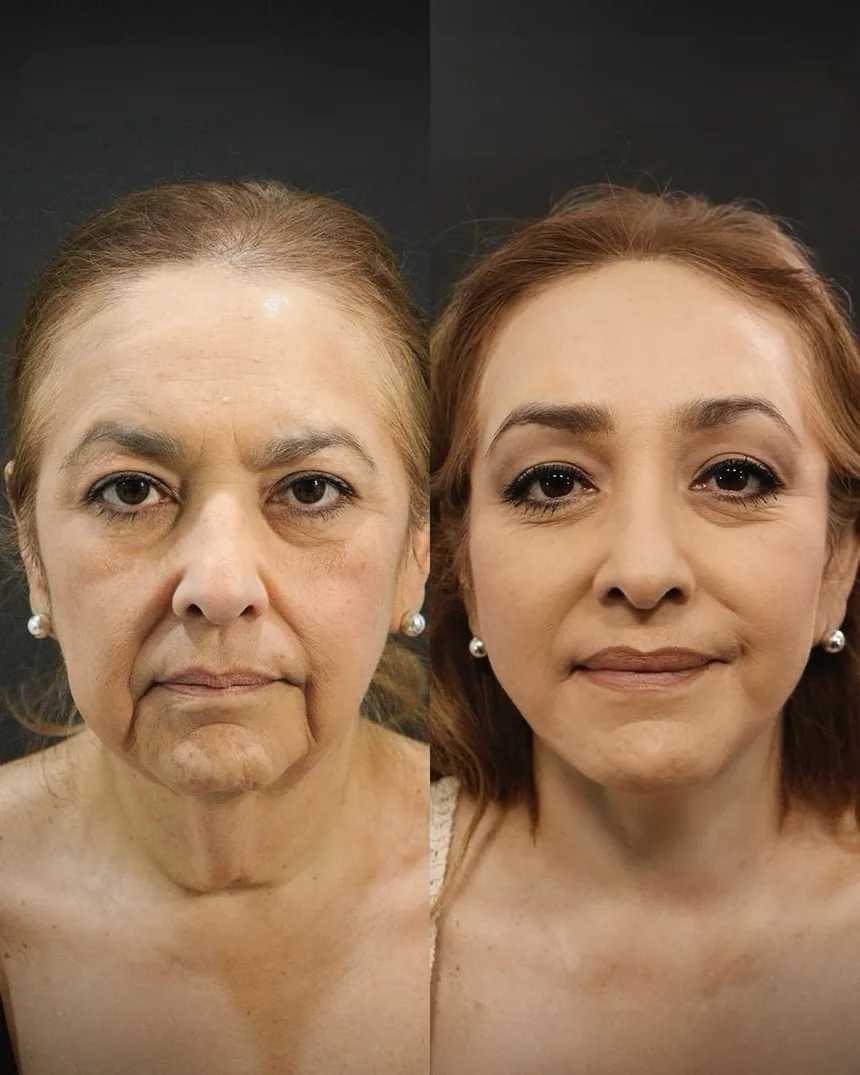
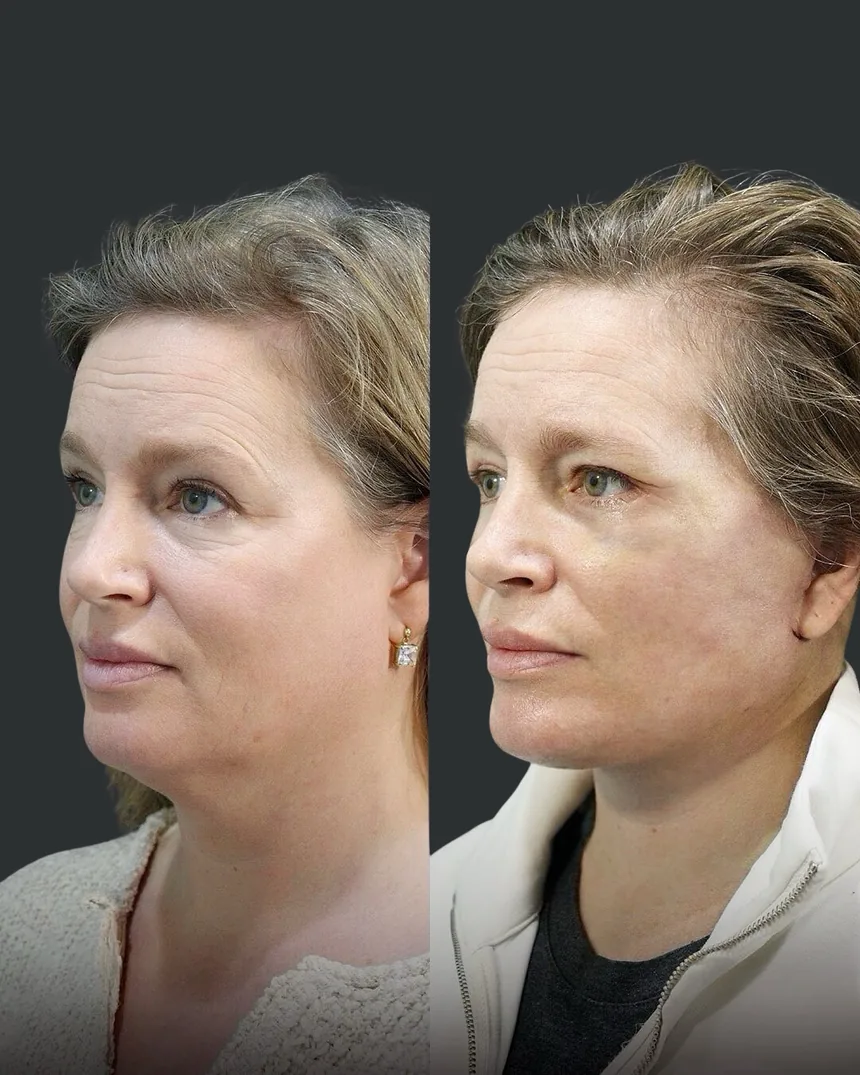
Before a face and neck lift with upper eyelid surgery: heavy upper lids crowding the eyes.
Before
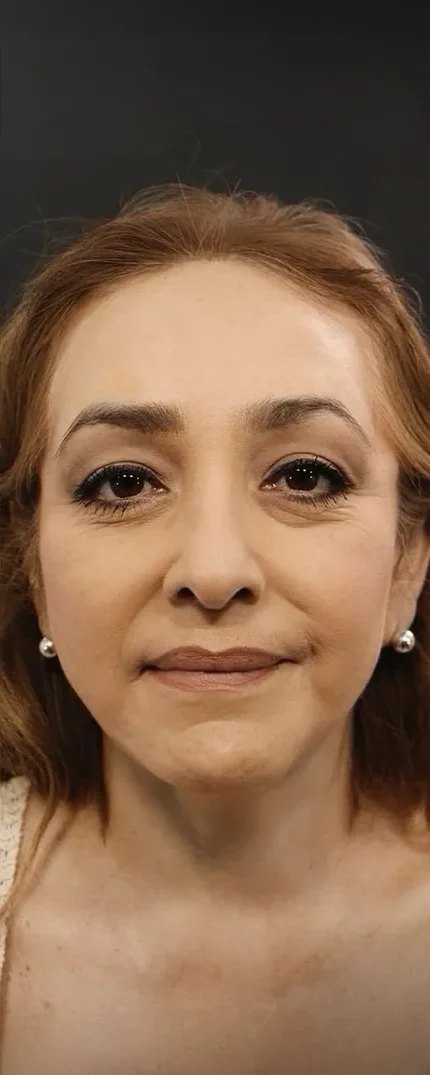
Nine months after a face and neck lift with upper eyelid surgery by Dr. Quiroz: the eyes open and rested. Individual results vary.
Nine months after

Real patient, photographed with consent. Individual results vary.

The signals

Why do my eyes always look tired?

Because the eyes are where fatigue is read. In eye-tracking studies, observers judging how tired a face looks spend about a third of their gaze on the eye region alone, more than on any other feature, and the cues they weigh most, hanging upper lids, swollen eyes, the shadows beneath them, are the periorbital ones. That is also why eyelid surgery became the most performed cosmetic operation in the world: not vanity about the eyes, but the fact that the eyes are doing most of the talking. 1 2 4

What they sayWhat they are readingWhat it actually isWhat answers it
“You look tired.” The upper lid, crowding the eye Skin that has lengthened with the years and folds over the crease. The clinical name is dermatochalasis, and it does not care how much you slept. Upper eyelid surgery. Or a brow lift, when what fell is the brow and the lid is only carrying it.
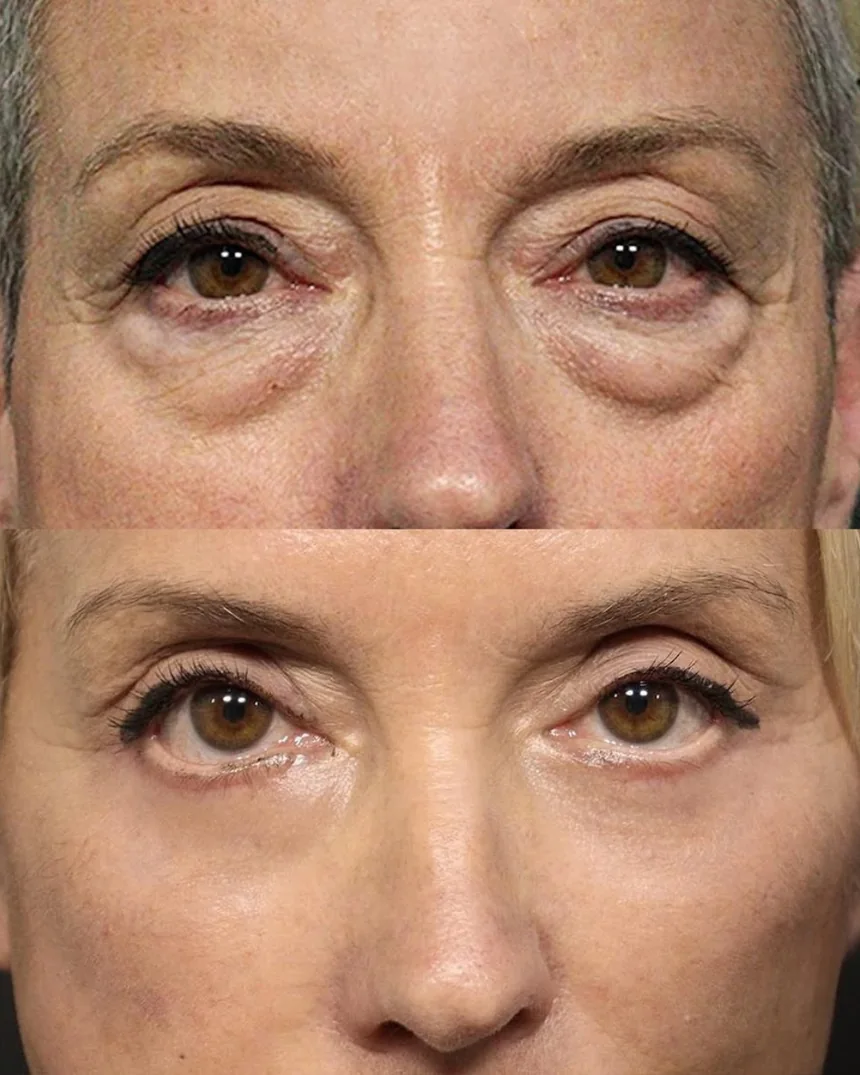
“Did you sleep?” The bags under the eyes The fat cushion behind the lower lid pressing forward as its restraints weaken. It is anatomy, not fatigue, which is why no amount of sleep deflates it. Lower eyelid surgery, repositioning the fat more often than removing it.
“You have dark circles.” The shadow beneath the bag A hollow where the lid meets the cheek, deepened by the bulge above it. Light falls into the valley, and the face reads it as a stain. The same fat, moved down into the hollow instead of thrown away. The bulge and the shadow are one problem.
“You look sad.” The outer corner of the eye Hooding at the eye’s corner, and often it is not the lid at all: the tail of the brow has settled onto it. Frequently the brow, not the eyelid. The mirror test on the brow lift page tells the two apart.

Four misreadings, two operations, and one diagnosis that decides between them. The rest of this page walks the two lids separately, because they age differently and are corrected differently.

The upper lid

The lid that ages by excess.

Upper eyelid skin lengthens with the years until it folds onto itself, resting on the lashes, sometimes into the field of vision. The operation removes a measured ellipse of that excess through the crease, and its restraint is structural: the lid must keep about 2 centimeters of skin between lash and brow to close and blink, so the design starts from what must stay. 6

The brow check comes first

A heavy upper lid is sometimes a descended brow leaning on it, and lid surgery alone in that face treats the symptom. Before any upper lid is planned, the brow is held at its height and judged. The mirror test on the brow lift page is the three-step home version.

Take the mirror test
  1. 01

    The incision is drawn where your lid already folds, in the natural crease, so the line lives inside a fold that exists anyway.

  2. 02

    A measured ellipse of excess skin is removed. Measured is the operative word: the lid must keep enough skin to close and blink without effort, so the plan is built around what stays, not what goes.

  3. 03

    When they contribute to the heaviness, a small strip of muscle or a bulge of fat at the inner corner is addressed. When they do not, they are left alone.

  4. 04

    The closure is a single fine line inside the crease, and the whole operation is measured in about an hour.

When it is not cosmetic

When the lid hangs low enough to cut the upper field of vision, the operation is functional, and in the United States insurers define that with numbers: a lid resting within about 2 millimeters of the pupil, and a measured field loss near 30 percent, tested with the lids taped and untaped. If that is your case, you will hear it named honestly in consultation. 14

The lower lid

The lid that ages by displacement.

Under-eye bags are not excess so much as escape: the fat that cushions the eye presses forward as its restraints weaken, and a hollow deepens where the lid meets the cheek. Modern lower eyelid surgery treats the bulge and the hollow as one problem, repositioning the fat downward to fill the valley it was shadowing rather than discarding it. 7 8

The bag and the dark circle beneath it are the same anatomy, seen twice.

Through the inside of the lid

The transconjunctival approach reaches the fat through the lid’s inner surface. No visible incision, and the lid’s supporting structures are left undisturbed, which is why published rates of the lid pulling downward afterward are close to zero by this road. 7 13

Just beneath the lash line

When the skin itself has loosened and must be addressed, the incision hides below the lashes. It asks more of the surgeon’s judgment, because taking skin greedily here is how lower lids get pulled down, and it is chosen only when the skin has earned it. 13

Which road, and whether a pinch of skin joins the plan, is a diagnosis made on your anatomy. What does not change is the principle: the eye must never look emptied, so repositioning outranks removal. 8

Results

Judged by strangers, which is how faces are judged.

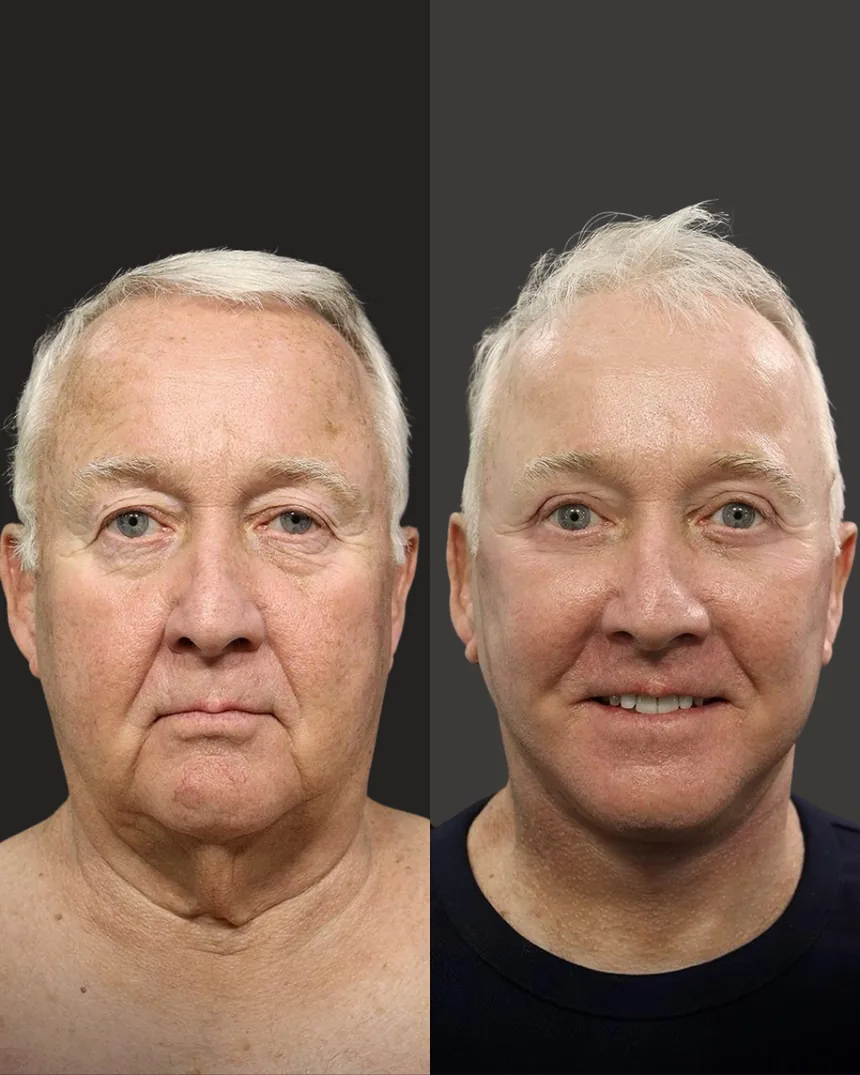
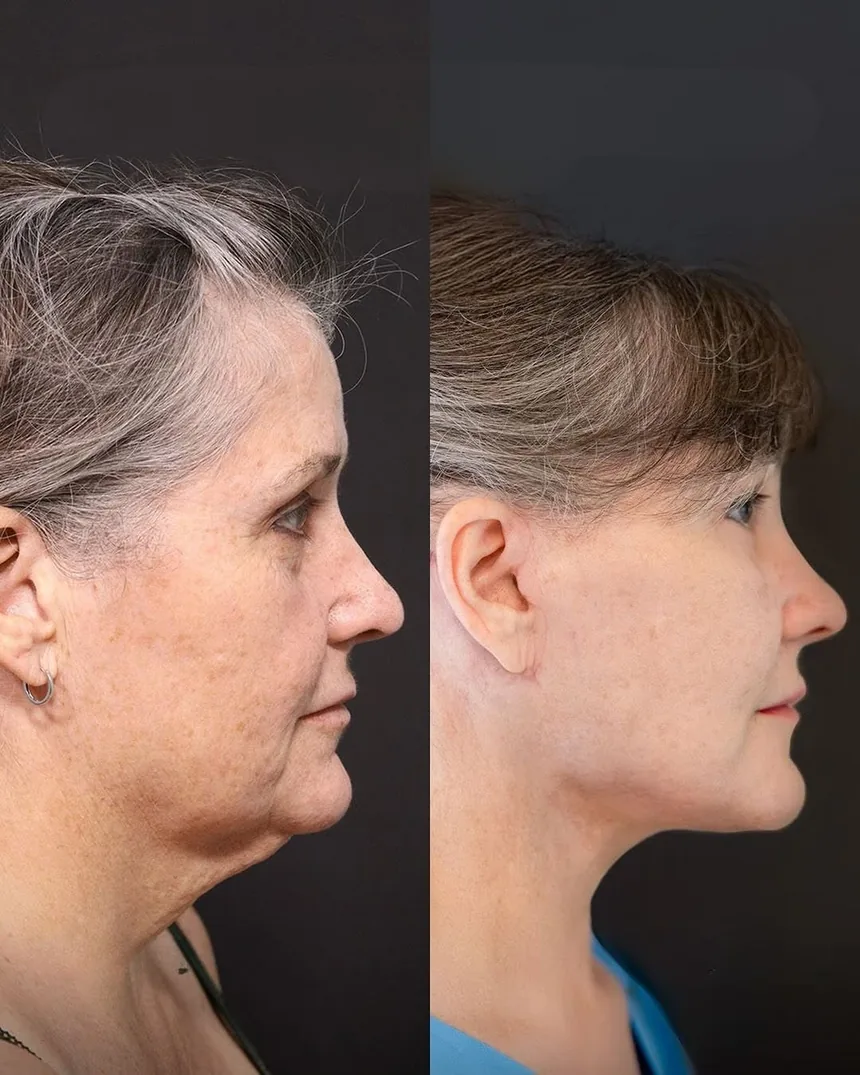
Real patients, photographed with consent, most with the time since surgery. In a controlled study, hundreds of observers rated faces after eyelid surgery about a year younger, healthier, more attractive, and above all more energetic, and the energy change was the largest measured. That is the honest promise of this operation: not a different face, a less tired reading of yours. In these patients the eyelids were corrected as part of a larger plan, because the eyes rarely age alone. 3

A patient before and after a Face and Neck and Upper Eyelid Surgery by Dr. Quiroz. Individual results vary. BeforeAfter

Dr. Quiroz, on this case

Face and Neck + Upper Eyelid Surgery

Shown at 9 months

In this patient I paired the deep plane face and neck lift with upper eyelid surgery. The lift repositions structure, and the eyelids open the gaze. Neither can do the other's work. Shown at nine months. Individual results vary.

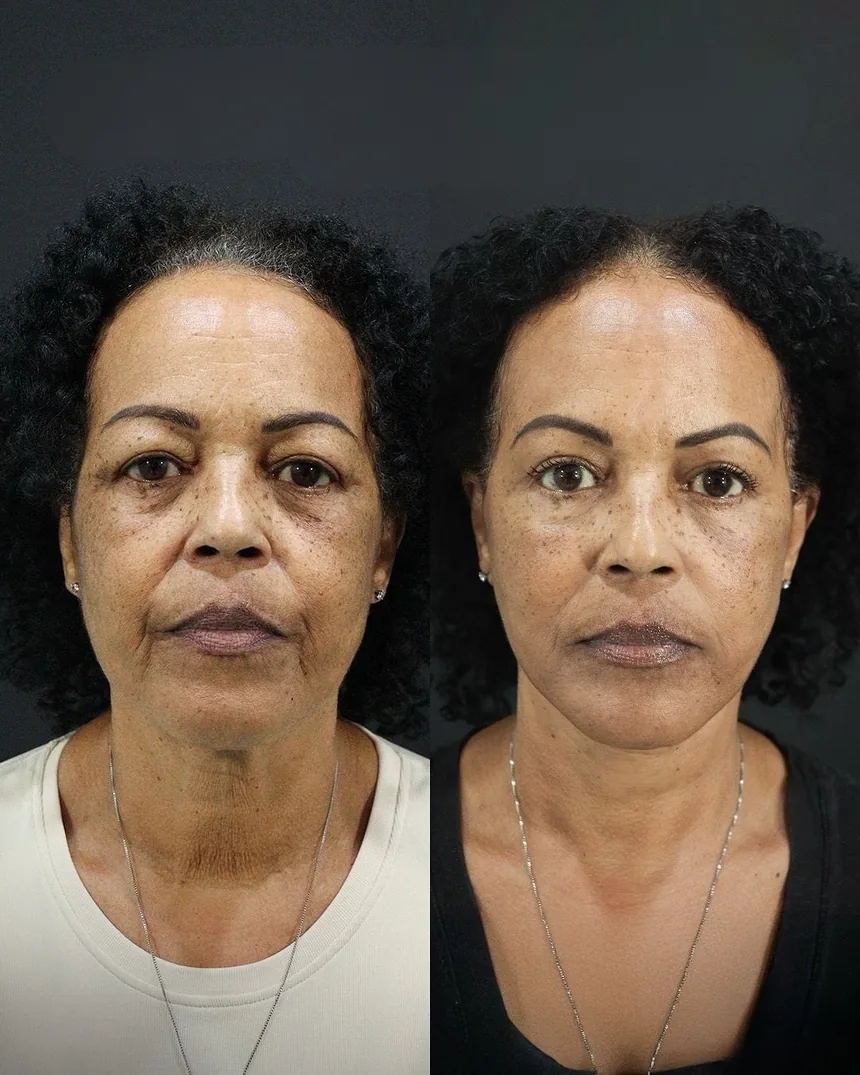
A patient before and after a Face and Neck Lift and Upper Eyelid Surgery by Dr. Quiroz. Individual results vary. BeforeAfter

Dr. Quiroz, on this case

Face and Neck Lift + Upper Eyelid Surgery

Shown at 4 months

In this patient I performed a deep plane face and neck lift with upper eyelid surgery. At four months the deeper swelling has mostly settled and the jawline is holding its new line. Individual results vary.

A patient before and after a Face and Neck Lift and Lower Eyelid Surgery by Dr. Quiroz. Individual results vary. BeforeAfter

Dr. Quiroz, on this case

Face and Neck Lift + Lower Eyelid Surgery

Shown at 2 weeks

In this patient I performed a deep plane face and neck lift with lower eyelid surgery. Shown at two weeks, deliberately, because this is what an early recovery actually looks like before the result refines. Individual results vary.

A patient before and after a Face and Neck Lift, Eyelid Surgery and CO2 Laser by Dr. Quiroz. Individual results vary. BeforeAfter

Dr. Quiroz, on this case

Face and Neck Lift, Eyelid Surgery and CO2 Laser

Shown at 2 months

In this patient I performed a deep plane face and neck lift with eyelid surgery and CO2 laser resurfacing. The lift cannot change the quality of the skin itself. The laser does that work. Shown at two months, still early. Individual results vary.

A patient before and after a Face and Neck Lift and Lower Eyelid Surgery by Dr. Quiroz. Individual results vary. BeforeAfter

Dr. Quiroz, on this case

Face and Neck Lift + Lower Eyelid Surgery

Shown at 3 months

In this patient I performed a deep plane face and neck lift with lower eyelid surgery. The jawline and the neck carry the structural change, and the eyelids soften what the years did around the gaze. Shown at three months. Individual results vary.

A patient before and after a Face, Neck Lift and Lower Eyelid Surgery by Dr. Quiroz. Individual results vary. BeforeAfter

Dr. Quiroz, on this case

Face, Neck Lift and Lower Eyelid Surgery

Shown at 1 month

In this patient I performed a deep plane face and neck lift with lower eyelid surgery. Shown at one month, the midface still settling into place. Individual results vary.

See more cases

Recovery

What is eyelid surgery recovery like?

Brief, bruised, and front-loaded. The eyes look worse than they feel in the first week, and most patients are back at work inside two.

Flying home

The cabin is not the problem: the American Academy of Ophthalmology notes that flying does not endanger the eye after eyelid surgery the way it can after some operations on the eye itself. The calendar is what matters. The rare serious complication declares itself in the first hours, so the first night is spent near the surgical team, and most patients cross home by land within days, returning or following up remotely for suture removal around day seven. 9 15

  1. Day of surgery

    Cold compresses begin the same evening, ten minutes of each hour, and the head stays elevated. Vision is functional but blurry from ointment.

  2. Days 1 to 3

    Bruising and swelling peak, then start down the cheek with gravity. This is also the window that matters medically, which is why the first night is spent near the surgical team.

  3. Days 5 to 7

    Sutures come out. Most of the swelling that will leave early has left.

  4. Days 10 to 14

    Most patients are socially presentable and back at work. Bruising is covered or gone.

  5. Week 2 onward

    Contact lenses and eye makeup return around the 2 week mark. Strenuous exercise is cleared individually, commonly between 1 and 3 weeks.

  6. Months 2 to 4

    Numbness of the lid skin fades and the scar settles into the crease. Individual recovery varies.

Recovery figures are typical, not a promise. Individual recovery varies. 6

Risks, honestly

Is eyelid surgery safe? The real numbers, including the one everyone fears.

The one nobody advertises

The operated eye. Hollowed from fat taken greedily, rounded or pulled down from skin taken greedily. It is the signature of removal without restraint, it is harder to repair than what it replaced, and it is why repositioning outranks removal on both lids. The goal is an eye that looks rested, never an eye that looks done.

No operation is without risk, and a risks section without numbers is not an honest one. Around the eyes, the ones worth understanding by name:

Dry, irritated eyes early on About 1 in 4 The most common complaint, and overwhelmingly temporary: about 95 percent resolve within 8 weeks, and new dryness persisting past 3 months is under 1 percent. 11 12
Bleeding behind the eye 1 in 2,000 The feared one, named plainly: bleeding that threatens vision follows about 1 in 2,000 cases, and permanent visual loss roughly 1 in 20,000 or rarer. It declares itself in the first hours, which is exactly why the first night here is spent near the surgical team, not on a highway. 9 10
The lower lid pulled down By approach In a pooled analysis of thousands of lower blephs, visible lid malposition followed about 2.5 percent of lash-line approaches and was close to zero through the inside of the lid. This is why the approach is a diagnosis, not a default. 13
A second pass Under 4% Published revision after upper blepharoplasty runs near 4 percent. Worth knowing: measurable lid asymmetry is common before surgery, and in published series it decreases afterward. 12

What safety actually rests on here.

  1. 01

    The diagnosis before the technique

    Upper or lower, lid or brow, skin or fat, remove or reposition. Every disappointment in eyelid surgery is one of these read wrong, and the examination is where they are read right.

  2. 02

    The experience of the surgeon

    37 years of facial surgery, and the restraint that comes from having seen what over-operated eyes look like a decade later.

  3. 03

    The facility and the first night

    A Quad A accredited center, a board-certified anesthesiologist, Dra. Nadiezhda Garcia Bonilla, present for every case, and the first hours, the ones that matter statistically, spent with nursing on hand and the surgeon reachable.

Cost

How much does eyelid surgery cost?

Eyelid surgery with Dr. Quiroz commonly runs about $2,100 all-in for the lower lids alone, about $4,150 for both lids together, and $5,900 to $6,700 combined with a brow lift, against ASPS 2024 surgeon-fee ranges of $3,000 to $5,500 for the upper lids and $3,709 to $6,500 for the lower, and a US patient-reported all-in average near $6,400 (RealSelf).

You receive a detailed, itemized quote after a photo review and a consultation, so the figure is yours before anything is scheduled.

The eyes are rarely quoted alone, because they rarely age alone.

United States surgeon’s fee, upper lids $3,000 to $5,500 The ASPS 2024 reported range, before anesthesia, the operating room, and everything around them. The lower lids run $3,709 to $6,500 by the same count.
What patients report actually paying, all in Near $6,400 The RealSelf patient-reported average, where eyelid surgery carries a Worth It rating around 93 percent.
With Dr. Quiroz, the lower lids alone, all in Around $2,100 The operation, the operating room and anesthesia, the pre-operative EKG and labs, and post-operative medication. Itemized, line by line.
Both lids, upper and lower, all in Around $4,150 The complete eyelid correction in one session: both operations, the operating room and anesthesia, the pre-operative workup, and medication.
Together with a brow lift, all in $5,900 to $6,700 The upper face corrected as one plan: the brow and the lower lids in one session, one recovery, itemized the same way.

Compare the right numbers: the American averages you see quoted are the surgeon’s fee alone, while a quote here is the whole operation, the accredited facility, the board-certified anesthesiologist, and the aftercare. What is lower in Tijuana is the cost of running an accredited operating room, not what happens inside it. 5 16

See the full cost breakdown

Common questions

Questions patients ask about eyelid surgery.

How much does eyelid surgery cost?

In the United States, the ASPS reports 2024 surgeon’s fee ranges of $3,000 to $5,500 for upper eyelid surgery and $3,709 to $6,500 for the lower lids, before anesthesia and the operating room, and RealSelf patient-reported all-in figures average around $6,400. With Dr. Quiroz, lower eyelid surgery alone commonly comes in around $2,100 all in, both lids together around $4,150, and corrected together with a brow lift the combined figure commonly runs between $5,900 and $6,700. All in means the operation, the operating room and anesthesia, the pre-operative workup, and post-operative medication, itemized after a photo review.

Is blepharoplasty worth it?

On RealSelf, eyelid surgery carries a Worth It rating around 93 percent, one of the highest of any facial procedure. In a controlled study where hundreds of observers rated faces before and after eyelid surgery, the faces afterward were judged about a year younger, healthier, more attractive, and above all more energetic, and the energy change was the largest measured. Whether it is worth it for you depends on whether the eyelids are truly what is writing the tired message on your face, and that is what the examination decides.

How long does eyelid surgery last?

No published study has directly measured the duration of the result in years, so honest answers are attributed, not invented. Cleveland Clinic tells patients upper eyelid results last anywhere from 5 to 7 years to a lifetime, and that lower eyelid surgery rarely needs repeating. What is documented is that the measured benefit persists at the longest follow-ups studied, several years out, and that the face continues to age around the result. Individual results vary.

Do I need upper eyelid surgery, lower, or both?

They solve different problems. The upper lid ages by excess, skin lengthening until it folds onto the lashes. The lower lid ages by displacement, the fat cushion pressing forward and a hollow deepening beneath it. Some faces have one, some have both, and the examination reads which is actually writing the tired look. When both are present they are commonly corrected in one session, one anesthesia, one recovery.

Do I need an eyelid lift or a brow lift?

It depends on what is actually crowding the eye. Hooding that looks like an eyelid problem is often a brow that has descended onto the lid, especially at the eye’s outer corner. The brow lift page on this site includes a mirror test that separates the two in three steps, and in consultation the same logic is applied formally: the brow is held at its height first, and only then is the lid judged for what is truly its own.

How is anesthesia handled for eyelid surgery?

Anesthesia is planned case by case by a board-certified anesthesiologist, Dra. Nadiezhda Garcia Bonilla, who is present for every procedure. The plan depends on whether the upper lids, the lower lids, or both are being treated, and whether the eyelids are part of a larger plan with a facelift or brow lift. You will know exactly what is planned for you, by name and credential, before anything is scheduled.

Where are the scars?

Upper eyelid incisions sit in the natural crease, inside a fold that already exists, and once healed they are difficult to find with the eyes open. On the lower lid there are two roads: through the inside of the lid, which leaves no visible scar at all, or just beneath the lash line when skin itself must be addressed. Healing varies from person to person.

Will eyelid surgery change the shape of my eyes?

That is what conservative technique is meant to prevent. A pulled, rounded, or hollowed eye is the signature of taking too much, so fat is repositioned where it can be rather than removed, and skin is measured against what the lid needs to keep. The goal is your own eyes, rested, not different eyes. Individual results vary.

Will insurance cover my eyelid surgery?

Only when it is functional rather than cosmetic. In the United States that is defined by measurements: an upper lid resting within roughly 2 millimeters of the pupil’s center and a documented loss of upper visual field, commonly 12 degrees or about 30 percent, proven with field testing done with the lids taped and untaped. Surgery done for how the eyes look is not covered, in either country. The consultation will tell you honestly which side of that line you are on.

When can I wear contact lenses again?

Commonly around 2 weeks, once the lids close comfortably and the early swelling has left. Glasses can be worn immediately. Eye makeup follows the same 2 week rule.

How soon can I fly home after eyelid surgery?

The airplane cabin is not the problem: the American Academy of Ophthalmology notes that flying does not endanger the eye after eyelid surgery the way it can after some eye operations. What matters is the calendar, not the altitude. The rare serious complication declares itself in the first hours, so the first night is spent near the surgical team, and most patients cross home by land within days. Suture removal around day 5 to 7 is planned with you, either in Tijuana or with your own doctor.

How long do I need to stay in Tijuana for eyelid surgery?

Eyelid surgery on its own is a short trip, about 2 nights. You spend 1 night before surgery in the hospital, and on the day of surgery you move to the on-site Recovery Boutique for 1 night, close to the surgical team for the hours that matter most. Suture removal is around day 5 to 7, planned with you, either back in Tijuana or with your own doctor at home.

Is eyelid surgery in Tijuana safe?

Mexico, like the United States, has both accredited surgeons and unaccredited ones, so safety is a matter of verification, not geography. Dr. Quiroz is board certified by the CMCPER (No. 293, since 1984, recertified through 2030), holds an active California Physician and Surgeon license (A 42463), and operates at VIDA Wellness & Beauty, the first Quad A (formerly AAAASF) accredited facility in Mexico, licensed by COFEPRIS and 15 minutes from the border, with a board-certified anesthesiologist, Dra. Nadiezhda Garcia Bonilla, present for every case. Every credential is a public record, verifiable from his profile page.

What is the best age for eyelid surgery?

There is no fixed age, because the finding is anatomic, not chronological. Some inherit heavy lids or under-eye bags in their thirties, most develop them across their fifties and sixties, and by the ASPS count a sixth of American eyelid patients are over 70. It is a diagnosis, not a birthday, and the examination is what makes it.

Sources

  1. S1Nguyen HT, Isaacowitz DM, Rubin PA. Age- and fatigue-related markers of human faces: an eye-tracking study. Ophthalmology. 2009;116(2):355-360. PMID 19084276.
  2. S2Sundelin T, Lekander M, Kecklund G, Van Someren EJ, Olsson A, Axelsson J. Cues of fatigue: effects of sleep deprivation on facial appearance. Sleep. 2013;36(9):1355-1360. PMID 23997369.
  3. S3Bater KL, Ishii M, Nellis JC, et al. A Dual Approach to Understanding Facial Perception Before and After Blepharoplasty. JAMA Facial Plastic Surgery. 2018;20(1):43-49. PMID 28859184.
  4. S4ISAPS International Survey on Aesthetic/Cosmetic Procedures, 2024 Global Survey. Released 2025.
  5. S5American Society of Plastic Surgeons, 2024 Procedural Statistics and 2024 average surgeon and physician fees.
  6. S6Patel BC, Malhotra R. Upper Eyelid Blepharoplasty. StatPearls, NCBI Bookshelf. NBK537078.
  7. S7Transconjunctival Lower Blepharoplasty. StatPearls, NCBI Bookshelf. NBK538152.
  8. S8Goldberg RA. Transconjunctival orbital fat repositioning. Plastic and Reconstructive Surgery. 2000. PMID 10697189; and Wong CH, Mendelson B. Extended Transconjunctival Lower Eyelid Blepharoplasty. Plastic and Reconstructive Surgery. 2017. PMID 28746272.
  9. S9Hass AN, Penne RB, Stefanyszyn MA, Flanagan JC. Incidence of postblepharoplasty orbital hemorrhage and associated visual loss. Ophthalmic Plastic and Reconstructive Surgery. 2004;20(6):426-432. PMID 15599241.
  10. S10Mejia JD, Egro FM, Nahai F. Visual loss after blepharoplasty: incidence, management, and preventive measures. Aesthetic Surgery Journal. 2011;31(1):21-29. PMID 21239669.
  11. S11Prischmann J, Sufyan A, Ting JY, Ruffin C, Perkins SW. Dry eye symptoms and chemosis following blepharoplasty. JAMA Facial Plastic Surgery. 2013;15(1):39-46. PMID 23329270; and Zhang SY, et al. Ocular surface changes after blepharoplasty. International Journal of Ophthalmology. 2020. PMID 32309188.
  12. S12Persistent dry eye and revision rates after upper blepharoplasty. Plastic and Reconstructive Surgery. 2024. PMID 38315110.
  13. S13Atiyeh B, et al. Lower eyelid malposition by surgical approach: systematic review, 3,623 patients. Plastic and Reconstructive Surgery Global Open. 2025. PMC12708136; and Gimenez A, et al. Complications of lower blepharoplasty: systematic review of 36 studies. Plastic and Reconstructive Surgery Global Open. 2025. PMC12456572.
  14. S14Cahill KV, et al. Functional indications for upper eyelid ptosis and blepharoplasty surgery: an American Academy of Ophthalmology report. Ophthalmology. 2011. PMID 22019388; and CMS Medicare Local Coverage Determination L34528.
  15. S15Cleveland Clinic patient information on blepharoplasty (result duration); and American Academy of Ophthalmology patient guidance on flying after eye and eyelid surgery.
  16. S16RealSelf patient-reported cost and Worth It data, 2026.

Written and medically reviewed by Dr. Alejandro Quiroz, board certified in plastic and reconstructive surgery, CMCPER No. 293. Last reviewed July 2026.

The surgeon, and the place

Every recommendation here is worth exactly as much as the surgeon behind it.

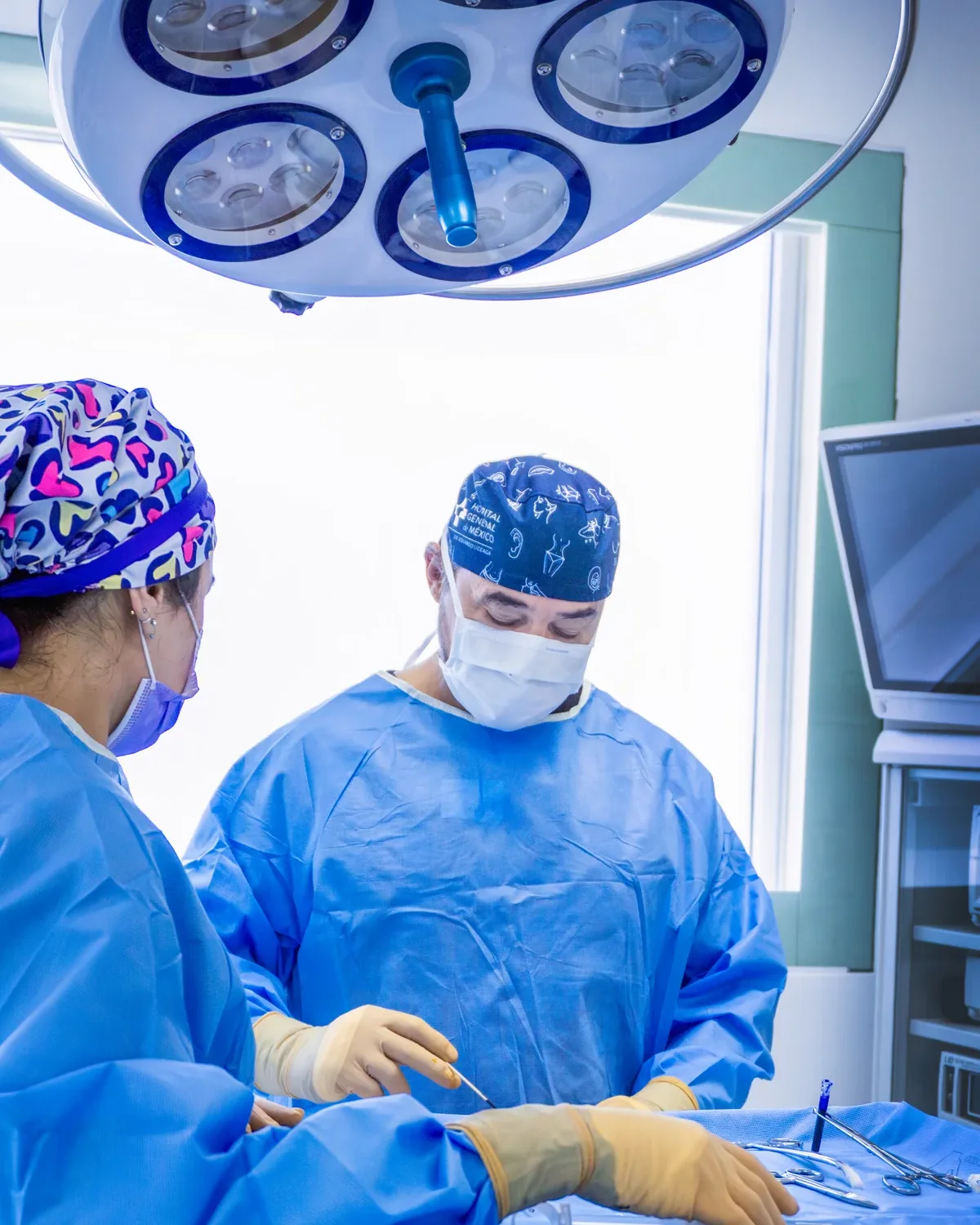
Dr. Alejandro Quiroz operating at VIDA Wellness & Beauty in Tijuana

The surgeon

Dr. Alejandro Quiroz

Board certified in plastic and reconstructive surgery since 1984 (CMCPER No. 293), an active California physician and surgeon license held since 1986, and fellowship training under Bruce F. Connell. 37 years, more than 3,000 facelifts. The surgeon you consult is the surgeon who operates.

The full record, with registries
VIDA Wellness & Beauty in Zona Rio, Tijuana

The facility

VIDA Wellness & Beauty

The first Quad A (formerly AAAASF) accredited surgical facility in Mexico, licensed by COFEPRIS, 15 minutes from the San Diego border. Dra. Nadiezhda Garcia Bonilla, a board-certified anesthesiologist, is present for every case, and recovery happens in the on-site Recovery Boutique with nursing around the clock.

The facility and anesthesia

The goal is not that they see your surgery. It is that they stop asking if you slept.

If the questions have started, the next step is not a booking. It is a conversation, with an honest read of what is writing the tired message on your face: the upper lid, the lower lid, the brow above them, or nothing that needs an operation at all.

Request a Consultation