Dr. Alejandro Quiroz · Facial Plastic Surgery

The neck lift.

A neck lift, or lower rhytidectomy, is surgery that restores the angle between the jaw and the neck by repairing the structure beneath the skin. The neck is where age shows first and where it is hardest to hide. It is also the part most operations get wrong, because what looks like loose skin is usually structure that has let go: the muscle sheet has separated into bands, the deeper fat has descended, and the angle under the jaw has filled in. Skin cannot fix any of that. Structure can.

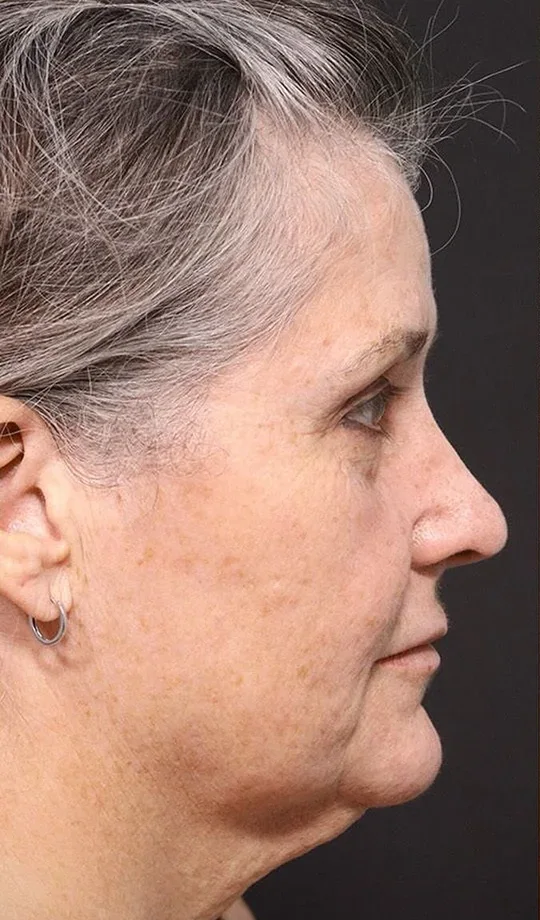
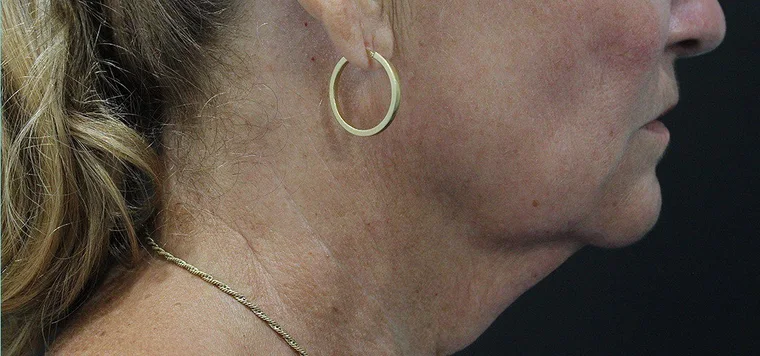
Before a face and neck lift: jowls and a softened jawline, in profile.
Before
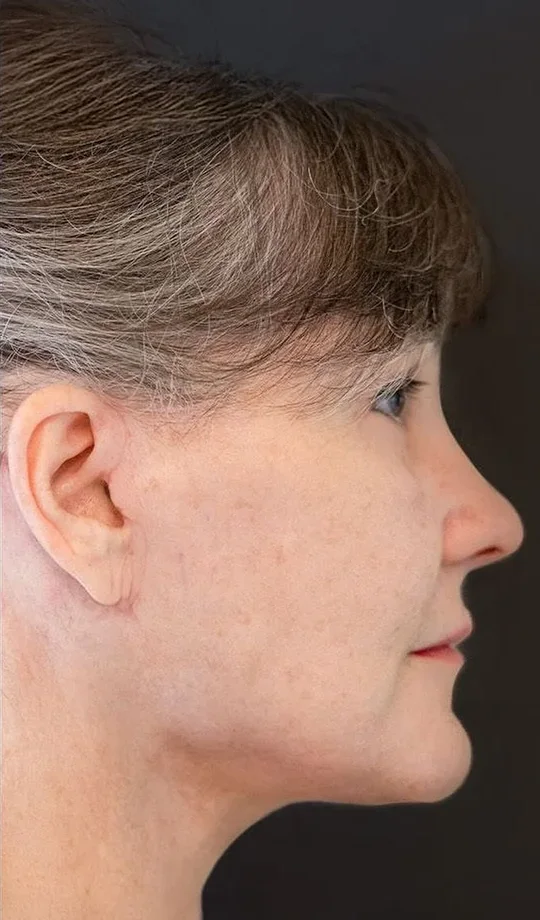
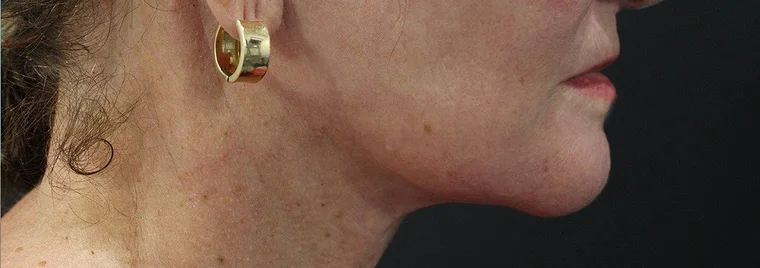
Three months after a face and neck lift by Dr. Quiroz: a clean jawline again. Individual results vary.
Three months after

Real patient, photographed with consent. Individual results vary.

The diagnosis

What makes a neck look old? Six findings, and most necks have more than one.

A neck ages in layers, which is why one name, turkey neck, covers so many different necks. The skin loosens, fat collects above and beneath the muscle, the paired edges of the platysma separate into vertical bands, the glands under the jaw ride low, and the deeper muscles thicken. A neck lift is not one fixed procedure. It is the set of corrections your neck actually needs, and the examination decides which. 4 6 7

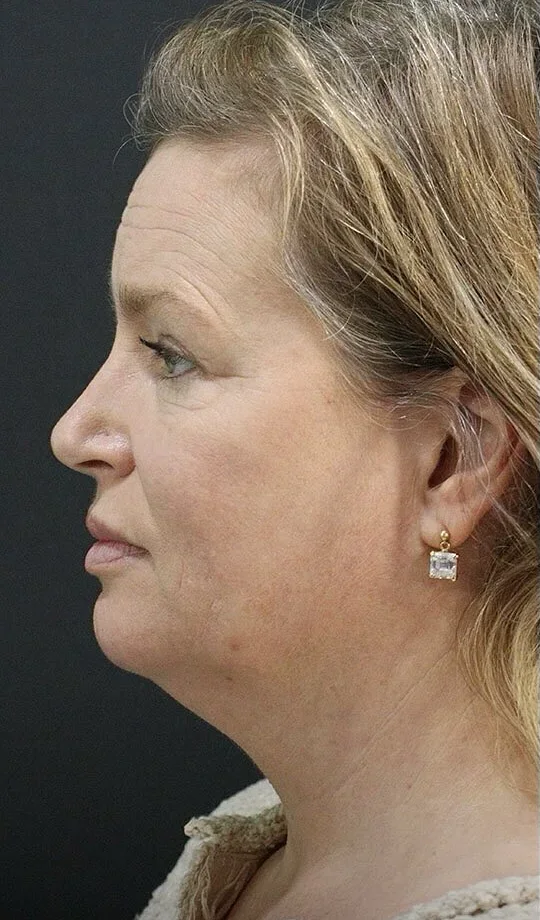
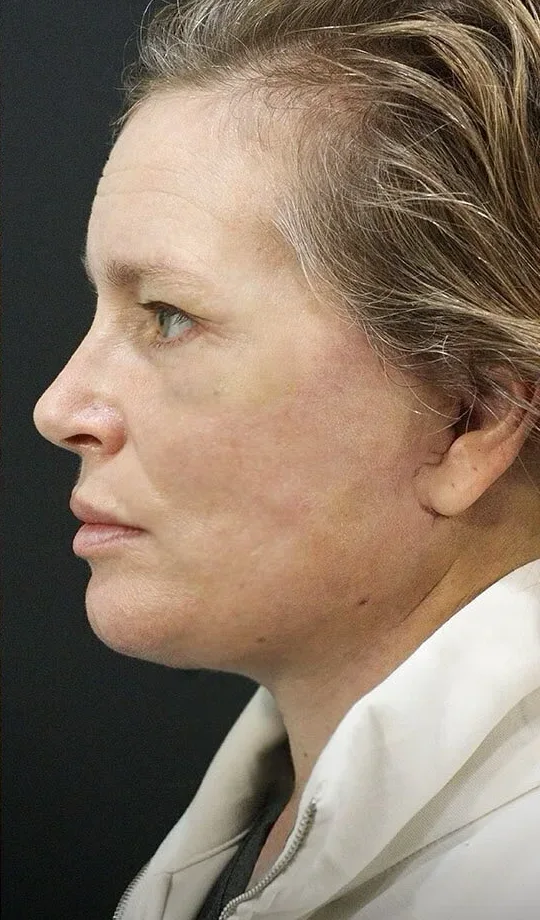
A patient of Dr. Quiroz before her neck lift, in profile: the six anatomic findings live in this frame. The same neck two weeks after her lift by Dr. Quiroz: the findings corrected. Individual results vary.

One real neck, six places it can fail. A patient of Dr. Quiroz before her lift, photographed with consent.

  1. Loose skin.

    The part everyone blames. Skin loosens, creases, and sags with age, and it is almost never the whole story. What reads as loose, sagging neck skin is usually the structure beneath it letting go.

    The correctionRedraped at the end of surgery over a corrected neck. Never stretched to do the correcting.

  2. Fat above the muscle.

    The soft fullness under the chin, the double chin, that arrives with age, weight, or family inheritance. It sits just beneath the skin, above the platysma.

    The correctionRefined directly. When this is the only finding, in a younger neck with elastic skin, liposuction alone can be the whole operation.

  3. The platysma and its bands.

    A thin sheet of muscle wrapping the front of the neck. With age its paired inner edges separate and slacken, and the two vertical cords you can see when you grimace are those loose borders, the platysmal bands, what patients call neck bands or cords. Bands are muscle, which is why no cream or laser corrects them.

    The correctionThe edges are brought back together in the midline and repaired, like a corset. Nothing is cut out of the muscle.

  4. Fat beneath the muscle: deep neck lift territory.

    A second, deeper compartment of fat that liposuction should never chase blindly. When the fullness lives here, working above the muscle accomplishes nothing.

    The correctionReduced under direct vision, with the deeper plane open. This is the territory of the deep neck lift.

  5. The glands.

    The submandibular glands sit under the jaw, and in some necks they sit low. Tightening a neck around a low gland can make it more visible, not less.

    The correctionDiagnosed before surgery, not discovered after. Tightening a neck around a low gland can make it more visible, which is why the examination names it first.

  6. The deep muscles.

    The anterior digastric muscles run from the chin toward the bone above the voice box. When they are bulky, they blunt the angle from below.

    The correctionNamed in the examination when they are part of the problem, because no surface work changes them.

And two things surgery does not move.

The hyoid bone sets how deep your angle can ever be, and the chin sets where the line begins. A surgeon who examines your neck without naming them is not giving you a plan. He is giving you a brochure. When the bone is the limit, you will hear that from me before surgery, not after. 4 11

The measure

The angle under your chin has a number.

In 1980, Ellenbogen and Karlin wrote down what a young neck actually shows. Not smoothness, geometry: five visible signs, and an angle under the chin between roughly 105 and 120 degrees. Modern re-measurement keeps landing in the same neighborhood, closer to 100. For perspective, the average adult neck measures wider, near 126 degrees in men and 121 in women, so a youthful angle is a restoration, not the norm. 15 Surgery does not invent that angle. It uncovers the one your bones allow. 2 14

  • 01A distinct border along the jawline
  • 02A visible dip just below the hyoid bone
  • 03A visible thyroid cartilage
  • 04A visible front edge of the muscle that turns the head
  • 05An angle under the chin of roughly 105 to 120 degrees

Two lines draw it: one along the underside of the jaw, one down the front of the neck, and the angle lives where they cross. Below, the same patient before and after her neck lift: before, the fullness swallows the corner where the lines should meet. Seven months later, the corner is back.

Before a neck lift: the hanging fullness fills the angle under the chin, traced on the photograph. The neck that arrived
Seven months after a neck lift by Dr. Quiroz: the line of the jaw and the line of the neck meet in a clean corner again. Individual results vary. The neck underneath, seven months on

The same patient, seven months apart, photographed with consent. Individual results vary.

The operation

What does a neck lift actually do?

A neck lift, or lower rhytidectomy, restores the line from the jaw to the chin by repairing the structure beneath the skin: the platysma muscle is brought back together where its edges have separated, the compartment beneath it is corrected when it needs correcting, and the skin is redraped last, without tension, over a neck that is already in the right place. 5

  1. 01

    The examination decides the plan: which of the six findings your neck has, and which corrections it needs. The technique is chosen after the diagnosis, never before it. 1

  2. 02

    Incisions are placed behind the ears and, when the front of the neck needs direct work, in the natural crease under the chin, where they heal hidden.

  3. 03

    The separated edges of the platysma are brought back together in the midline, from the chin down toward the voice box, and repaired like a corset. Nothing is cut out of the muscle. 3

  4. 04

    The muscle is also secured at the sides, so the repair is held from more than one direction instead of depending on a single line of tension. 5

  5. 05

    When the deep compartment is the problem, the plan says so before surgery: the deeper fat, a bulky digastric, a low gland are named in the diagnosis, never discovered on the table. 6

  6. 06

    Drains are placed, and the skin is redraped and closed without tension. The skin was never the cause, so it is never the repair.

Which neck is yours

Most necks I examine are one of three.

I

The neck that aged with the face.

The common case. The jawline has softened into jowls, and the neck followed. Jowls belong to the face, so correcting the neck alone would leave one area looking younger than the one beside it. This neck is corrected inside the operation built for both: the deep plane face and neck lift.

II

The neck that was never defined.

Younger, often inherited: a full angle since the school photos, a jawline that still holds, no jowls. This is the narrow case where the neck alone can be the whole operation, reaching beneath the muscle when the examination finds the fullness there, and the candidacy is strict: elastic skin, stable weight, no smoking. The examination decides it, not the calendar.

III

The neck after major weight loss.

The fat left, faster than the skin could follow when the loss came quickly, on a GLP-1 medication or after bariatric surgery, and the slack muscle stayed behind. It follows its own logic and its own timing, after the weight has stabilized, and I wrote about it separately: the facelift after weight loss.

And a fourth, who should wait.

If the changes are early, if your weight is still moving, if a condition is not controlled, or if what bothers you lives in the skin's surface rather than its structure, surgery is the wrong tool for now. Telling you so is part of the work. I would rather send you home with a no than operate on a neck that does not need it.

Results

How long does a neck lift last?

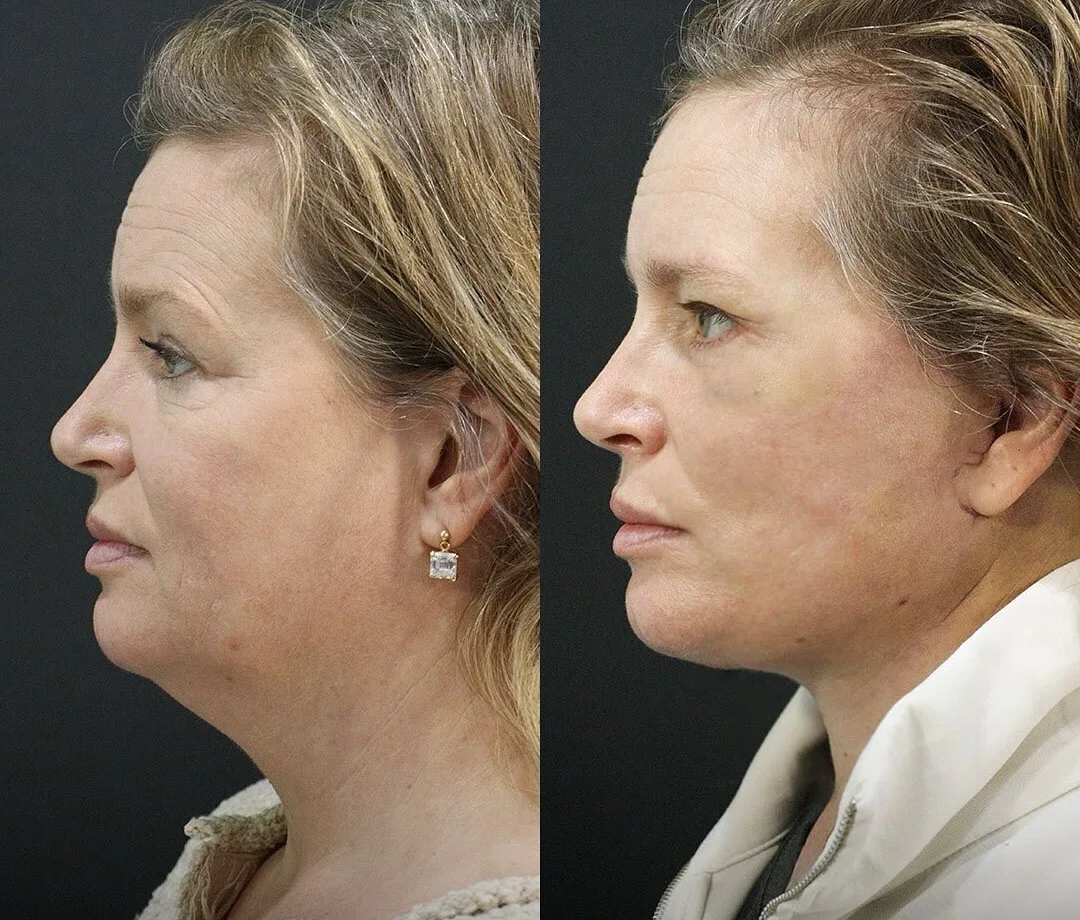
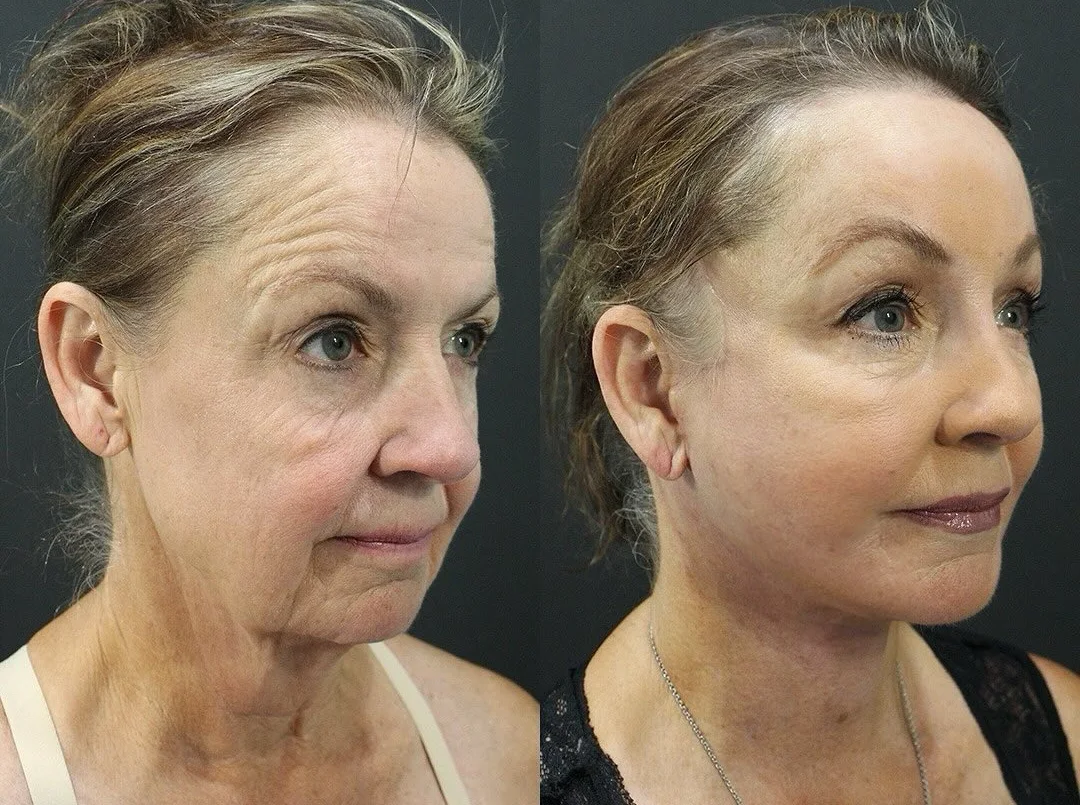
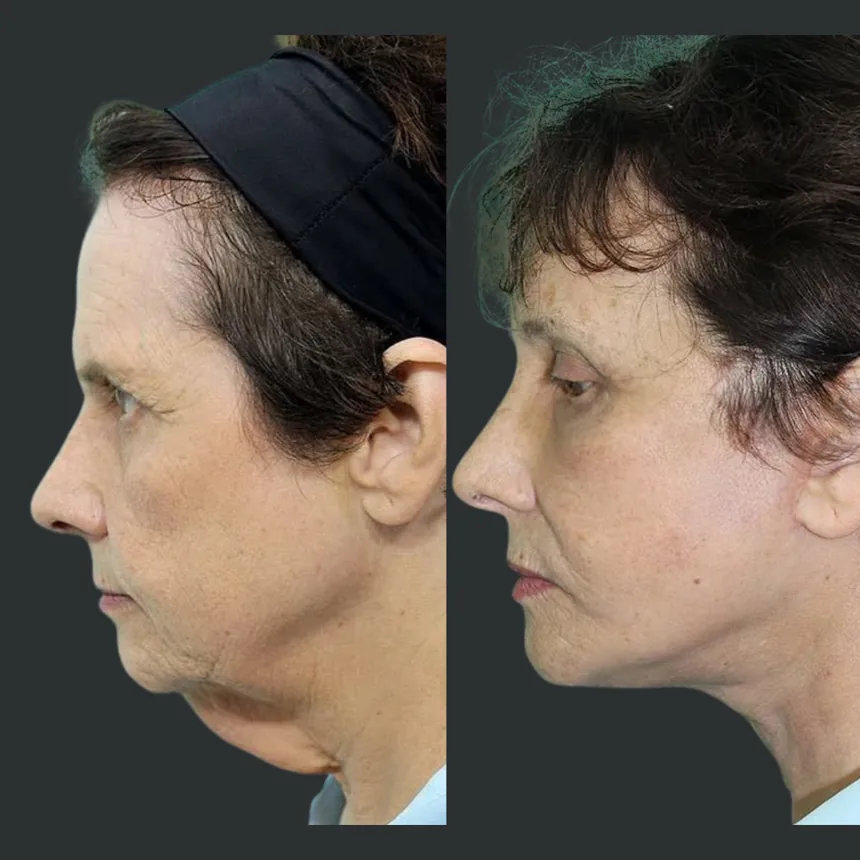
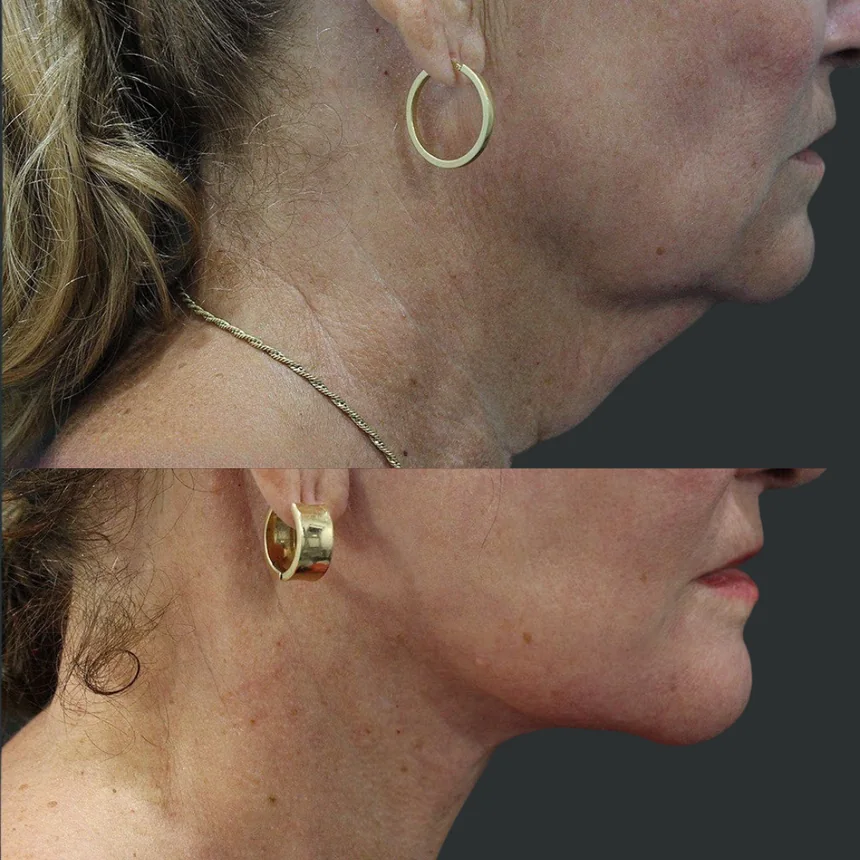
A neck is read in profile, so that is how these cases are shown. Real cases, photographed with patient consent, most with the time since surgery. On longevity, the published data are honest and so am I: at 5.5 years, about three quarters of facelift patients still look younger than before surgery, and the neck is the area most prone to relaxing first, keeping part of its correction rather than all of it. That is not an argument against the operation. It is the argument for repairing structure instead of stretching skin. 10

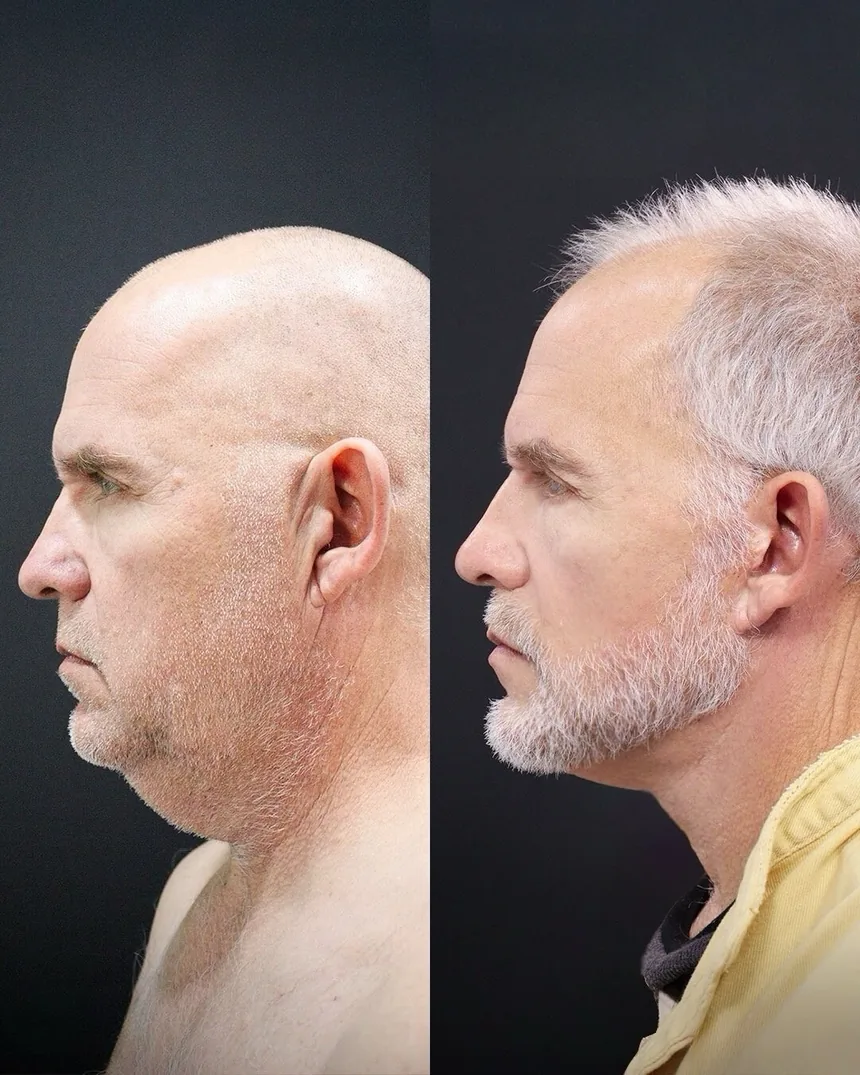
A patient before and after a lower face and neck lift by Dr. Quiroz. Individual results vary. BeforeAfter

Dr. Quiroz, on this case

Lower Face and Neck Lift

In this patient I performed a deep plane lower face and neck lift, nothing else. The deeper structure was released and carried back as one unit, and the skin settled without tension. Shown at ten months, when swelling no longer flatters the result. Individual results vary.

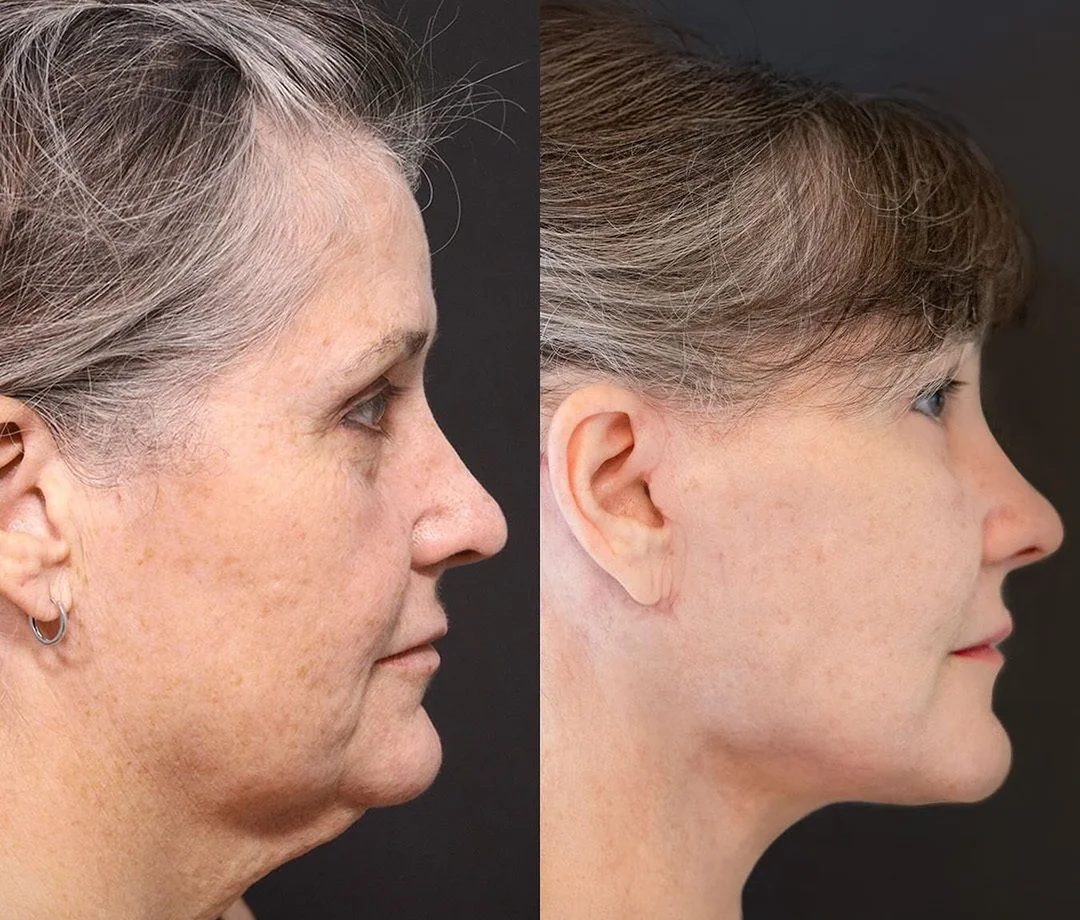
A patient before and after a face and neck lift + lower eyelid surgery by Dr. Quiroz. Individual results vary. BeforeAfter

Dr. Quiroz, on this case

Face and Neck Lift + Lower Eyelid Surgery

In this patient I performed a deep plane face and neck lift with lower eyelid surgery. In profile the change is easiest to read: the fullness under the chin is gone and the angle beneath the jaw is back where her bones always meant it to sit. Shown at three months. Individual results vary.

A patient before and after a face and neck lift + lower eyelid surgery by Dr. Quiroz. Individual results vary. BeforeAfter

Dr. Quiroz, on this case

Face and Neck Lift + Lower Eyelid Surgery

In this patient I performed a deep plane face and neck lift with lower eyelid surgery. Two weeks is early, and I show it on purpose: some swelling remains, and the line from chin to neck has already been rebuilt. What settles from here is refinement, not correction. Individual results vary.

A patient before and after a face, neck and brow lift by Dr. Quiroz. Individual results vary. BeforeAfter

Dr. Quiroz, on this case

Face, Neck and Brow Lift

In this patient I performed a deep plane face and neck lift with a brow lift, planned as one operation so the upper face would keep pace with the new jawline. Shown at one month, with the deeper swelling still settling. Individual results vary.

A patient before and after a face and neck lift by Dr. Quiroz. Individual results vary. BeforeAfter

Dr. Quiroz, on this case

Face and Neck Lift

In this patient I performed a deep plane face and neck lift. The neck sets the line the jaw is read against, which is why I so often treat them as one. Individual results vary.

A patient before and after a face and neck lift + upper eyelid surgery by Dr. Quiroz. Individual results vary. BeforeAfter

Dr. Quiroz, on this case

Face and Neck Lift + Upper Eyelid Surgery

In this patient I performed a deep plane face and neck lift with upper eyelid surgery. At four months the deeper swelling has mostly settled and the jawline is holding its new line. Individual results vary.

See more cases

The alternatives

What about liposuction, Kybella, or an ultrasound tightening?

Each of these is the right answer for somebody, and none of them competes with surgery on surgery's ground. Here is what each does well, and where it stops. 6 13

OptionWhat it does wellWhere it stopsHow long it holds
Botulinum toxin Softens early vertical bands while the muscle is active, not yet lax. Relaxes the cords rather than repairing them. Once the edges have truly separated, it stops being enough. Three to four months
Thread lift A very early change, without an incision. The thread dissolves, and the lift goes with it. Months, temporary
Ultrasound and radiofrequency A modest tightening of skin in early, mild laxity, with no incisions and no downtime. Skin only, and modest even when it works well. A structural problem does not answer to a surface tool. Modest, and commonly repeated
Deoxycholic acid injections A drug, FDA approved in 2015, that dissolves fat under the chin across a series of sessions. Approved for submental fat and nothing else. It cannot touch bands, glands, or the deeper fat. Lasting, for the fat it dissolves
Neck liposuction The right call when the only finding is fat above the muscle, in a younger neck with elastic skin. Cannot tighten skin, repair separated muscle, or reach beneath the platysma. The fat stays gone. The neck keeps aging.
The neck liftPlatysmaplasty, inside a deep plane face and neck lift Repairs the separated muscle, corrects the deep compartment when it needs it, and redrapes the skin last. It is surgery, with a real recovery. 10 to 12 years

The durations are the commonly cited spans used across this site, and the neck asks for one honest caveat: in published long-term data it is the area most prone to giving part of its correction back first. Individual anatomy and aging matter most. 4 10

None of these removes skin, repairs a separated platysma, or reaches the compartment beneath it. That is not their failure, it is their design. When one of them is the right answer for your neck, you will hear it from me in the consultation, because the honest smaller answer today is worth more than the wrong operation tomorrow.

On camera, in one minute each: whether a turkey neck can truly be corrected without surgery, and how to choose between chin liposuction and a neck lift.

What the operation costs
One minute, in English, subtitled in Spanish.
One minute, in Spanish, subtitled in English.

Risks, honestly

Is a neck lift safe? The real risks, including the ones other pages skip.

The one nobody advertises

The over-operated neck. Take out too much fat, and the neck goes from full to skeletal, with the muscles showing through like cords under wet cloth. It is a deformity that is far harder to repair than fullness, and it is why the deeper compartment is never treated blindly and never treated greedily. The goal is the angle your bones allow, not the deepest angle a cannula can dig. 6

There is no operation without risk, and a risks section without numbers is not an honest one. In the neck, the ones worth understanding by name:

A hematoma, in pooled series About 1% The most common early issue, and the reason the first night is spent with nursing on hand.
Motor nerve injury, of any kind Well under 1% In a 2025 meta-analysis of more than 15,000 patients. The version patients notice is a temporary weakness of the lower lip, because the nerve that moves it runs 1 to 2 centimeters below the border of the jaw, exactly where a neck lift works.
The cases where that injury is permanent 1 in 2,000 Roughly, in the same 15,000-patient series. The rest resolve.

Numbness near the ear, usually temporary, is the most common sensory complaint, and fluid collections can follow work on the deeper compartment. 8 9 6

What safety actually rests on here.

  1. 01

    The diagnosis before the technique

    The complications above follow misjudgment more than misfortune. Knowing which necks need the deep compartment opened, and which must not be, is the operation.

  2. 02

    The experience of the surgeon

    37 years, more than 3,000 facelifts, and a practice built on treating the face and the neck as one operation.

  3. 03

    The facility and the follow-up

    A Quad A accredited center, a board-certified anesthesiologist, and a 24/7 line with the warning signs taught before you leave.

Recovery

What is neck lift recovery like, and when can you fly home?

Shorter than most patients fear, with one rule the neck adds: patience with the feeling of tightness, which is the repair holding.

Flying home

From Southern California, flying is not the first question: sutures come out around day 7, and then you cross home by land. For patients who fly home from Tijuana, Mexico, short flights are commonly cleared around 10 days to 2 weeks and long-haul flights later, because pressure changes and long immobile hours work against a fresh repair. Your exact plan is set before surgery is scheduled, not negotiated after.

  1. Day of surgery

    1 hospitalization night with nursing on hand around the clock, then the next morning to the on-site Recovery Boutique, with a soft support garment and, commonly, a small drain on each side.

  2. Days 2 to 3

    Drains commonly come out at 48 to 72 hours. Swelling and the feeling of tightness peak in these first days.

  3. Day 7

    Sutures come out. The neck reads swollen and snug, and the angle has not surfaced yet.

  4. Week 2

    Most patients are socially presentable. Long stretches of looking down are best avoided in these weeks.

  5. Weeks 4 to 6

    Exercise is cleared. The area under the chin commonly stays firm to the touch the longest.

  6. Months 3 to 12

    The line under the jaw refines as the deep swelling resolves. Individual recovery varies.

Recovery figures are typical, not a promise. Individual recovery varies. 5

Cost

How much does a neck lift cost?

You receive a detailed, itemized quote after a photo review and a consultation, so the figure is yours before anything is scheduled.

The number changes at the border. The standard does not.

The United States average, surgeon’s fee alone $7,885 Before anesthesia, the operating room, and everything around them.
What patients report actually paying, all in Near $13k Patient-reported United States averages.
With Dr. Quiroz, the neck lift alone, all in Around $8k The operation, the accredited operating room, anesthesia, the pre-operative labs and EKG, hospital nights before and after surgery, two lymphatic massage sessions, post-operative medication, and round-trip border transportation. Itemized, line by line.
Corrected inside a deep plane face and neck lift, all in $11 to $13k The combined operation, itemized the same way. The examination decides which operation your neck actually needs.

Compare the right numbers: the American average you see quoted is the surgeon’s fee alone, while the figure here is the whole operation, the accredited facility, the board-certified anesthesiologist, and the aftercare. What is lower in Tijuana is the cost of running an accredited operating room, not what happens inside it. 12

See the full cost breakdown Request your itemized quote

Common questions

Questions patients ask me about the neck lift.

How much does a neck lift cost?

In the United States, the ASPS reports an average of $7,885 for the surgeon’s fee alone, before anesthesia, the operating room, and everything around them, and patient-reported all-in figures average near $13,000. With Dr. Quiroz an isolated neck lift commonly comes in around $8,000, all in: the operation, the operating room, anesthesia, the pre-operative labs and EKG, hospital nights before and after surgery, two lymphatic massage sessions, post-operative medication, and round-trip border transportation. Corrected inside a deep plane face and neck lift, the combined figure is commonly between $11,000 and $13,000. The US average facelift is about $20,000 and a US deep plane about $25,700 (RealSelf). Every quote is itemized after a photo review.

Is a neck lift worth it?

On RealSelf, the neck lift carries a 91 percent Worth It rating from patient reviews. Whether it is worth it for you depends on which of the six findings your neck actually has, and on whether surgery is the right tool for them. That is what the examination is for, and sometimes its honest answer is a smaller procedure or none at all.

How long does a neck lift last?

The published long-term data are honest: about three quarters of patients still look younger than before surgery at 5.5 years, and the neck gives back part of its correction sooner than the face does. That is exactly why the repair must be structural rather than skin-deep. Individual results vary, and the neck continues to age.

What is the best age for a neck lift?

There is no fixed age. Most patients are in their forties to sixties, when the platysma has separated and the angle has filled in. A neck that was never defined, from inherited fullness rather than age, can justify surgery earlier, and that is a diagnosis, not a birthday.

Do I need a neck lift or a facelift?

It depends on where the aging lives. Jowls belong to the face, not the neck, so if the jawline has broken up, an isolated neck lift will not fix it and one area will look younger than the one beside it. The lower face and the neck descend together, which is why most of my patients are best served by correcting both in one operation.

Does a neck lift get rid of jowls?

No. Jowls are the face arriving at the jawline, and they are corrected by repositioning the deeper structure of the face, which is facelift territory. A neck lift corrects the neck: the bands, the fullness under the chin, and the angle under the jaw.

How do I get rid of a turkey neck?

A turkey neck is the name patients give a neck whose skin and platysma have both let go. Creams and massage cannot correct it, because the slack lives in the muscle and the deeper structure. The honest fix depends on the findings: early banding can be softened with botulinum toxin, fat-only fullness responds to liposuction in elastic skin, and an established turkey neck is corrected surgically, by repairing the platysma and redraping the skin.

What is a deep neck lift?

A neck lift that works beneath the platysma muscle, where liposuction and skin tightening cannot reach: the deeper compartment of fat, the anterior digastric muscles, and the submandibular glands when they sit low. It exists because some necks are full below the muscle, and no amount of surface work changes that.

Will the bands in my neck come back?

The repair addresses the cause: the separated edges of the platysma are brought back together rather than the surface being stretched over them. The neck keeps aging afterward, and published data show it is the first area to relax with time, so the honest answer is that the correction holds well but not forever. Individual results vary.

Is liposuction or Kybella enough for my neck?

Sometimes. If the only finding is fat above the muscle and your skin still has its elasticity, liposuction alone can be the whole answer, and deoxycholic acid injections can reduce the same fat without surgery. Neither tightens skin, repairs separated muscle, or reaches beneath the platysma. If one of them is the right answer for your neck, you will hear it from me.

Will a neck lift leave visible scars?

Incisions sit behind the ears and, when the front of the neck needs direct work, in the natural crease under the chin. They commonly heal as fine lines that are difficult to notice once settled. Healing varies from person to person.

How painful is neck lift recovery?

Most patients describe tightness and pressure more than pain, strongest in the first days and controlled with medication. The feeling of a snug band under the chin fades over the early weeks.

Is a neck lift in Tijuana safe?

Mexico, like the United States, has both accredited surgeons and unaccredited ones, so safety is a matter of verification, not geography. Dr. Quiroz is board certified by the CMCPER (No. 293, since 1984, recertified through 2030), holds an active California Physician and Surgeon license (A 42463), and operates at VIDA Wellness & Beauty, the first Quad A (AAAASF) accredited facility in Mexico, with a board-certified anesthesiologist present for every case. Every credential is a public record, verifiable in the registries linked from his profile page.

How soon can I fly home after a neck lift?

Most patients from Southern California cross by land, so the first deadline is not a flight but suture removal, around day 7. Short flights are commonly cleared at 10 days to 2 weeks, and long-haul flights later than that. The exact plan depends on your recovery.

Can a neck lift fix my neck after major weight loss?

The neck is often where major weight loss shows first: the fat leaves and the skin and muscle stay behind. The repair is the same structural one, sized to what the examination finds, and the timing matters, after your weight has stabilized. I cover this in detail on the facelift after weight loss page on this site.

Is Dr. Quiroz certified by the American Board of Plastic Surgery?

Dr. Quiroz is board certified in plastic and reconstructive surgery in Mexico (CMCPER No. 293, since 1984) and has held an active California physician and surgeon license since 1986 (Medical Board of California, No. A 42463). American Board of Plastic Surgery certification is a separate United States credential and should not be assumed.

Sources

  1. S1Connell BF. Contouring the neck in rhytidectomy by lipectomy and a muscle sling. Plastic and Reconstructive Surgery. 1978;61(3):376-383.
  2. S2Ellenbogen R, Karlin JV. Visual criteria for success in restoring the youthful neck. Plastic and Reconstructive Surgery. 1980;66(6):826-837.
  3. S3Feldman JJ. Corset platysmaplasty. Plastic and Reconstructive Surgery. 1990;85(3):333-343.
  4. S4Marten T, Elyassnia D. Neck Lift: Defining Anatomic Problems and Choosing Appropriate Treatment Strategies. Clinics in Plastic Surgery. 2018;45(4):455-484.
  5. S5Alexander L, Patel BC. Platysmaplasty Facelift. StatPearls, NCBI Bookshelf.
  6. S6Neck Rejuvenation. StatPearls, NCBI Bookshelf.
  7. S7Anatomy, Head and Neck: Platysma. StatPearls, NCBI Bookshelf.
  8. S8Gandra G, Silva BS, Horta R. Facelift Surgery and Nerve Injury: A Systematic Review and Meta-Analysis of 67 studies, 15,404 patients. Aesthetic Plastic Surgery. 2025. PMC12618380.
  9. S9Gupta V, Winocour J, Shi H, Shack RB, Grotting JC, Higdon KK. Preoperative Risk Factors and Complication Rates in Facelift: Analysis of 11,300 Patients. Aesthetic Surgery Journal. 2016.
  10. S10Jones BM, Lo SJ. How long does a face lift last? Objective and subjective measurements over a 5-year period. Plastic and Reconstructive Surgery. 2012;130(6):1317-1327. PMID 23190814.
  11. S11Mendelson B, Wong CH. Changes in the Facial Skeleton With Aging. Aesthetic Plastic Surgery. 2012;36(4):753-760.
  12. S12American Society of Plastic Surgeons neck lift cost guidance, and RealSelf patient-reported cost data, 2026.
  13. S13Improvements in Submental Contour up to 3 Years After ATX-101 (deoxycholic acid): REFINE follow-up. Aesthetic Surgery Journal. 2021. PMC8520020.
  14. S14Halani SH, Chang V, Lee MR. Revisiting Visual Criteria of the Ideal Neck in the Young Caucasian Female. Aesthetic Surgery Journal. 2025.
  15. S15Sommerville JM, Sperry TP, BeGole EA. Morphology of the submental and neck region. International Journal of Adult Orthodontics and Orthognathic Surgery. 1988;3(2):97-106.

Written and medically reviewed by Dr. Alejandro Quiroz, board certified in plastic and reconstructive surgery, CMCPER No. 293. Last reviewed July 2026.

The surgeon, and the place

Every recommendation here is worth exactly as much as the surgeon behind it.

Dr. Alejandro Quiroz operating at VIDA Wellness & Beauty in Tijuana

The surgeon

Dr. Alejandro Quiroz

Board certified in plastic and reconstructive surgery since 1984 (CMCPER No. 293), an active California physician and surgeon license held since 1986, and fellowship training under Bruce F. Connell. 37 years, more than 3,000 facelifts. The surgeon you consult is the surgeon who operates.

The full record, with registries
VIDA Wellness & Beauty in Zona Rio, Tijuana

The facility

VIDA Wellness & Beauty

The first Quad A (formerly AAAASF) accredited surgical facility in Mexico, licensed by COFEPRIS, 15 minutes from the San Diego border. Dra. Nadiezhda Garcia Bonilla, a board-certified anesthesiologist, is present for every case, and recovery happens in the on-site Recovery Boutique with nursing around the clock.

The facility and anesthesia

You do not describe a neck. You describe an angle.

Patients rarely arrive asking for a platysmaplasty. They arrive tired of scarves, of high collars, of tilting their chin up in photographs. If that is you, the next step is not a booking. It is a conversation, with an honest read of which of the six findings your neck has, and which corrections, if any, it needs.

Request a Consultation