Patients ask me about recovery more than any other part of the operation, and they deserve a straight answer rather than a brochure. Here is what the weeks tend to look like. Yours may differ, because every face and every person heals on their own schedule.
What does the first week look like?
The first few days are quiet and slow on purpose. You spend the first nights in our in-house Recovery Boutique at VIDA Wellness & Beauty, with nursing around the clock, so the early healing happens under a trained eye rather than alone in a hotel room. There is swelling and bruising, and you will not look like yourself yet. That is expected, and it is not the result. Drains usually come out within 48 to 72 hours, and sutures come out on day seven. Most people are surprised by how little pain there is, and by how much of the early work is simply rest. The soreness around the incisions tends to settle within the first few days, which is what I see in nearly every patient.
- Week 1Quiet and supported. The first nights are in the Recovery Boutique with nursing on hand. Drains come out at 48 to 72 hours and sutures near day seven. Most patients are surprised by how little pain there is, and by how much of the early work is simply rest.
- Week 2Back among people. The obvious bruising fades and the swelling drops enough to move through a normal day without drawing attention. Most patients are socially presentable near the end of this week, not finished healing, but presentable.
- Weeks 3 to 4Looking like yourself. Residual tightness and numbness keep easing, and light activity returns once I clear you. The face is recognizably you again, still quietly refining.
- MonthsThe real result settles. Deep swelling leaves over the following months and the final line emerges. The honest photograph is taken here, not at two weeks. Individual results vary.
When can I be seen in public again?
Social recovery is near fourteen days for most patients. By then the obvious bruising has faded and the swelling has come down enough that you can move through a normal day without drawing attention. You are not finished healing, but you are presentable, and you can begin to see the shape of the change. This is roughly the window the major plastic surgery societies describe for returning to normal activity, though every recovery runs on its own clock.
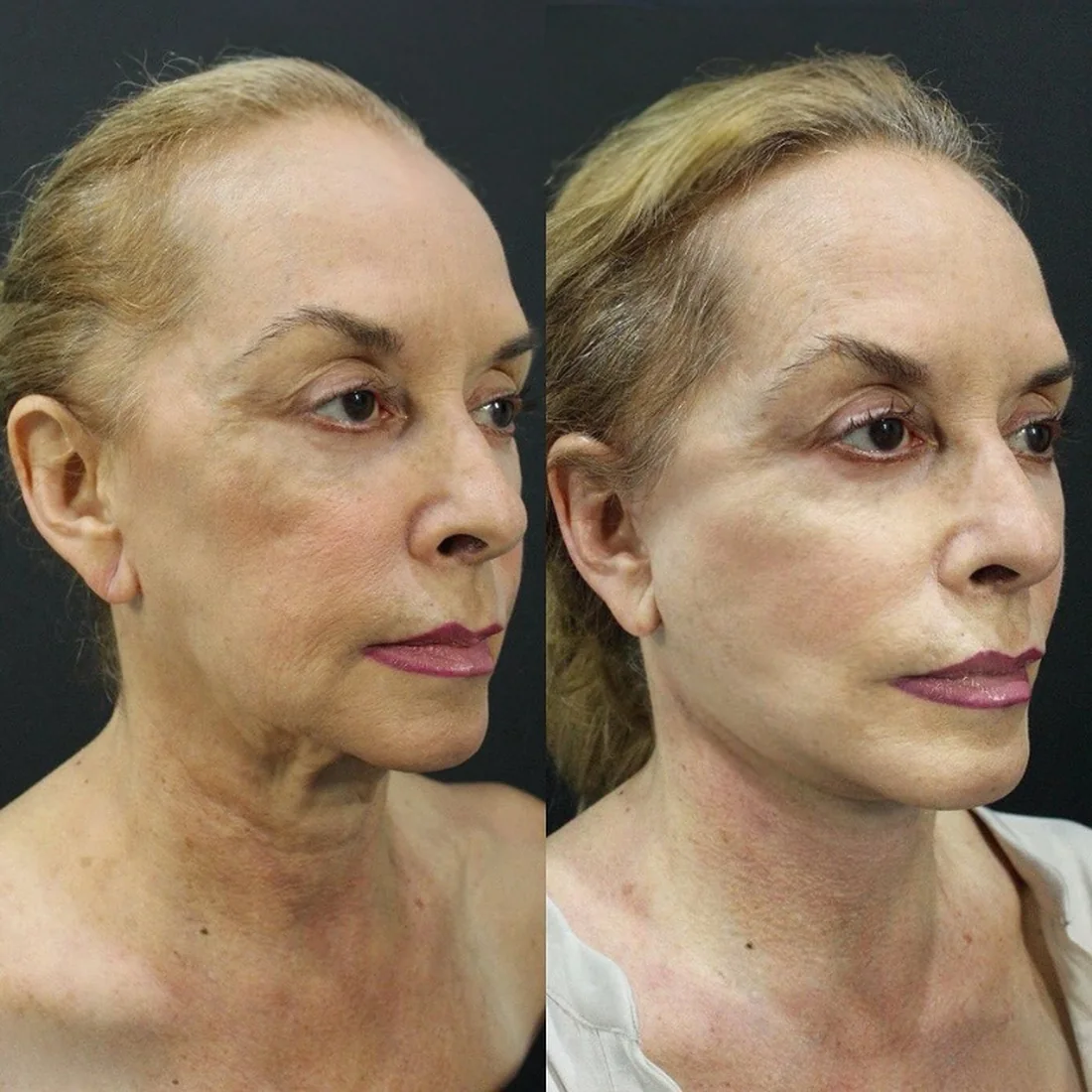
The final result comes months later, not weeks
Swelling continues to settle over the months that follow, and the face keeps refining well past the point most people expect. The final result is not the face at two weeks. It is the face at several months, once the deep tissues have fully quieted, which is why an honest result is documented months out rather than at two weeks. This is the part that rewards patience.
Who carries you through recovery?
You are not left to guess. We coordinate from San Diego, and follow-up continues remotely once you are home, by phone, text, iMessage, and email, through the months that matter most. Recovery is rarely a straight line: some people bruise more, some feel tightness or numbness for longer, and one side can settle a little behind the other. Most of that is ordinary healing. But if something concerns you, sudden one-sided swelling, unusual pain, anything that feels wrong, you have a single point of contact, not a stranger.
Recovery is the price of a result that holds. The deep plane repositions structure rather than tightening skin, the approach Hamra first described in 1990, which is why the healing is worth the wait. Individual recovery and results vary, and we talk through your own timeline before anything is scheduled.