
It is 2 a.m. and you are awake in your own bed in San Diego, or Sacramento, or Phoenix. One side of your face feels tighter than it did yesterday. Or warmer. Or is that your imagination? The surgeon who operated on you is in another country, and the question that almost stopped you from booking in the first place is suddenly not hypothetical: who do I call?
I have spent 37 years answering that call, and I want to walk you through exactly what happens when something feels wrong after you fly home from a facelift abroad. The honest answer is both more reassuring and more demanding than the marketing on either side of the border admits. The short version is this. If your surgeon built a real aftercare system, you call one number, a person who knows your case answers, and within the hour you know whether you are looking at normal healing, a problem we manage remotely, a problem that needs hands on your face, or an emergency that starts with 911. If your surgeon did not build that system, you are alone with a search engine in the dark. That difference, not the stamp in your passport, is what decides how safe your surgery abroad actually was.
The fear is rational. Look at the evidence before you look at me.
I will not pretend this worry is paranoia, because the record says otherwise. The American Society of Plastic Surgeons publishes a briefing paper on cosmetic surgery tourism, and one of its central warnings is that vacation style packages bundle the operation with flights and hotels while including little or no meaningful follow-up care. The CDC Yellow Book, the reference American clinicians use for travel medicine, makes the same point from the public health side: continuity of care is one of the documented weak points of medical tourism, and patients who fly home soon after surgery carry risks their local doctors never agreed to manage.
The plastic surgery literature has receipts too. A 2024 case series in the journal Eplasty followed patients who returned to the United States with complications after cosmetic surgery abroad. They arrived at American hospitals with infections, wound problems, and almost no documentation of what had been done to them, and the teams treating them were forced to reconstruct the original operation from guesswork. The same literature, and the ASPS itself, acknowledge a hard truth that patients discover at the worst possible moment: many American surgeons decline to assume elective care of another surgeon’s overseas work.
So the fear is earned. The industry earned it. Thousands of patients have been sold a package that quietly ends at the airport curb.
My argument is not that the fear is wrong. My argument is that the fear points at the wrong variable. The question is not “Mexico or the United States.” The question is whether the practice you chose treats the weeks after surgery as part of the operation or as your problem. There are practices north of the border where you will never see your surgeon after the operating room, and there are practices south of it where the aftercare is more structured than anything you have experienced in American healthcare. Geography is a poor proxy. Systems are what save you at 2 a.m.
Why an American surgeon may not want to touch your face
Before you judge the American surgeon who declines, understand the position they are in. A woman calls their office: she had a facelift somewhere abroad three weeks ago, something is wrong, and she has no records. The surgeon has no idea what plane was dissected, whether the deep plane was entered, how the facial nerve branches were handled, what suture material is holding her deep tissues, or what was removed. Operating on that face blind is genuinely dangerous, and taking over a complication you did not create carries liability that their insurer never priced. Declining is not cruelty. It is often the only defensible answer to an undocumented mystery.
That is precisely why the paperwork section of this article matters as much as the surgical one. A surgeon who is handed a complete operative note in English is a different conversation entirely. But hold that thought.
There is also a distinction that gets blurred at 2 a.m., and I want to unblur it, because it changes what you should do and who owes you what.
A true emergency is chest pain, shortness of breath, one sided leg swelling, uncontrolled bleeding, or a rapidly expanding, painful swelling of the face. For these you do not email anyone abroad. You call 911. And here the American system protects you completely: under the federal law known as EMTALA, every emergency department in the United States must screen and stabilize you regardless of where your surgery happened, who performed it, or whether anyone will ever pay for it. No emergency room will turn away a hematoma or a blood clot because the operation was in Tijuana.
A complication is a medical problem that is real but not immediately dangerous: a stitch abscess, a small skin edge that is healing poorly, a seroma, an incision that looks angrier than it should. This is what structured aftercare exists for, and it is where the operating surgeon should carry the load.
A disappointment is an aesthetic concern: swelling that resolves unevenly, a scar you are watching too closely, a result at week three that nobody should judge until month three. This is not a 911 problem and not an ER problem. It is a patience and follow-up problem, and I will come back to it, because more of those 2 a.m. fears belong in this category than in either of the others.
So who actually manages a complication after surgery in Mexico?
The surgeon who performed the operation, if the practice was built for that job. In mine, it is, and the system starts before you ever get on a plane home.
Fly-in patients stay in Tijuana for about six days at minimum. That number is not hospitality, and it is not arbitrary. It is designed around when facelift complications actually happen. A hematoma, the most common significant complication after a facelift, declares itself overwhelmingly in the first 24 to 48 hours, which the StatPearls surgical literature on cervicofacial rhytidectomy documents clearly. You spend that window under observation, with my team, two floors away from an operating room, not in an airport lounge. Drains come out at 48 to 72 hours, in my hands, because a drain is information: what comes out of it, and how much, tells me things a video call never could. Sutures come out around day seven, and only after that visit, when I have examined the incisions, the skin flaps, and your overall recovery with my own eyes, do I clear you to travel. I have described the signals we watch for in that first window in my article on facelift warning signs and hematoma, and every fly-in patient reviews them with my team before discharge.
I will tell you about a patient, with details changed. A woman from Orange County, the evening after her deep plane facelift, developed a firm, one sided swelling with pressure that was clearly more than the other side. She was in our recovery suite, so my nurse saw it within minutes, I examined her within the hour, and we returned to the operating room that night, evacuated a small collecting hematoma, and controlled the vessel. Her final result was indistinguishable from an uncomplicated recovery. Individual results vary, and I share her story not as a promise but as an illustration of the only thing that actually protects you from an early complication: proximity to the surgeon during the window when complications happen. She did not need a plan for managing a hematoma from her living room in Orange County, because the six day stay meant she was never in her living room when it mattered.
By the time my patients fly, the statistical center of gravity of surgical complications is behind them, and what remains is the slower stuff: healing questions, swelling anxiety, the rare late seroma or stitch reaction. Those are exactly the problems that remote follow-up handles well, and I will show you how in a moment.
Real continuity versus polite abandonment
Every clinic on either side of the border will tell you they offer aftercare. The word costs nothing. Here is how I would separate a real continuity system from a polite goodbye if I were the one shopping, and I encourage you to hold my own practice to this exact list.
- A written aftercare protocol, with day by day expectations, given to you before you pay anything
- A named person and a direct line that answers around the clock, tested by you with a real question before booking
- Your operative note and anesthesia record, in English, placed in your hands before you leave the country
- Drains and sutures removed by the surgical team that placed them, on a stated schedule, before flight clearance
- Scheduled video follow-ups at set intervals, on the calendar before you fly home
- A surgeon who is licensed or physically reachable near where you live, with a stated plan for who examines you if remote care is not enough
- "Any doctor back home can take your sutures out" offered as the follow-up plan
- Aftercare that turns out to be a group chat with a coordinator who answered sales questions in minutes but goes quiet on medical ones
- Records "available upon request" after you get home, in Spanish, weeks later
- A flight home booked for day two or three after a facelift
- Nobody can tell you the anesthesiologist's name
- "Complications almost never happen here" as an answer to the question of what happens when they do
Notice that nothing on the good side of that list is expensive or exotic. It is administrative discipline. Which tells you something important: when a clinic skips it, they are not cutting a cost they could not afford. They are telling you where their interest in you ends.
The six day stay is not a vacation. It is the complication plan.
Some patients push back on the length of the stay, and I understand the impulse. Work, children, the sense that if you feel fine on day three you should be allowed to leave. So let me explain what each part of the week is doing, because when patients understand the reasoning, almost nobody argues.
The first night, you are observed. The first 48 hours own most of the bleeding risk, so you are near us. Days two and three, drains come out and I see how the tissues are settling. Days four and five are when an early infection would typically begin to declare itself, and when I want eyes on any area of skin whose circulation I am not perfectly happy with. Day six or seven, sutures come out, I examine everything, we take photographs, and we talk honestly about what I see. Only then does the conversation about flying happen.
And flying deserves its own paragraph, because this is the part of surgery abroad that people underestimate in both directions. Surgery itself is a risk factor for blood clots. Travel is a second, independent one. A meta-analysis in the Annals of Internal Medicine pooled the research and found that travel roughly doubles a person’s risk of venous thromboembolism, with the risk climbing further for every additional two hours in transit. Stack recent surgery on top of a long flight and you have stacked two risk windows on top of each other. The period I respect most runs from roughly day five through day fourteen after surgery, with some elevation persisting for weeks. That is why my flight clearance is individualized rather than automatic: I am weighing your mobility, your hydration, your personal and family clotting history, the length of the flight, and what I saw at the day seven visit. Most patients are cleared on schedule. Some I ask to stay another day or two, and once or twice a year I tell someone with a long haul itinerary to break the trip into segments. Individual results vary, and clearance to fly is a medical decision, not a hotel checkout time.
For Californians the geometry is kinder than the phrase “surgery abroad” suggests. Many of my patients drive home to San Diego in under an hour, no airplane, no cabin pressure, a car that can stop whenever they want. The whole rhythm of the week, from arrival through the day seven visit, is laid out in your facelift itinerary in Tijuana, and reading it is the fastest way to understand that the stay is a medical structure, not an itinerary of leisure.
One more thing belongs in this section because patients rarely think to ask about it. Everything I have described assumes the operation itself happened in a facility equipped for the rare bad moment. My patients are asleep under general anesthesia with Dra. Nadiezhda Garcia Bonilla, a board certified anesthesiologist who is present for every procedure I perform, in a facility accredited by Quad A, the American association that inspects ambulatory surgical facilities. Aftercare cannot rescue an operation done in an unsafe room. The escalation path starts in the operating room, not at the airport.
What a video visit can and cannot see
Telemedicine after a facelift is genuinely useful, and I refuse to oversell it, because the moment a surgeon pretends a camera replaces hands, you should stop trusting him.
Here is what remote follow-up does well. Incision surveillance: healing skin photographs beautifully, and a standardized set of photos, same angles, same lighting, taken by your companion, lets me compare today against three days ago with real precision. Trend watching: swelling that is slowly improving looks different from swelling that is slowly worsening, and trends are exactly what serial photographs capture. Medication and activity questions. Reassurance, which I do not say dismissively, because in the weeks after a facelift, an experienced voice telling you that what you feel is normal is a clinical service, not a courtesy. The tight band sensation around the neck, the numbness in front of the ears, the lumpy firmness under the skin at week three: I have seen each of these thousands of times, and most of what patients fear at 2 a.m. dissolves under a good explanation.
Here is what remote follow-up does badly. I cannot palpate through a screen. A fluid collection, the difference between ordinary induration and something that needs draining, the temperature of the skin over an area of redness: these are findings my fingers know and my eyes alone do not. I cannot drain, culture, or debride anything remotely. And video flattens subtlety; a color change that matters can hide inside a phone camera’s automatic white balance.
So my rule is simple, and I say it to every patient before they leave: the video visit decides whether you need an in-person visit, and when it cannot decide, the answer is automatically yes. For a Southern California patient, “yes” is logistically small. You can drive back to me, and patients do, for anything from a suture of concern to simple peace of mind. And I am not a stranger to the American side of the border: I have held California medical license A 42463 since 1986, which means I can lawfully see and evaluate my patients on the San Diego side and speak to their local physicians as a colleague licensed in the same state, not as a foreign voice on a bad phone line. I have written in detail about what a California licensed surgeon’s follow-up actually means in practice, because it is the single structural fact that most changes the “what if something goes wrong at home” equation, and almost no one thinks to ask about it.
Leave Mexico with your chart in your hand
Remember the patients in that Eplasty case series, reconstructed from guesswork in American emergency rooms? Nearly everything that went badly in the aftermath, as opposed to the surgery, traces to one missing object: the record.
My patients leave Tijuana carrying a folder, physical and digital, and I consider it as much a part of the operation as the sutures. Inside it: the operative note in English, describing the approach, the plane of dissection, what was done to the SMAS and platysma, where drains were placed, and the suture materials used. The anesthesia record, signed by Dra. Garcia Bonilla, with the agents used and your response to them. A medication list in generic names, so an American pharmacist recognizes every item. Your pre and postoperative photographs. And a contact sheet: the direct line, my San Diego coordination contact, and instructions written for a third party, so that if you ever hand the folder to an ER physician at 3 a.m., it speaks for you when you are too frightened to.
Why does this change everything? Put yourself behind the eyes of that American doctor from earlier, the one who declines the undocumented mystery. Now hand her a complete operative note. She knows the plane, the materials, the drains, the anesthesia course. She can call a surgeon, licensed in her own state, who answers and speaks to her in English as a colleague. She is no longer being asked to adopt an orphaned complication. She is being asked to join a documented case with the operating surgeon still attached. Most physicians will help you on those terms, because the thing they were protecting themselves from, the unknown, is gone.
If you take one practical instruction from this entire article, take this one, and apply it to any surgeon in any country: before you book, ask in writing whether your complete records, in English, will be handed to you before you leave. Not “available upon request.” In your hand. A practice that hesitates on that question is answering a much bigger one.
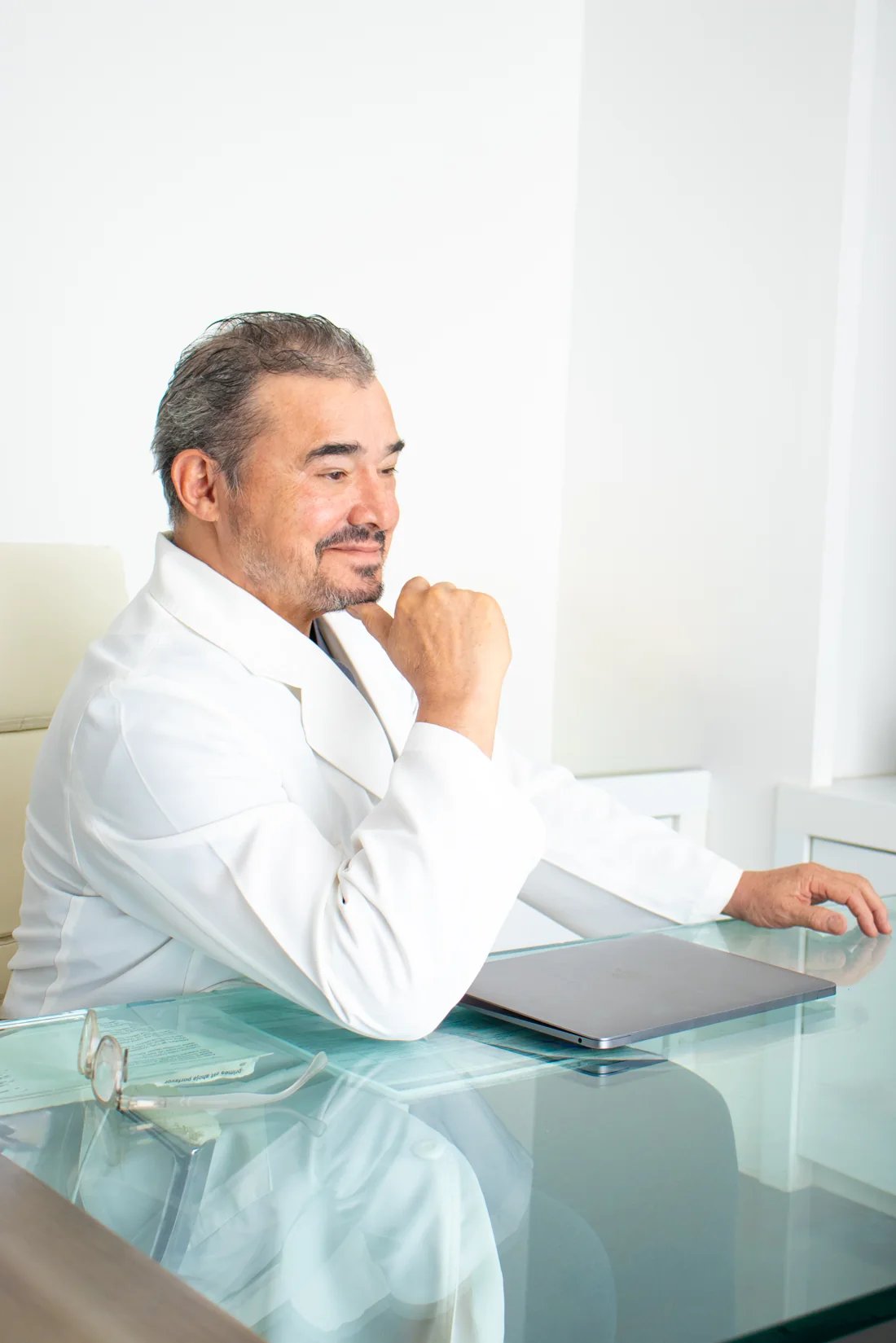
The escalation path, step by step
Now let me put you back in that bed at 2 a.m. and replace the fear with a procedure. This is the exact sequence I teach my patients before they leave, in order of urgency.
First, rule out the emergencies. Chest pain, sudden shortness of breath, swelling or pain in one calf, bleeding you cannot control with pressure, or a rapidly expanding painful swelling under the skin of the face or neck: call 911 before you call anyone in Mexico. Grab the folder. The ER must evaluate and stabilize you no matter where your surgery was done, and with your records in their hands they will do it faster and better. My team gets the second call, and I will be on the phone with the treating physician as soon as they will take it.
Second, if it is urgent but not an ambulance problem, call the line. A human answers around the clock. You will be asked for photographs within minutes, in the same standardized format you learned during your stay, and depending on what we see, we move to video. My commitment is that an urgent call gets a decision within the hour: this is normal, or this needs a prescription, or this needs eyes and hands, and here is where and when.
Third, if it is concerning but stable, the itchy incision, the new firmness, the asymmetry you noticed in the bathroom mirror, send photographs through the same channel and you will hear back the same day. No concern is too small to send. I would rather review a hundred photographs of normal healing than have one patient sit on a real problem out of politeness.
And when remote is not enough, the path forks by geography, and we choose together. Southern California patients usually come back across the border to me, often the same week; it is a drive, not an expedition. When returning is truly impractical, I coordinate local care: I speak surgeon to physician with your ER, your primary doctor, or a local plastic surgeon, in English, with your operative note already in their inbox, under a California license they can verify in thirty seconds. What I will not do is what the industry’s worst actors do, which is fall silent. Distance is real, and I cannot pretend my hands can reach Sacramento. What I can make certain is that no decision about your face gets made without your surgeon in the room, even when the room is a phone call.
When you should not have surgery with me
A chapter of honesty, because this article would be advertising without it.
The fly-in model is wrong for some patients, and when I recognize one in consultation, I say so. If you cannot stay the six days, do not compress the plan; choose a surgeon near home instead. If you have no companion, no spouse, friend, or family member who can be with you for the first days and take the photographs and drive the car, the model gets fragile in ways I do not accept. If your medical situation needs a hospital system wrapped around it, if you are on anticoagulation that requires bridging decisions with your cardiologist, if your history includes clotting disorders or prior venous thromboembolism, the calculus of travel changes, and sometimes the honest answer is that the safest operating room for you is one inside the system that already manages you. And some patients simply know themselves: if only a weekly, in-person visit with the operating surgeon will quiet your mind, and you live eight hours from the border, then remote follow-up, however well built, will feel like a rope bridge to you. Choose the surgeon whose follow-up model matches your temperament, not the one with the best photographs.
There is one more disqualifier, and it is attitudinal. If the appeal of Mexico is purely that it costs less, and you find yourself mentally trimming the stay, skipping the follow-ups, and treating the aftercare as optional decoration on a discount, we will not work together, because you are planning to discard the exact machinery this entire article describes. The economics can be legitimate: American surgical pricing is heavy, and my patients pay a much smaller share of what the same operation and facility standards cost north of the border. But the saving is a consequence of geography and cost structure, not of corners cut, and a patient shopping for missing corners will find a clinic happy to sell them. It will not be mine.
A complication is not the same as a disappointment
I promised to come back to the third category, because it is quietly the most common one, and mislabeling it causes real suffering.
Most 2 a.m. messages I receive from patients at home are not hematomas or infections. They are healing. The numbness in front of the ear that makes the face feel like a stranger’s. The tight band under the chin at week two. The swelling that is a little more stubborn on the left, because swelling is almost always a little more stubborn on one side. The moment around week three when the early, swollen prettiness deflates and the tissues look briefly worse before they look better. None of these are complications. All of them feel like complications at 2 a.m., and this is exactly why follow-up cannot be a pamphlet: a photograph reviewed by the surgeon who was inside those tissues, and a calm explanation of what week three does, is the treatment. Individual results vary, and so does the pace of settling, which is measured honestly in months, not weeks.
And if, months from now, when everything has settled, there is an aesthetic detail I can improve? Then you are not chasing a stranger across a border. You are returning to your surgeon, with your records, your photographs, and a relationship that never ended at the airport, and we decide together whether a refinement is worth it. I revise my own work when it deserves revising. That sentence should be unremarkable. In the world this article describes, it is the whole difference.
Ask every surgeon the 2 a.m. question
Here is the ending I want you to carry out of this article, and it cuts in every direction, including against the comfortable assumption that staying home solves everything.
Whatever surgeon you are considering, in Beverly Hills or Guadalajara or Tijuana, ask the same question: when something frightens me at 2 a.m. three weeks after surgery, who answers, what do they know about me, and what happens in the next hour? Ask it before you pay. Plenty of American practices route that call to an answering service, and the doctor you reach on a weekend is a covering physician who has never seen your face. Plenty of clinics abroad have no answer at all. And some practices, on both sides of the border, will hand you a folder, a direct line, a calendar of follow-ups, and a surgeon who picks up. The country does not tell you which one you are talking to. The answer to that question does.
If you want to ask me that question directly, along with the harder ones this article raised, bring all of it to a consultation. Bring your medical history, your medications, your flight anxieties, and your skepticism. After 37 years and more than 3,000 facelifts, the questions that begin with “but what if” are the ones I most enjoy answering, because a patient who asks them is a patient who will do their recovery seriously, and those are the patients who do best.