
If you have lost a great deal of weight on a GLP-1 medication and your face has paid for it, this article is the surgical half of the answer. The other half, why the face deflates in the first place and how I read it on a person, lives in the Ozempic jawline. The broader ground of operating after any major weight loss lives on facelift after weight loss. Here I want to go narrow and deep on the three questions I am asked most in my consultation room by exactly this patient: how long you should wait, why filler so often disappoints a truly deflated face, and where fat grafting and a deep plane lift belong. Over 37 years and more than 3,000 facelifts I have watched this patient arrive in growing numbers, delighted with the scale and startled by the mirror, and with them, more than with almost anyone else, the timing of what I do is most of the outcome.
How long should I wait after GLP-1 weight loss before a facelift?
Wait until your weight has stabilized and held, commonly at least six months at a steady weight, because I plan your operation on the face you have that day, and further loss can quietly undo it. A systematic review of the plastic surgery literature on so-called Ozempic face reached the same threshold, recommending patients reach at least six months of stable weight before surgery, and that matches what I have always done. The reason is not caution for its own sake. A face that is still shrinking is a moving target. If I lift and refill a face this month and you lose another fifteen pounds by the fall, the volume I restored no longer matches the frame, and the skin I redraped has more slack than it did on the table.
So I do not operate to a calendar. I operate to a settled face. The number six is a floor, not a countdown, and some patients need longer because their loss is still drifting downward or their dose is still climbing. The two non-negotiable rules I hold for any post-weight-loss patient, that the loss is finished and that your body has the reserves to heal, are the same however the weight came off, and I have laid them out in full on the facelift after weight loss page. What is different, and genuinely new, about the GLP-1 patient is what “stabilized” even means while you are still on the drug.
Stabilized is not a date on the calendar
Stabilized is not a number of months. It is a state of your tissue, and on a GLP-1 medication that state depends on where you are in the arc of the drug. If you are still titrating upward, still chasing a goal weight, or still watching the scale fall week to week, you are not stabilized no matter how long it has been, and I will tell you so plainly. If you have reached the dose and the weight you and your physician intend to hold, and the scale has gone quiet for months, now we can talk about a face I can trust to stay put.
There are three questions I ask every one of these patients before I will schedule anything. Are you still losing, honestly, or has it truly plateaued. Do you and your prescribing doctor intend to keep going, or is this the weight you plan to maintain. And has your dose been steady, because a dose that is still moving usually means a body that is still changing. If the answers point to a face still in motion, waiting a season is not lost time. It is the difference between operating once, well, and operating on a shape that erases itself.
I say this without any judgment of the medication. Losing the weight was good for your health, and I am not asking you to reverse it or to come off the drug to qualify. I am asking for the same thing I ask of every patient: a face that has arrived at the shape it will keep, so that the work I do to it lasts.
There is a second clock on GLP-1 timing, and the anesthesiologist keeps it
The first clock is your weight. The second one has nothing to do with your face at all, and patients rarely see it coming. GLP-1 medications work in part by slowing how quickly the stomach empties, which is wonderful for appetite and a real consideration under anesthesia. A stomach that empties slowly can still hold contents after the usual fasting window, and that raises the risk of aspiration when you are asleep. The anesthesiology literature has taken this seriously; a 2024 review in the Journal of Diabetes Science and Technology weighed exactly when and whether to pause these drugs before a procedure, and national anesthesiology guidance now leans toward holding them beforehand, often the day of a daily dose or about a week out for the weekly ones.
I do not want you to manage this alone from a blog. My anesthesiologist, Dra. Nadiezhda Garcia Bonilla, who is board certified and present for every one of my operations, reviews your medication list and tells you exactly when to pause the GLP-1 before surgery, individualized to your dose and your history. It is one more reason the plan for this patient is built carefully and in advance rather than improvised. You can read how the whole anesthesia and safety side is run on facility and anesthesia.
- WeightYour loss finishes and holds. Commonly at least six months steady before I will plan surgery on that face.
- PhotosI study standardized photographs. I read how far the structure has descended and where the true volume was lost.
- ~1 wkWe pause the GLP-1. My anesthesiologist directs when to hold your medication before anesthesia.
- One dayI lift, then I graft. The structure is repositioned and fat is restored in a single operation.
- MonthsSwelling and grafted volume settle. The real result arrives over months. Individual recovery varies.
Why is filler often not enough after major deflation?
Filler restores volume, and after major deflation volume is only half of what has gone wrong, so a syringe fixes half the problem and can worsen the other half. When you lost the weight, the discrete pads of deep and superficial fat that give a cheek its fullness shrank, and skin that was draped over a fuller structure was suddenly draped over less. Those fat compartments were mapped carefully by Rohrich and Pessa in their anatomical work on the fat of the face, and they do not deflate evenly, which is why a post-GLP-1 face can look hollow in the temple and midface while going heavy along the jaw at the same time.
Early and modestly, filler can genuinely help such a face, and I will say so when it is true. But there is a threshold, and past it the logic breaks. When a large share of the deep fat is gone and the skin has gone slack over the shrunken frame, the problem is no longer an empty compartment waiting to be topped up. Inject volume into that face and you push the loose tissue outward, widen the face, and add weight the slackened ligaments and skin now have to carry. This is the trap I see most: round after round of filler, each helping a little at first, ending in a face that is at once overfilled and still sagging. The deeper diagnosis of why this happens, and why the jawline in particular goes soft, I have kept on the Ozempic jawline so I do not repeat it here.
A deflated face is usually two problems wearing one expression
Look at a post-weight-loss face honestly and you are almost never looking at one thing. You are looking at two, layered on top of each other, which is what fools people, including some surgeons. The first problem is volume: the face has emptied, so the cheek is flatter and the temple and eye hollows have deepened. The second problem is drape: the supporting structure has slid down and the skin no longer fits, so the jawline blurs and the neck loosens. Volume loss and descent are different failures, and they do not answer to the same tool.
Filler speaks only to the first. It can put back some of what emptied. It cannot lift what fell, because it is a volumizer and not a scaffold, and adding more of it to a face that has descended only loads the sag. That single distinction, refill versus reposition, is the whole reason the right answer for a truly deflated, lax face is usually not more of anything in a needle.
What fat grafting actually is, and what it is not
Fat grafting is the most misunderstood part of this plan, so let me be plain about it. Fat grafting, or autologous fat transfer, means I use your own fat rather than a manufactured product. Autologous simply means it comes from you. I harvest fat gently by liposuction from a donor site such as the abdomen, flank, or inner thigh, refine it, and place it back into the face in very small amounts, layered through the tissue so each parcel sits close to a blood supply that can keep it alive. The technique most of the field builds on was described by Coleman, whose work on structural fat grafting established that fat handled carefully behaves less like a temporary filler and more like living tissue that integrates and persists.
That is the honest promise and the honest limit in one. Because the graft is living tissue, not all of it survives. A portion resorbs over the first months as the transplanted fat settles, and what remains after that tends to stay, which is why I judge the true result at several months and not at several weeks. It is also why I do not overcorrect wildly on the table chasing a number; I place what the face can nourish. Fat that takes is yours, permanently in the way your own tissue is permanent, and it can improve the quality of the thin, deflated skin above it in a way a syringe of filler does not. Individual results vary, and retention is one of the places they vary most.
What if GLP-1 loss left me with very little fat to give?
A woman sat across from me not long ago, thrilled to have lost a great deal of weight, and asked the question this whole section exists to answer: if I have no fat anywhere, what do you graft. It is a fair and specific worry for the post-GLP-1 patient, because the same medication that deflated the face often thinned the donor sites too. There is usually more left than patients fear, tucked at the flank, the abdomen, the inner thigh or knee, and a face needs remarkably little fat compared with a body. But sometimes the honest answer is that reserves are genuinely thin, and I will not pretend otherwise.
When donor fat is limited, I do three things. I harvest conservatively and refine gently, because when there is little to work with, wasting none of it matters more than ever. I spend it where it counts, the deep midface and the specific hollows that read as gaunt, rather than trying to reinflate the entire face. And I lean on the lift itself, because repositioning descended fat back up onto the cheekbone restores fullness there without borrowing a single cell from elsewhere, which often means the face needs far less grafting than it first appeared. Occasionally I will stage a second, smaller session once you have healed, or pair a modest amount of graft with a conservative filler in a spot that needs it. What I will not do is promise a fullness your body cannot supply. This is one of the places where I tell patients honestly what we still do not know well, which is how grafted fat behaves over the long run in a very lean patient whose weight is being held by ongoing medication, and I would rather aim carefully and revisit than overreach once.
I lift first and fill second, and the order is not arbitrary
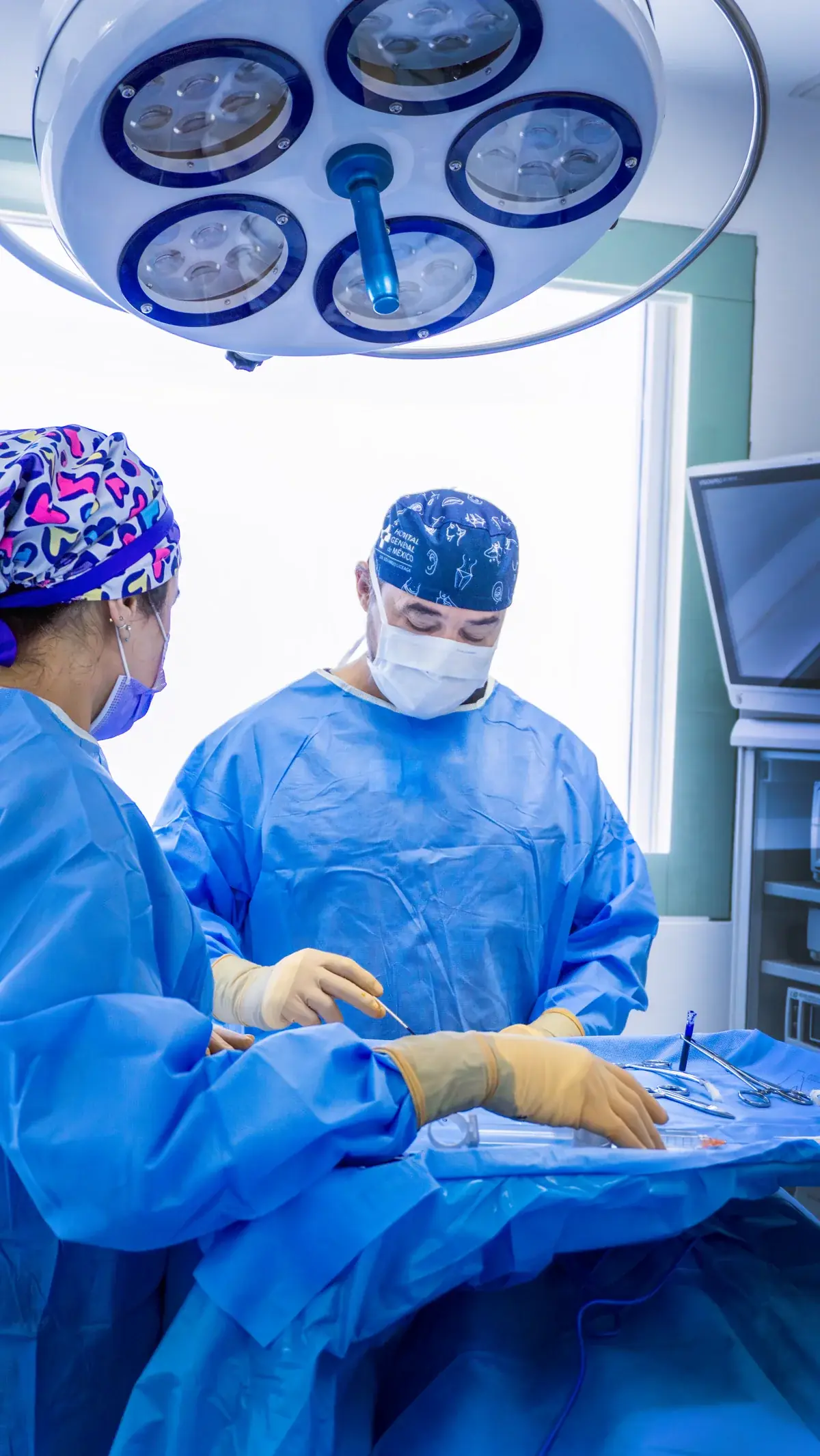
On a deflated, lax face I reposition the structure before I add any volume, always, because filling a face that has not yet been lifted just loads the sag, while lifting first shows me the true hollows that actually need fat. The lift I use for this is the deep plane, the technique Hamra described in 1990. It works beneath the SMAS, the sheet of muscle and fibrous tissue that connects the muscles of expression to the skin, releasing the retaining ligaments that tether it and moving the deep soft tissue back up onto the bone as one connected unit, so the skin redrapes over restored structure and is never itself under tension. If the neck and jowls have gone with it, that same layer continues into the platysma, the neck muscle, which is why this often becomes a face and neck lift rather than a cheek alone. If the vocabulary is new, I have written a plain-language guide to the SMAS.
Here is why sequence matters so much. Once I have lifted, the face in front of me is a different face: the descended fat is back where it belongs, the jawline has returned, and the remaining hollows are the true deficit rather than an illusion created by sagging. Now, and only now, do I graft, filling those genuine hollows on a foundation that has been lifted and freshly supplied with blood, which is a better bed for fat to survive in than slack, poorly draped tissue. The systematic review on GLP-1 facial aging reached the same conclusion I have worked by for years, describing facial fat grafting as a useful complement to a lift rather than a rival to it. One tool answers the drape. The other answers the volume. Used in that order, they answer the whole face.
Why the combination ages differently than a lifetime of syringes
Consider the two roads a deflated face can take. On one, you refill it every several months, indefinitely, spending steadily and slowly overloading a face that keeps descending underneath the volume. On the other, you reposition the structure once and restore the lost volume with your own living tissue. Those roads do not age the same way. In the published data, a deep plane lift commonly holds its correction in the range of about ten to twelve years, longer than a surface or SMAS lift, which is often described in the range of about five to ten, and the fat that takes stays in the way your own tissue stays. The syringe road has no such horizon; it is a maintenance subscription that, past real deflation, tends to compound the very heaviness you were trying to fix.
I am not against fillers, and there is a real place for them earlier in the story or as a small finishing touch. What I am against is asking a volumizer to do a scaffold’s job on a face that has clearly fallen, because it costs more over time and moves you further from the result you wanted. If your deeper question is about whether you are simply too young for surgery given how fast the medication changed your face, that is a question of tissue and not birthday, and I have answered it at length in the best age for a facelift. What the combined operation genuinely looks like, and how it settles, you can see on facelift results. Individual results vary, in every case.
When I tell a post-GLP-1 patient to wait, and who this is not for
Not everyone who wants this is ready for it, and part of my job is to say so kindly and early. I will ask you to wait if your weight is still moving, if your dose is still climbing, or if you intend to keep losing, because operating into a shrinking face wastes the operation. This is also not the right path if what you are picturing is the instant, plumped look a syringe gives, since grafted fat is subtler, takes partially, and reveals itself over months rather than days. And the ordinary disqualifiers still apply with full force: uncontrolled blood pressure or blood sugar, and above all nicotine in any form, which starves healing tissue of blood exactly when a lift and a graft both need it most.
An honest word on limits and risk, without inventing numbers I do not have. Fat graft retention varies from person to person, and a small touch-up is sometimes part of getting the volume right. Overgrafting can look as unnatural as overfilling, which is why I place conservatively. And every facelift carries the real, general risks of surgery, which I go through with you individually rather than in an article. None of this is meant to frighten you off. It is meant to make sure that when I do operate, it is on a settled face, in a body ready to heal, toward a goal your tissue can actually reach.
- Your weight has held steady for at least six months and you intend to maintain it
- Your GLP-1 dose is stable and you are not planning further loss
- You want to look like a rested, restored version of yourself, not plumped overnight
- You are still losing, still titrating up, or unsure whether you will keep going
- Nicotine in any form, or blood pressure or blood sugar not yet under control
Can I plan this from California, and pause my medication before I travel?
Yes, and most of the planning happens before you ever cross the border. Our team coordinates your care from San Diego, and the United States side of the logistics runs through San Ysidro, so the remote consultation, your standardized photographs, and your surgical plan are largely settled while you are still at home. That is also when I tell you precisely when to pause your GLP-1 medication ahead of anesthesia, so you arrive ready rather than sorting it out at the last minute. Surgery in the United States is expensive and patients pay a lower share here, but I never let cost set the timing; the settled face sets the timing.
For the trip itself, plan on a minimum local stay of about six days. Drains usually come out at 48 to 72 hours, sutures around day seven, and most patients are socially presentable near two weeks. Adding fat grafting to the lift does little to the recovery you would have had from the lift alone; the donor site is minor and heals quietly. Once you are home, follow-up continues from California by phone, text, iMessage, and email, and I see you back when your plan calls for it. The full arc of healing, week by week, lives on facelift recovery, and the practical logistics of a consultation are laid out for you there. Individual recovery varies.
How we begin
If you have read this far, you already know the shape of what I will and will not do. I will not operate on a face that is still shrinking. I will not ask a syringe to lift what has fallen. I will not promise you volume your own body cannot supply, and I will not rush the timing that makes this last. What I will do is study your photographs honestly, tell you whether your weight has truly settled, and, when it has, reposition your structure and restore your lost volume in one carefully sequenced operation, on a face I can trust to stay the shape I gave it.
My work is performed at VIDA Wellness & Beauty, the first Quad A accredited facility in Mexico and licensed by COFEPRIS, with Dra. Nadiezhda Garcia Bonilla present for every procedure. When your weight has held and you want a genuine read on your own face after GLP-1 loss, arrange a consultation, or reach us directly by phone, text, iMessage, or email at +1 (619) 738-2144. Bring your real face and your honest timeline. I will bring what 37 years and more than 3,000 facelifts have taught me about reading a face that has just changed size, and between the two we will land on whether the moment has actually arrived. Individual results vary.