
You do not need to trust a website, a testimonial, or a before and after photo to know whether a plastic surgeon in Mexico is real. Four public records will tell you, free of charge, in about ten minutes: the surgeon’s cedula profesional in the federal registry, the surgeon’s CMCPER board certification, the facility’s COFEPRIS license, and the facility’s accreditation. This article defines each credential in plain terms, shows where to look each one up, and then runs every check on me, so you know what a clean record looks like before you compare anyone else’s.
What are the four free checks anyone can run before booking?
Before booking plastic surgery in Mexico, verify four public records: the surgeon’s cedula profesional, the surgeon’s CMCPER board certification, the facility’s COFEPRIS license, and the facility’s accreditation. Two of the four belong to the surgeon and two belong to the building, and the split matters, because a genuinely certified surgeon can still operate in a facility that answers to nobody. If the surgeon also claims a license in the United States, that is a fifth check, run on the public lookup of the state medical board that issued it.
None of these checks requires a password, a payment, or a phone call. Each registry is maintained by the institution that grants the credential, which is why a ten minute search is worth more than a hundred reviews. This is the same discipline the American Society of Plastic Surgeons and the International Society of Aesthetic Plastic Surgery urge on anyone considering surgery abroad: confirm the surgeon’s board certification and the facility’s accreditation before you travel. Safety in Mexico is a question of verification, not geography, and the broader argument, including how surgeries go wrong when nobody checks, lives on whether a facelift in Mexico is safe. This article has a narrower job: define the credentials, then teach the lookup.
What is a cedula profesional and how do I look one up?
A cedula profesional is the federal license Mexico issues for the practice of a profession, granted through the SEP, the Secretaria de Educacion Publica, and recorded in the public Registro Nacional de Profesionistas. For a plastic surgeon you are looking for two of them. The first is the general medical cedula, which licenses someone as a physician. The second is a separate specialty cedula in Cirugia Plastica y Reconstructiva, plastic and reconstructive surgery, and this is the one that matters most.
The trap hides in the words. Mexico’s general medical degree is titled Medico Cirujano, which translates literally as physician and surgeon, so a general practitioner’s cedula can look surgical to an American reader. It is not. A doctor holding only that first cedula is licensed to practice medicine, not credentialed in plastic surgery. Search the registry at cedulaprofesional.sep.gob.mx, read the profession printed beside each number, and treat a missing specialty cedula as your answer.
What is the CMCPER and does Mexican board certification mean anything?
The CMCPER, the Consejo Mexicano de Cirugia Plastica, Estetica y Reconstructiva, is the certifying board for plastic surgeons in Mexico. It is a genuine peer board with a public record, not a paper title, and its certification is not a lifetime laurel: a certificate is renewed rather than granted for life, so a current certificate reflects current standing rather than a distant exam, which is why a live expiry, like mine through 2030, says more than the original year.
The board that grants it is the CMCPER, the Consejo Mexicano de Cirugia Plastica, Estetica y Reconstructiva. Ask the practice for the certificate number, then confirm it against the public record: a public directory of Mexican plastic surgeons is searchable by name. Keep the two Mexican credentials straight: the cedula is a federal license, the CMCPER certificate is a specialty board’s judgment, and a fully credentialed plastic surgeon holds both, each verifiable in its own registry.
What is COFEPRIS and what does a facility license cover?
COFEPRIS, the Comision Federal para la Proteccion contra Riesgos Sanitarios, is Mexico’s federal health authority, and its license is what makes a building a legal place to perform surgery. The surgeon and the facility are credentialed separately, so a certified surgeon operating in an unlicensed back room fails the safety question just as surely as an impostor in a licensed hospital. That is why the third check moves from the person to the address.
The lookup here is a question rather than a search box. Ask the practice where, exactly, the operation happens, by name, and then ask for that facility’s COFEPRIS license. A legitimate facility can produce it without ceremony, and vagueness about the address is a finding in itself. Where I operate, who administers anesthesia, and what happens on the first night are documented on the facility and anesthesia page.
What is Quad A (AAAASF) accreditation and what does it audit?
Quad A, formerly AAAASF, the American Association for Accreditation of Ambulatory Surgery Facilities, is a voluntary American accreditation that audits a surgical facility against a United States standard covering safety, sanitation, equipment, and emergency protocols. A COFEPRIS license is the legal floor; accreditation is a higher bar that a facility chooses to clear, and keeps clearing, because accreditation is maintained rather than framed once and forgotten.
For a patient comparing options across the border, this is the check that translates. The standards and the accredited facility directory are published by Quad A itself, an American body, so you are not asked to evaluate an unfamiliar foreign credential. VIDA Wellness & Beauty, where I operate, was the first facility in Mexico to earn this accreditation, and it holds its COFEPRIS license alongside it.
How do these checks look when you run them on Dr. Quiroz?
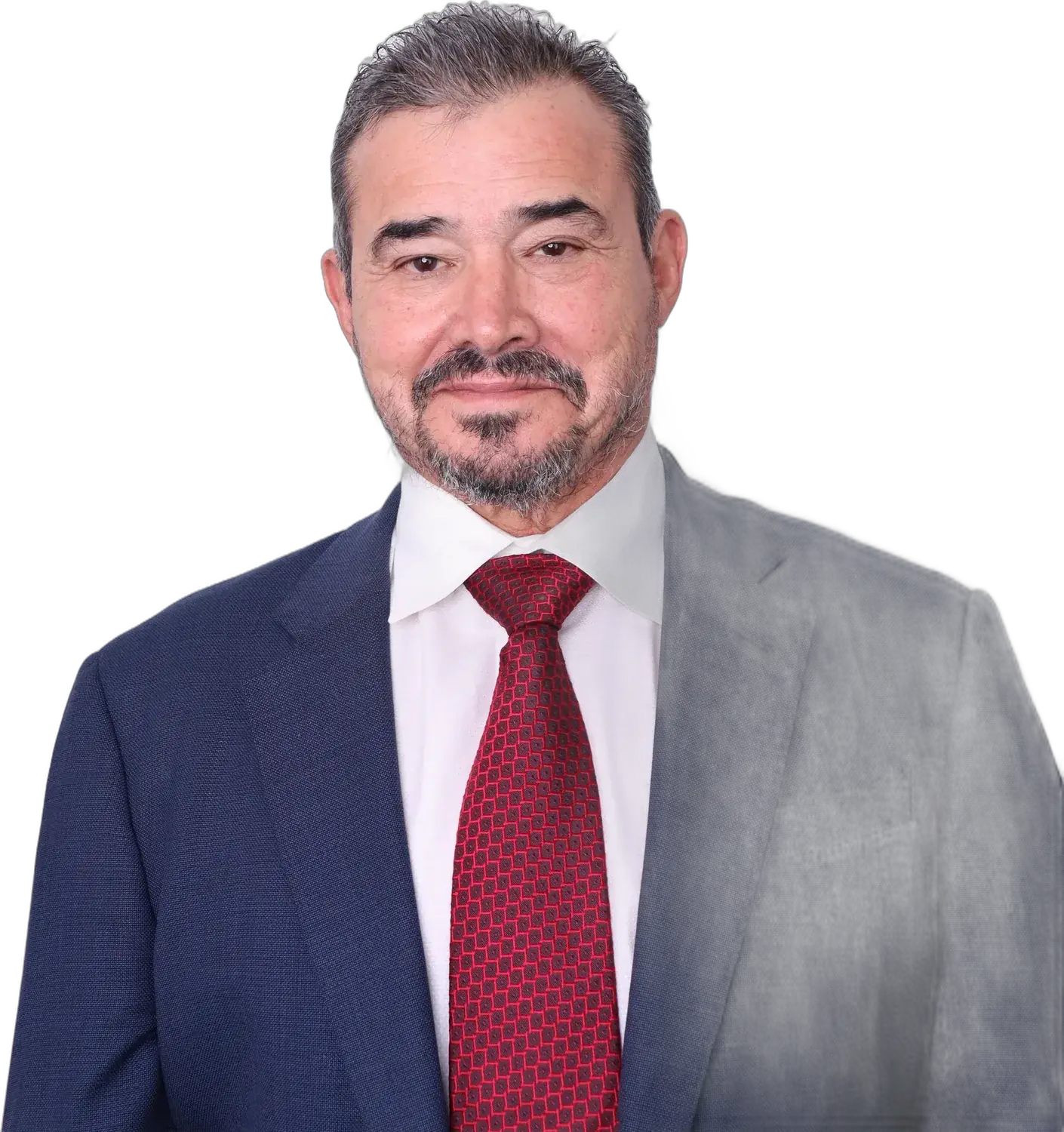
Run all four checks on me before you run them on anyone else; every number is public, and I would rather you verify than believe. Here is the worked example, credential by credential.
First, the cedulas. My general medical cedula is No. 550795, Medico Cirujano, with the degree conferred through the UNAM, Mexico’s national university. My specialty cedula is No. 3175867, in Cirugia Plastica y Reconstructiva. Both sit in the federal registry.
Second, the board. My CMCPER certificate is No. 293, board certified in plastic and reconstructive surgery in Mexico since 1984, recertified through 2030, and my public directory listing shows it.
Third, and separately, a United States credential: I have held a California Physician and Surgeon license, A 42463, since 1986. Those are two different credentials with two different dates, each in its own registry. Verify the California license at the Medical Board of California lookup, and search by the license number itself, since registries index numbers more reliably than name spellings.
Fourth, the facility. I operate at VIDA Wellness & Beauty, the first Quad A (AAAASF) accredited facility in Mexico, licensed by COFEPRIS, with Dra. Nadiezhda Garcia Bonilla, a board certified anesthesiologist (CNCA / CONACEM), present for every procedure. The rest of the record, the fellowship with Bruce F. Connell, the 37 years in practice, the more than 3,000 facelifts, is laid out on the Dr. Quiroz page, each claim beside its source.
What does hesitation about license numbers tell you?
A certified surgeon has nothing to hide in a registry, so reluctance to hand over a number is itself information. Ask any practice you are considering for four things: the cedula numbers, the CMCPER certificate number, the name of the facility where the surgery happens, and that facility’s license and accreditation. The right practice will volunteer them before you finish asking. If instead you get a subject change, a discount with a deadline, or an appeal to trust, the free checks have done their work without a single search.
If you are weighing all of this from the United States, the logistics, the border, the passport, the minimum local stay of about 6 days, are covered in how a facelift in Tijuana works for U.S. patients. And when you are ready to talk rather than search, a consultation starts remotely, with photographs and a plan rather than a deposit. Call or text +1 (619) 738-2144, bring your questions, and bring the numbers you found.