A facelift does not have one price. It has four, added together: the surgeon and the hours their hands are on you, the accredited room the operation happens in, the anesthesiologist who keeps you safe while it does, and the nursing and follow-up that carry you through recovery. When a quote looks mysterious, or looks too good, it is almost always because one of those four has been quietly enlarged, hidden, or dropped. This article is not about what a facelift costs in dollars; the full cost picture, country by country, lives on the cost page. It is about what the cost is made of, so that when you read a quote you can see straight through the number to the operation underneath it, and tell an honest quote from a thin one.
What are you actually paying for in a facelift?
You are paying for four things, and a serious quote can name all four: the surgeon and their operating time, an accredited operating room, a board certified anesthesiologist present in that room, and the nursing and aftercare that watch your recovery. Everything else on a quote is a subheading under one of those. The American Society of Plastic Surgeons says as much on its own facelift cost page, where it notes that a surgeon’s fee “does not include anesthesia, operating room facilities or other related expenses.” The number a surgeon quotes for themselves is, by design, only one of the four parts. A quote that stops there is not cheaper. It is incomplete.
Read a quote as a sum, not a single figure. If you can see the four parts, you can compare two quotes honestly. If you cannot, you are not comparing operations. You are comparing marketing.
The surgeon is the largest part of the price, and the hardest to see
Of the four, the surgeon is usually the largest share, and it is the one a discount attacks first, because it is the one you cannot photograph. What you are buying is not a procedure code. It is a particular person’s training, the thousands of small decisions they make while your face is open, and the fact that they, not an assistant, perform every step. The ASPS page puts the surgeon’s fee down to three things: “his or her experience, the type of procedure used and the geographic office location.” Two of those, experience and technique, are exactly what a cheap quote quietly trades away.
A deep plane facelift, the release Hamra described in 1990, takes longer than a skin or surface lift because more of the work happens beneath the muscle layer, the SMAS, the sheet of tissue that carries the face as one unit. More surgeon time under the skin is more cost, honestly earned. Over my 37 years and more than 3,000 facelifts, I have learned that the hour a surgeon is willing to spend is not overhead to be trimmed; it is the operation. So the way to price a surgeon is not to hunt for the lowest fee. It is to verify the training behind it, and the public records that prove a surgeon is who they say cost you nothing to check.
The cheapest surgeon’s fee on your list is telling you something. Listen to it.
Why does the operating room have a price of its own?
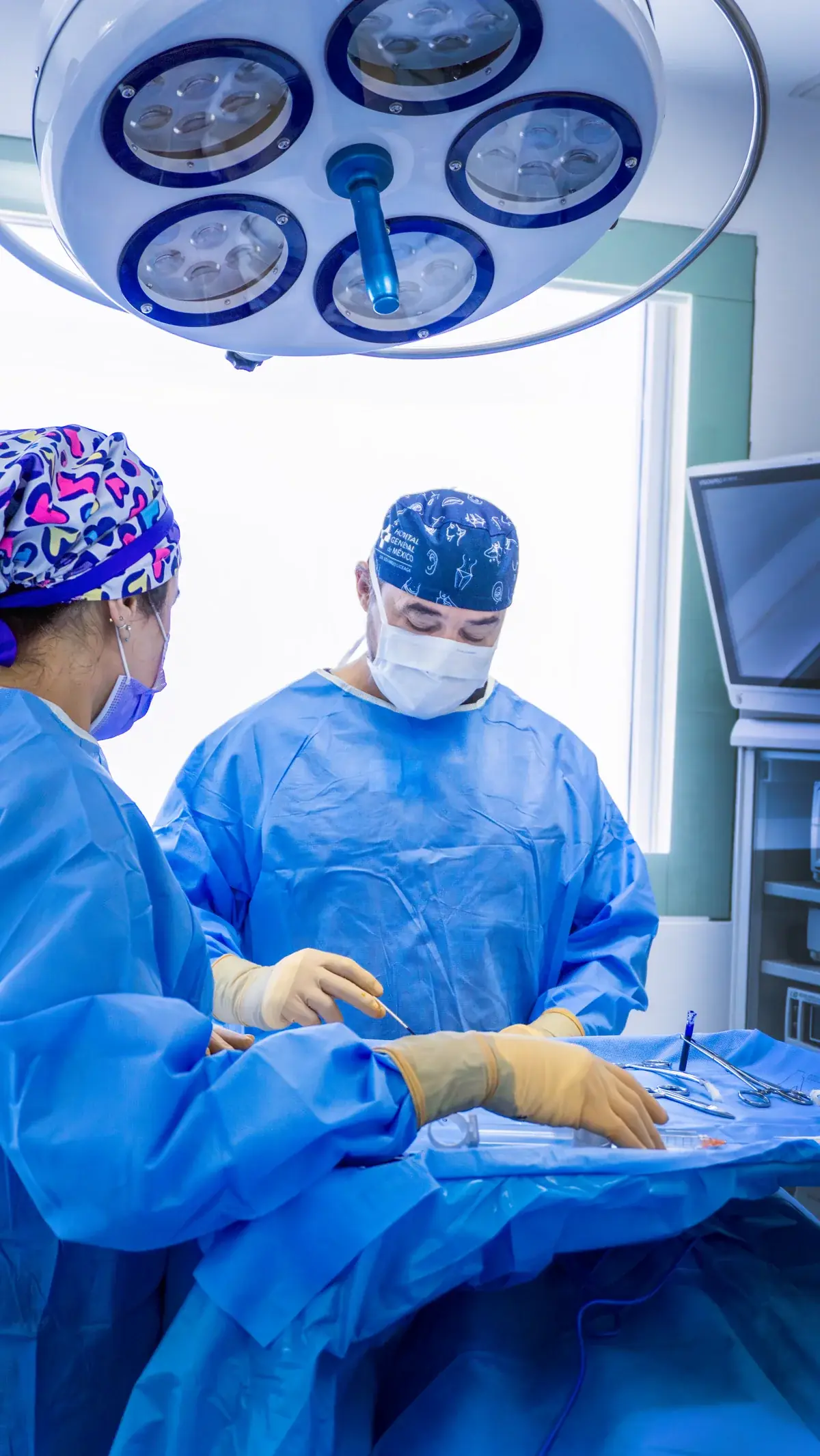
Picture the room the operation actually happens in. Is it accredited by a body that audits it, or is it a treatment room behind a storefront that no one inspects? That difference is a real line on a real quote, and it is invisible in a photograph of a smiling before and after. An accredited operating facility costs money to run and to keep accredited, because accreditation is not a plaque earned once. It is a standard a facility keeps clearing, on equipment, sterility, staffing, and emergency protocols, year after year.
This is not a matter of taste. When surgeons compared 183,914 aesthetic procedures across accredited settings, the major complication rate in accredited office based surgical suites was the lowest of the three settings studied, just above one percent, against roughly two percent in ambulatory centers and hospitals, as reported in the Aesthetic Surgery Journal. The lesson is not that any one setting is magic; all three settings studied were accredited, and all posted low complication rates. It is that accreditation, the thing you are partly paying for, is not where a safe quote finds its savings, and a quote that saves money by skipping it is not saving you anything you would want saved. I operate at VIDA Wellness & Beauty, the first Quad A (AAAASF) accredited facility in Mexico, licensed by COFEPRIS, Mexico’s federal health authority.
The anesthesiologist is a second name on that same bill, and a second place cheap quotes economize. Anesthesia is given by a person, not a department. In my practice that person is Dra. Nadiezhda Garcia Bonilla, a board certified anesthesiologist present for every procedure I perform. A quote that will not tell you who administers your anesthesia has told you what it left out to reach its number.
Aftercare is the line item that disappears first
The fourth part, aftercare, is the easiest to leave off a quote and the most dangerous to skip, because the days right after a facelift are when the one complication that truly demands watching, bleeding under the skin, tends to show itself. A hematoma, a collection of blood beneath the skin, is the most common early complication of a facelift, and it announces itself in hours, not weeks. Aftercare is what puts trained eyes on those hours. It is nursing, monitoring, a place to be watched, and a plan for follow-up, and none of it is free.
In my practice, recovery begins inside the same building where I operate. The in-house Recovery Boutique staffs nursing 24 hours a day, the minimum local stay is about six days, drains typically come out at 48 to 72 hours, and sutures at about day seven. A quote that ends at the operating room door, handing you a bag of gauze and a hotel address, has moved the cost of the riskiest days off its own page and onto you. Who actually takes care of you through those days, especially if you travel alone, is the whole subject of going alone for a facelift in Tijuana. Individual recovery varies.
What a proper quote includes, and what a thin one leaves off
Here is the simplest test of a quote: can you take it apart? A proper quote already comes in pieces. It names the surgeon’s fee, the facility fee, the anesthesia, and the aftercare, each on its own line you can read and question. A thin quote gives you one number and a warm feeling. That difference is not decoration; an itemized quote is a promise you can hold a practice to, while a single figure is a number that can grow after you have committed.
- The surgeon's fee, named, for the specific operation you discussed
- The facility fee, with the operating room named and its accreditation stated
- Anesthesia, with the anesthesiologist's name and credentials
- Aftercare: the nights of monitoring, the nursing, and how follow-up continues
- What is explicitly not included, so nothing is discovered later
- A single all-in number with no breakdown you can question
- Anesthesia and facility folded invisibly into the surgeon's fee, or simply missing
- A price with a deadline, or a discount that shrinks the longer you think
- No line for the days after surgery, or a vague "recovery included"
The itemized quote is not busywork. It is the document you reread at midnight while you decide, and the one that protects you from the sentence no patient wants to hear after surgery: that part was extra.
Why are some quotes suspiciously cheap?
A woman once forwarded me a quote from another clinic that was a fraction of everything else she had been shown, and asked me, hopefully, whether I could match it. I could not, and I told her why. It was not the same operation for less money. It was a different, thinner operation wearing the same word. When a price sits far below the rest of the field, the savings are real, but they come from somewhere, and the somewhere is almost always one of the four parts.
The corners are predictable. Less surgeon time, which favors a quick skin tightening over the deeper structural lift that actually lasts. A lesser anesthesia arrangement, or a provider you are not allowed to name. A room that is not accredited. Or no real aftercare, the piece that costs the least to delete and hurts the most to lose. The American Society of Plastic Surgeons, writing about surgery marketed on price abroad, warns that such packages “provide limited follow-up care, if any,” and that patients can face costs for “revision surgeries and complications that may total more than the cost of the initial operation,” in its briefing on cosmetic surgery tourism. Surgeons who tally the tourism complications they are asked to repair describe the same pattern, in the Aesthetic Surgery Journal Open Forum: the cheapest quote is often the most expensive one, paid later in a second operation.
Why is the same operation less expensive in Mexico?
Because the overhead of running a practice, the staff, the facility, the day to day costs, is genuinely lower in Mexico, a patient typically pays a smaller share of what the same operation would cost in the United States, where surgery is expensive by any measure. That is the honest and complete reason, and notice what it is not: it is not a discount on the four things you should be paying for. The surgeon’s training, the accredited room, the board certified anesthesiologist, and the nursing do not become cheaper because the border moved. The economics around them do.
This is the distinction that separates a legitimate lower price from a dangerous one. A legitimate price in Mexico is lower because local costs are lower, while every one of the four parts is still present and still verifiable. A dangerous price, in any country, is lower because one of the four parts is missing. The way to tell them apart is never the size of the number. It is whether you can still name all four, and verify the surgeon and the facility yourself. The country by country cost picture is laid out on the cost page; this article only wants you to arrive there able to read it.
Who should be careful, and what a quote cannot tell you
Let me be honest about the limits of everything I have just said. If your only question is which quote is smallest, this article, and frankly my practice, is not built for you, because the whole argument here is that the number is the last thing to compare, not the first. Price is a fair question. It is a poor filter.
A quote also cannot tell you some things, and I will not pretend otherwise. It cannot predict your individual recovery, which varies from person to person no matter how the operation is priced. It cannot put a figure on the value of a complication that never happens because the right people were watching. And it cannot promise a result; anyone who prices you a certain, promised outcome is selling something surgery does not sell. What a good quote can do is show you, in writing, that the four parts are all there and all real. That is the most a number can honestly do, and it is enough to choose well. Individual results vary.
How to read a quote before you sign anything
Do it in this order: get the quote in writing and itemized, confirm it names all four parts, then verify the surgeon and the facility in the public records before the price decides anything. A number you can see through is safe to compare. A number you cannot see through is not a bargain. It is a blank you are being asked to fill in with trust.
In my practice this starts where it should, before any money changes hands: a consultation from home, photographs first, and then an itemized plan so nothing is discovered later. Bring me another clinic’s quote and I will tell you honestly what it includes and what it quietly does not. When you want to have that conversation, call or text +1 (619) 738-2144, by phone, SMS, iMessage, or email, and bring the four parts with you. Once you can read a quote as the sum of them, you are no longer shopping on price. You are choosing an operation.