A before and after photograph is a piece of evidence, and like any evidence it can be staged. Before you let a pair of images tell you a surgeon is good, you have to know how to cross-examine them, because the photographs that sell the most surgery are often the ones arranged to flatter it. This is a reading skill, and it is learnable in an afternoon. I am going to teach you the specific things I look for when I study another surgeon’s gallery, the small tells that separate a documented result from a decorated one, and then I am going to ask you to turn every one of them on my own before and after gallery. Whether the surgeon is truly the one who performed the work, and holds the credentials to prove it, is a separate investigation, and I keep it separate: the registries and license checks live in how to verify a plastic surgeon in Mexico. This article is only about the photographs.
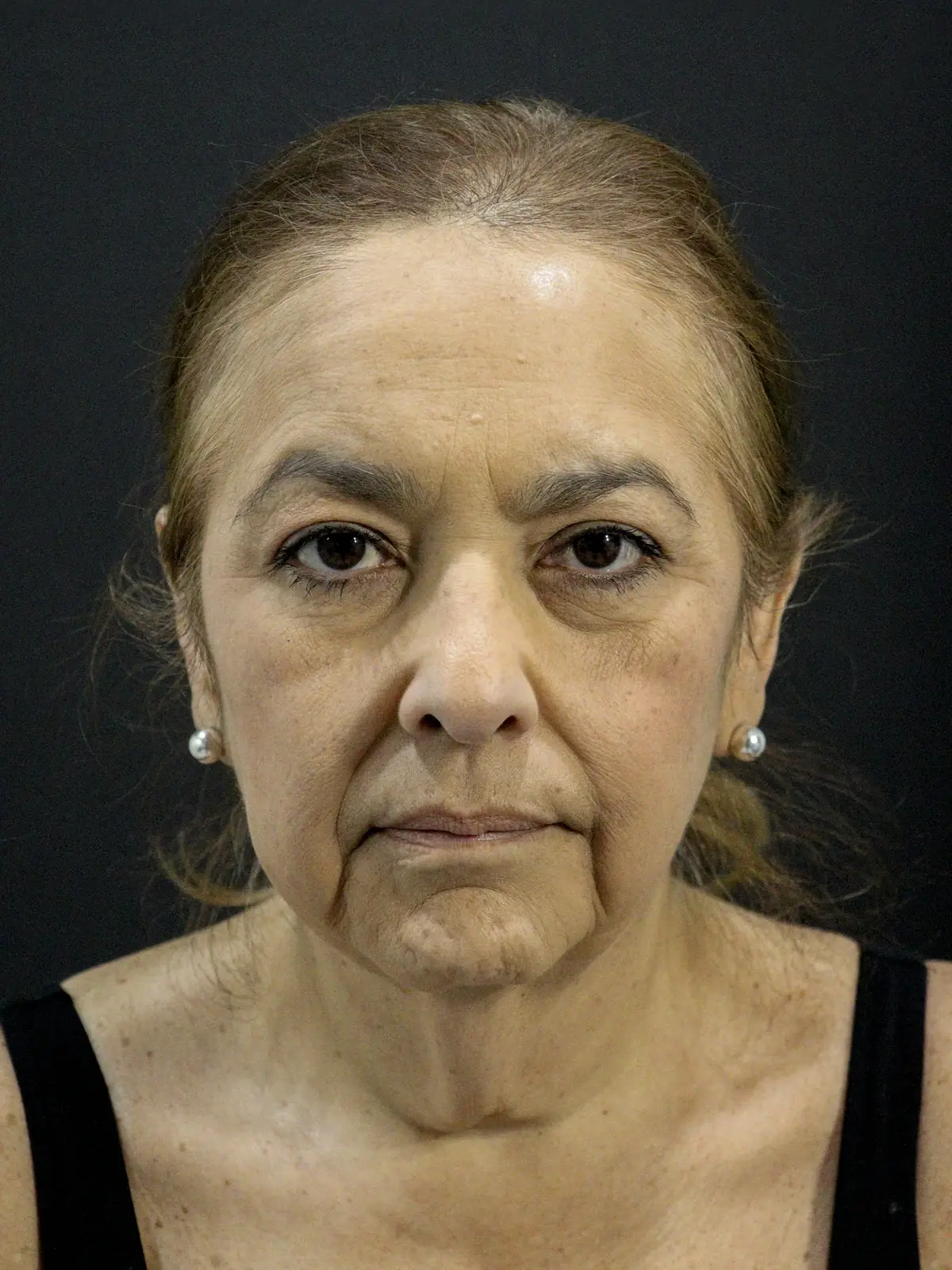
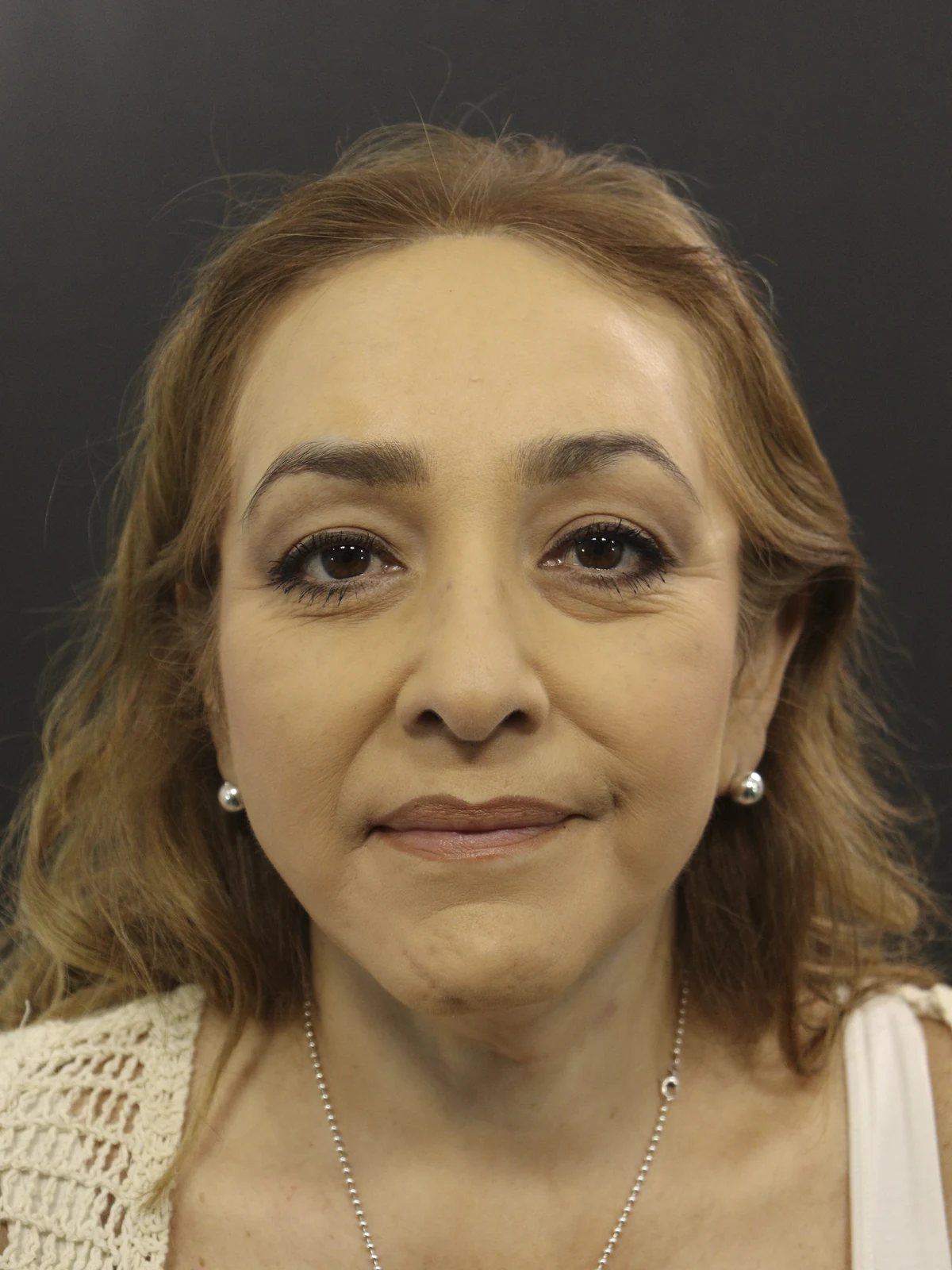 BeforeAfter
Drag to compare. This is what an honest pair looks like: same angle, same lighting, same expression, one real patient photographed with consent. That is exactly what you are learning to demand. Individual results vary.
What am I actually looking for in a before and after?
You are looking for a fair comparison, which means everything in the two photographs should be identical except the result of the surgery. Same angle, same distance from the camera, same lighting, same expression, same background. Then two more things a single pair cannot show you on its own: an honest label of how much time has passed since the operation, and consistency when you widen out to the whole gallery. Hold those three ideas in your head, the matched pair, the timeframe, and the pattern across many cases, and you already read photographs better than most patients who walk into a consultation.
Here is the principle underneath all of it. Every difference between the before frame and the after frame, other than the surgery itself, is a variable, and a variable is a place where a photograph can tell a small lie. A softer light, a lifted chin, a turned head, a relaxed brow: none of these is surgery, and each one can do some of surgery’s job for free. The whole skill is learning to hold every variable still in your mind, so that only the operation is left to explain the difference.
The pair must be photographed the same way, or it is not a comparison.
Start with the geometry of the head, because it is the variable that hides the most. A face is a three-dimensional object, and the smallest change in how it is turned or tilted changes the silhouette of the jaw and neck completely. Surgeons who study this formally describe it as holding the head steady across all three axes, and the point is blunt: as one standardized facial-photography protocol puts it, photographs can never be compared if the head is not in the same position (Callan and Wilson, Australasian Journal of Plastic Surgery, 2021). A jawline can be made to look sharper with a quarter turn and a slightly raised chin, no operation required. So the first thing I check in any pair is whether the head is genuinely in the same position. If the after photo is turned more toward profile, or the chin is lifted, I stop trusting the neck it is showing me.
Then the light. Consistent lighting is the oldest requirement in clinical photography, and it exists precisely because light sculpts a face: flat, even light in the before and warm, angled light in the after will manufacture a contour that no scalpel touched. The standards plastic surgeons hold themselves to call for the same lighting, the same camera, and the same patient position across both sessions (DiBernardo et al., Plastic and Reconstructive Surgery, 1998), and a modern protocol pins the camera on a tripod at a fixed distance, roughly a meter and a half, under steady studio light against a plain background (Thornton et al., Aesthetic Surgery Journal Open Forum, 2024). You do not need the equipment to use the idea. You only need to ask whether the two photographs look like they were taken in the same room, on the same day, by someone trying to document a result rather than dress it.
And then, the one almost nobody watches: expression. A face at rest and a face in the faintest smile are two different faces. A small smile lifts the brow, opens the eyes, raises the corners of the mouth, and gathers the very volume a facelift is meant to reposition, which is why the same protocol warns that the slightest smile or frown shifts brow position, lip position, and eyelid level (Callan and Wilson, 2021). A tired, frowning before and a bright, lifted after can show you a mood, not a surgery. Match the expression in your mind before you credit the change to me, or to anyone.
What tricks make a result look better than it is?
The tricks are simply the constants, broken on purpose: a changed angle, a changed light, a changed expression, a changed frame, each one quietly doing a little of the surgery’s work. None of them requires bad intent, which is what makes them so common. A practice photographs its patients casually, keeps the flattering frames, and a gallery of small, honest-seeming improvements accumulates that no operation fully earned. Learn the moves and you stop being persuaded by them.
The ones I catch most often, roughly in the order I catch them: the head turned further toward profile in the after, hiding a heavy neck behind the jaw. The chin quietly lifted, which tightens the same neck a lift would. Different light, flat before and flattering after. A frown traded for a soft smile. Hair worn down in the after to blur a scar the before showed. Makeup added. And the newest one, retouching, from a smoothing filter all the way up to fully generative editing, which the surgical literature now flags directly: modern imaging tools, and AI in particular, can alter preoperative and postoperative photographs, which is exactly why an unedited, dated, matched pair is worth more than a beautiful one (Thornton et al., 2024).
- The head is turned or the chin lifted more in the after than in the before
- The lighting or the background changes between the two frames
- A tired, unsmiling before set against a bright, smiling after
- Skin that looks unnaturally smoothed, or no date anywhere on the pair
- A matched angle, distance, light, and expression, with the time since surgery printed beside it
- The same honest standard held across many different faces, including early ones
Read the ears and the hairline.
Look at the ears. It is the single most revealing corner of a facelift photograph, and almost nobody thinks to check it. When a lift is done by pulling the skin tight rather than repositioning the structure beneath it, the tension has to go somewhere, and it lands at the ear: an earlobe stretched downward or forward, dragged out of its natural shape, or a scar pulled wide and shiny. A well-designed lift places the tension on the deep layer so the skin, and the ear with it, sits without strain. In the deep plane operation I perform, the whole point is that the skin carries no tension, which is why the ear should still look like an ear and the scar should hide where it belongs. What incisions should and should not look like is its own subject, and I lay it out in facelift scars and incisions.
The hairline is the second tell. A lift that drags skin can displace the sideburn or the temporal hairline, leaving a bald step or a hairline that jumps where the skin was pulled and trimmed. Study the temple and the sideburn in both frames. If the after shows a hairline shoved out of place, or a widened scar creeping into the hair, the photograph is telling you how the lift was actually done, whatever the caption says. These are the details that separate a real reading from an impressed glance, and they are exactly what the short four-point lesson on my results page is built to help you practice.
Why does the time since surgery matter so much?
Because a face at two weeks and the same face at one year are two different photographs of one operation, and only the later one tells the truth about the result. Swelling is the reason. In the early weeks the tissues are still full and settling, and a photograph taken then shows structure that is already rebuilt underneath a surface that has not yet calmed. Read an early photo as a finished result and you will misjudge it in both directions, crediting swelling as fullness or blaming it as a flaw. Swelling settles over months, and the honest photograph is the later one. Individual recovery varies.
This is why a date is not a nicety, it is the second most important thing in the frame after the matched pair. The plastic surgery ethics literature is explicit that surgeons should state the length of time in a before and after post, precisely so patients are not misled about how quickly a result appears (Oregi et al., Aesthetic Plastic Surgery, 2023). A gallery with no dates anywhere is not being modest, it is being undocumented. The one I keep prints the time since surgery beside nearly every case, including some deliberately early ones shown so you can see what settling actually looks like, and the longer arc of that settling is mapped in facelift settling month by month.
One lucky pair proves nothing. A gallery proves a standard.
Any surgeon can produce one beautiful pair. Even a weak surgeon eventually operates on an easy face, photographs it well, and leads with it forever after. So the question is never how good is the best photograph. The question is how good is the tenth one, and the twentieth, on faces that do not resemble each other.
What you are testing when you scroll a full gallery is consistency. Do the results hold across different ages and different starting points, heavier necks and lighter ones? Is the same honest standard, rested but not pulled, still recognizably the same person, visible again and again? A gallery that shows only its most flattering one-year pairs is curating. A gallery that shows a range of faces, with their timeframes printed and some early cases left in, is documenting, and documentation is what you are trying to find. That is the discipline I hold my own before and after gallery to, and it is the reason the page also teaches you to read it skeptically before you scroll. Individual results vary.
Why do consent and real patients matter?
Because a photograph is only evidence if the patient and the result are real, and consent is the marker that they are. Stock photographs, images lifted from another surgeon’s work, and pictures of patients who never agreed to be shown are not rare, and none of them tells you anything about the hands you are considering. A practice that publishes with written consent is telling you two things at once: these are its own patients, and the people in them agreed to be seen. The ethics literature treats this as a genuine obligation, noting that using patient images requires a specific, additional layer of consent, not a casual assumption (Oregi et al., 2023).
There is a quieter reason consent matters, too. A surgeon willing to attach real, consented patients to a result is a surgeon standing behind it. Every photograph on my site is a patient of mine, published with written consent, with no stock photography anywhere on it. Whether those hands are also the credentialed, verified hands they claim to be is the next question, and the right one to ask immediately after this one, which is why I keep the registry-by-registry method in how to verify a plastic surgeon in Mexico rather than repeating it here.
What even honest photographs cannot tell you.
I will say the hard part plainly, because a reading lesson that only teaches you to trust the right photographs is only half honest. Even a perfect gallery, matched and dated and consented, cannot promise you your own result. The faces in it are not your face. They arrived with their own skin quality, their own bone, their own fat, their own starting point, and their own way of healing. What an honest set of photographs demonstrates is a standard the surgeon can reach on other people, not a preview of what he will reach on you.
So be wary in both directions. Be wary of the surgeon who promises your result will match a photograph, and be wary of your own eye when it falls for a single stunning pair. Photographs also cannot show the things that do not photograph: how the operation was actually performed, what the recovery cost, whether the neck still holds at year three, whether the patient would choose it again. Some of that lives in what patients say rather than in what they look like, which is the other half of the record, kept in the reviews. And what your own face can realistically do is not a gallery question at all. It is a consultation question, answered from your photographs, not someone else’s. Individual results vary.
How I photograph, and how to read mine.
Send me your photographs and the first thing I do is exactly what I am asking you to do with mine: study them under a standard. I learned this discipline early, in my fellowship with Bruce F. Connell, my mentor in face and neck surgery, who taught that the diagnosis lives in standardized photographs studied carefully, long before any talk of technique. Over my 37 years and more than 3,000 facelifts, that has not changed. Matched angles, steady light, a plain background, the same views every time, so that when I compare a patient before and after, only the surgery is left to explain the difference.
So apply this whole checklist to me. Turn the matched-pair test, the ear and hairline test, the timeframe test, and the whole-gallery test on my results page, and bring what you find to the consultation. The full list of what to ask once you are in the room is laid out in questions to ask a facelift surgeon, and the credentials to verify behind the photographs in how to verify a plastic surgeon in Mexico. A surgeon who photographs honestly wants you to read closely. I do.
You can do almost all of this reading from home, before you ever cross the border. Study the gallery from California, ask for additional angles or a longer timeframe, and let the photographs earn or lose your trust before a single date is discussed. My consultation begins remotely, with your own photographs, coordinated from San Diego for patients traveling from the United States. When you are ready, call or text +1 (619) 738-2144, by phone, SMS, iMessage, or email, and bring the pairs you have questions about. I would rather you read them with me than be sold by them. Individual results vary.