
A revision facelift is a second operation that corrects a prior facelift which either pulled the face too tight or relaxed too soon. Rather than tightening skin again, I release the structure beneath the muscle and reposition it in the deep plane, so the skin is carried back without tension. Because a revision works through tissue that has already been operated on, it begins with an honest assessment of what can and cannot be improved.
Why would a first facelift need to be revised?
Two things send patients to me for a revision. The first is a lift that looks pulled. When skin is tightened at the surface and dragged in the wrong direction, the result announces itself in a swept hairline, a wide or pleated scar, an over-tightened cheek, or a corner of the mouth that reads as a stretch rather than a smile. The second is a lift that simply relaxed, because a surface lift tightens skin and skin gives way again, and the jawline and neck return.
A deep plane revision addresses both problems at their source. Instead of pulling the skin once more, I release the facial structure beneath the muscle, the connected sheet Mitz and Peyronie first mapped in 1976 as the SMAS, and reposition it as one unit, the way the face was built. The skin is then carried back without tension. That is what releases a pulled look and gives a relaxed result something durable to hold to. Individual results vary.
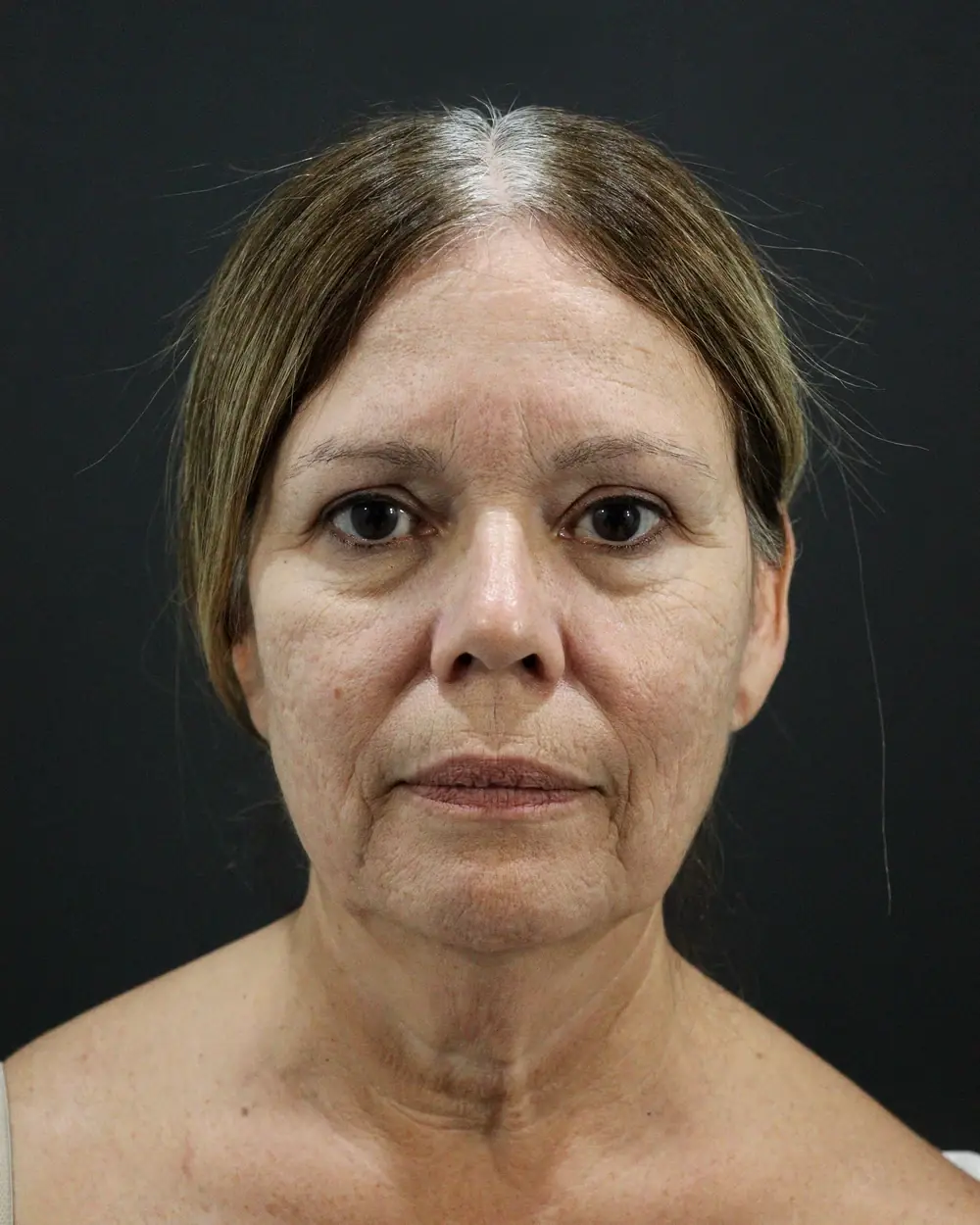
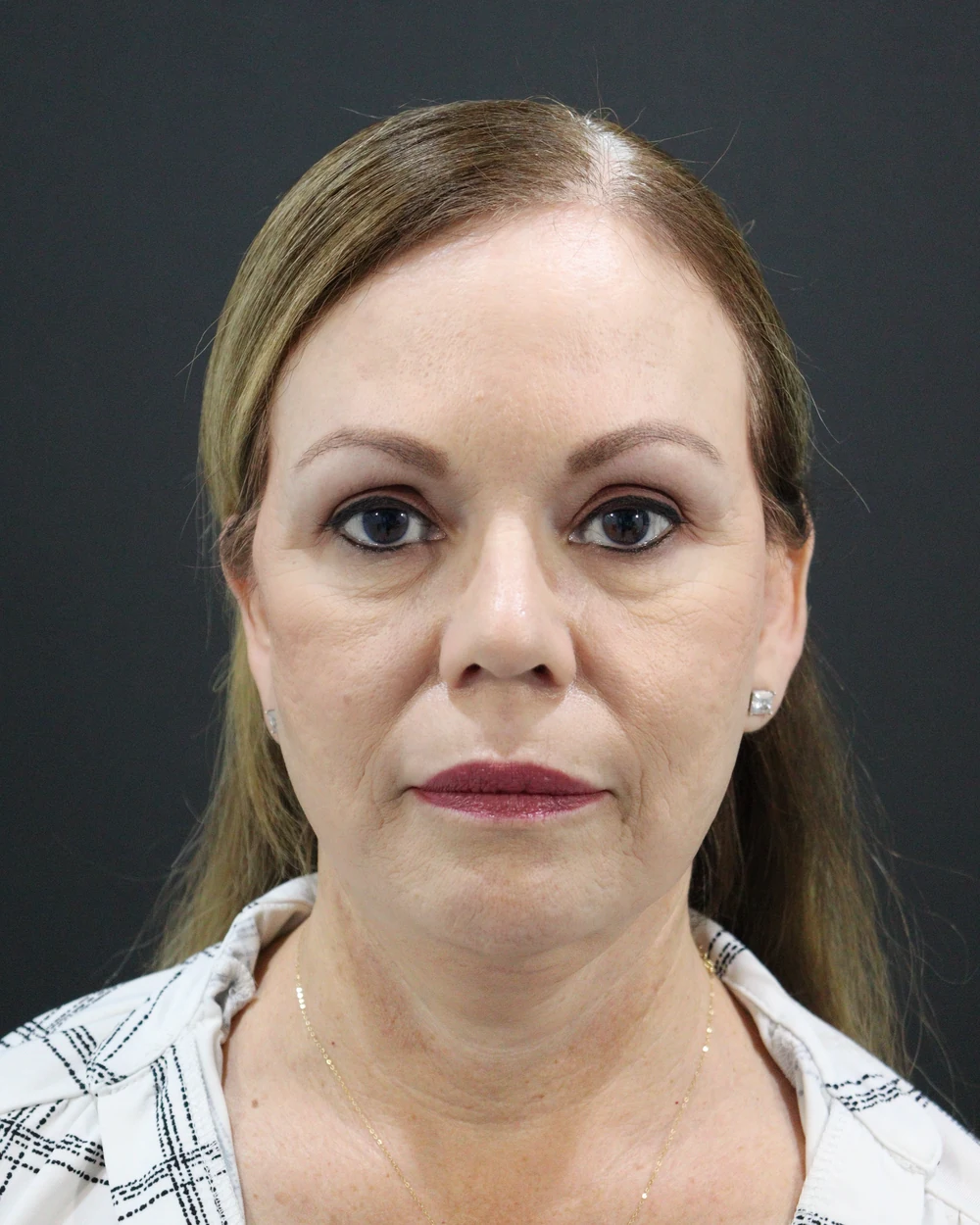 BeforeAfter
Drag to compare. The goal of a second operation is a restored, natural line, never a tighter one. A real result, photographed with consent. Individual results vary.
Why is a revision more complex than a first facelift?
A first facelift works in tissue planes that have never been touched, and a revision does not. Earlier surgery leaves scar in the layers I need to work through, the natural planes can be obscured, and the facial nerve does not always sit where the anatomy textbook puts it. Surgeons who have studied secondary lifts describe the same picture, among them Skouras and colleagues in Plastic and Reconstructive Surgery Global Open: scar that makes the dissection tedious, and a nerve left shallower and less predictable once the deeper layer has been thinned. Repositioning structure through that requires reading tissue that has already been changed once.
This is exactly why method and experience matter here. The deep plane is the right approach because it works below the scarred surface, at the level where the face actually descends, the plane Hamra described in 1990. The facelift is my signature, and over 37 years and more than 3,000 facelift procedures I have learned to read faces, including faces that another hand has operated on before me.
What does an honest revision assessment look like?
I study your face before I plan anything. A revision begins with a remote consult and standardized photographs from every angle, so I can see what was done, how your face has settled, and where the tension or relaxation actually lives. Some prior results can be meaningfully improved, while others are better left to mature further before any second surgery, and a scar or a hairline that has already been moved cannot always be returned to where it began.
You will hear my read directly, in the first conversation, before anything is planned or scheduled. Part of my job is telling you what a revision can realistically do for your face and what it cannot. I will not promise a result I cannot stand behind, so I would rather decline a case than overstate what is possible. Individual results vary, and a revision is no exception.
How long does a revision facelift last, and how is recovery?
Because a deep plane revision repositions structure rather than re-tightening skin, the result tends to hold the way a deep plane lift does. Deep plane longevity is commonly described as ten to twelve years in published data; in a long-term review of deep plane patients, Levin and Frankel reported that the average interval before a second lift ran close to eleven years, and longer still for those first lifted younger. That holds against five to ten years for a surface lift. Long-term numbers on revisions specifically are thinner than the data on first lifts, so I hold them loosely; a revision works through altered tissue, and individual results vary.
Recovery follows the same arc as a first deep plane lift. Sutures come out on day seven, social recovery is near fourteen days for most patients, and swelling continues to settle over the following months. Revision tissue can take its own time to quiet down, and individual recovery varies.

What if my first facelift was done somewhere else?
Most revision patients I see were operated on by another surgeon, often closer to home, and that is a normal place to start. I do not need to have done the first lift to help with the second. What I need is to see your face and understand what was done, which is what the consult and photographs are for.
If you are traveling from the United States, the same care applies to a revision as to any procedure here. I perform the surgery myself, at VIDA Wellness & Beauty, the first AAAASF accredited facility in Mexico, now called Quad A, with a board-certified anesthesiologist present for every procedure. A single bilingual point of contact coordinates the crossing from San Diego, and follow-up continues remotely once you are home, so support stays with you through the months that matter most.