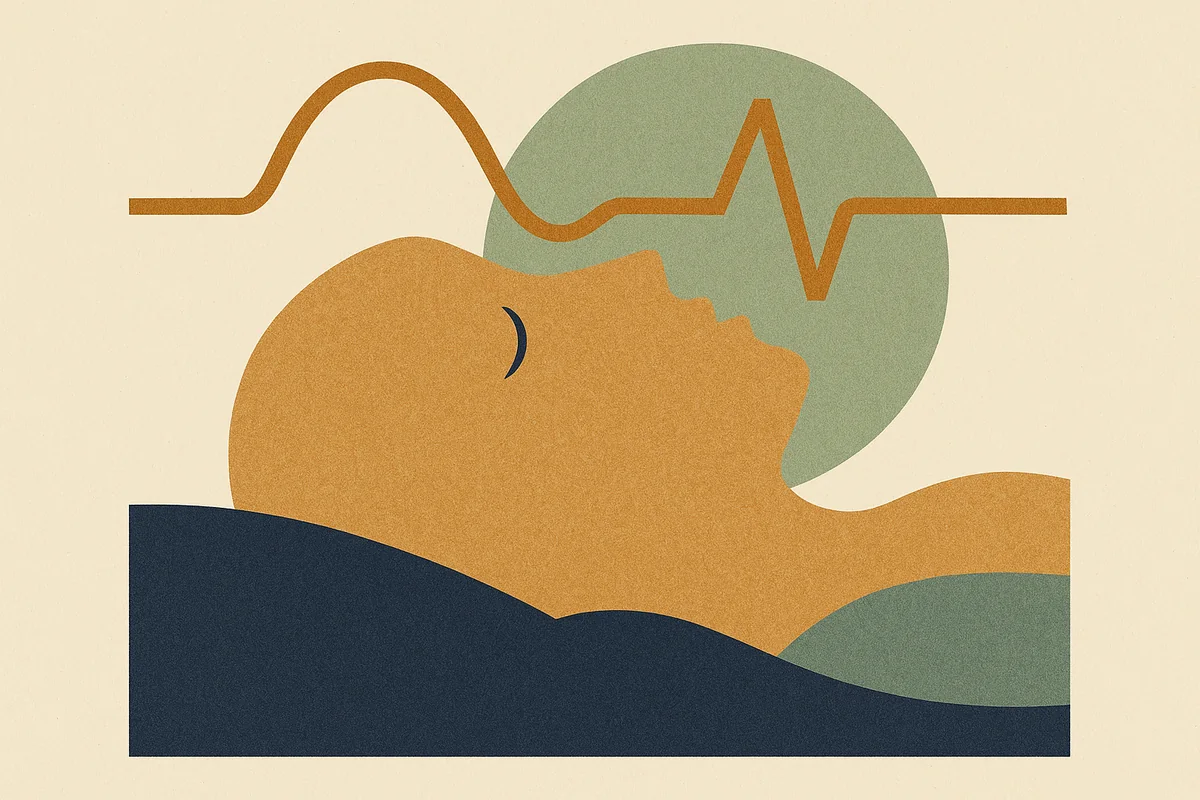
Asleep. That is the direct answer, and I will not make you scroll for it. When I perform a deep plane facelift, you are under general anesthesia, fully asleep, with a board-certified anesthesiologist, Dra. Nadiezhda Garcia Bonilla, in the room from the moment you drift off until the moment you are stable in recovery. She is there for every procedure I do. Not on call, not supervising several rooms from a hallway. In the room, watching you, while I watch your face.
But if you found this article, you have probably also found the videos. A patient chatting calmly while a surgeon lifts the deep tissues of her face. Headlines about the “awake facelift.” Forum threads asking whether a deep plane facelift under local anesthetic is safer, especially for someone already nervous about having surgery in Mexico. Those videos are real, some of the surgeons behind them are serious and skilled, and the question they raise deserves a serious answer, not a dismissive one.
So let me give you both things in this article: an honest account of the awake deep plane trend, including the published evidence behind it, and a clear explanation of why, after 37 years and more than 3,000 facelifts, I still choose a sleeping patient, a dedicated anesthesiologist, and an accredited operating room. By the end you should be able to evaluate any surgeon’s anesthesia plan, including mine.
The Awake Facelift Videos Are Real. Here Is What They Show.
A small number of surgeons, mostly in the United States, have built practices around performing deep plane facelifts under a technique where large volumes of very dilute numbing medicine, usually lidocaine with epinephrine in saline, are infiltrated into the tissues of the face and neck until the surgical field is numb and firm. The patient stays awake or lightly sedated and breathes on their own., with the patient awake or under minimal oral sedation. This is not a fringe experiment. In late 2025, Dr. R. Brannon Claytor and his colleagues published a peer-reviewed series in Plastic and Reconstructive Surgery Global Open describing awake deep plane facelifts with extended deep neck contouring performed under tumescent local anesthesia, reporting a low overall complication rate and no deaths in their series.
If you have browsed patient forums, you have seen the question asked directly: can a deep plane facelift really be done under local anesthetic? The technical answer is yes, it can, by teams that have specifically built their practice around doing it. The tumescent solution numbs the tissue and shrinks the blood vessels, oral or minimal sedation keeps the patient calm, and the surgeon adapts pace and technique to an awake face. What the forums rarely explain is that the interesting question was never “can it be done.” It is “what does each approach trade away, and who is standing next to you while it happens.”
The awake camp’s arguments are worth stating fairly, because they are not silly. Avoiding general anesthesia means avoiding its known aftermath for some patients: nausea, grogginess, a slower return of appetite and energy. An awake patient never has a breathing tube. And the authors make a specific, clever point about blood pressure: some of the most dangerous minutes after a facelift under general anesthesia are the minutes of waking up, when blood pressure can spike and a fresh surgical field can start to bleed. A patient who was never asleep has no turbulent wake-up.
I want to be equally fair in the other direction. A single published series from a practice that has refined this workflow over years tells you that awake deep plane surgery can be done safely by that team. It does not tell you that awake surgery is safer than general anesthesia for you, in an arbitrary practice, on an arbitrary Tuesday. Even surgeons who favor sedation over general anesthesia tend to concede, when pressed, that the published numbers do not crown a clear safety winner between the two approaches. Each camp can point to large series with excellent outcomes. That should tell you something important: the technique on the consent form matters less than the team executing it.
And one more honest observation from someone who has watched marketing cycles come and go for decades. “Awake facelift” is also a differentiator in a crowded market. That does not make it wrong. It does mean you should read the enthusiasm around it the way you would read any advertising: with interest, and with your eyes open.
What Being Asleep in My Operating Room Actually Involves
a medically induced, carefully controlled state of unconsciousness. You feel nothing, remember nothing, and your breathing, blood pressure, heart rhythm, temperature, and depth of sleep are continuously managed by an anesthesia physician using dedicated monitoring equipment. is a phrase patients say with dread and physicians say with respect. It is not “being knocked out.” It is a continuously piloted state, and the pilot matters.
In my practice the pilot is Dra. Nadiezhda Garcia Bonilla, a board-certified anesthesiologist certified by Mexico’s national anesthesiology board and recognized by CONACEM, the national commission that oversees specialty certification. She has one job during your operation: you. She evaluates you before surgery, reviews your medical history and medications, decides with me whether you are a safe candidate, and then stays physically present through the entire procedure and into recovery. Her monitors track your heart rhythm, oxygen saturation, blood pressure, carbon dioxide, and temperature from before the first incision until well after the last suture.
The room itself matters as much as the people. I operate in a facility accredited by Quad A, the American accreditation body formerly known as AAAASF, which certifies ambulatory surgery facilities in the United States and internationally. Ours was the first facility in Mexico to earn that accreditation, and it is licensed by COFEPRIS, Mexico’s federal health authority. Accreditation is not a plaque. It is a recurring inspection of anesthesia machines, emergency medications, crash carts, sterilization logs, recovery staffing, and written transfer protocols to a hospital. I describe how the operating room, the equipment, and the anesthesia team fit together on my page about the surgical facility and anesthesia, and I encourage you to hold that page to the same standard you would apply to a surgical center in San Diego or Los Angeles.
The Full Menu of Facelift Anesthesia, Described Without Salesmanship
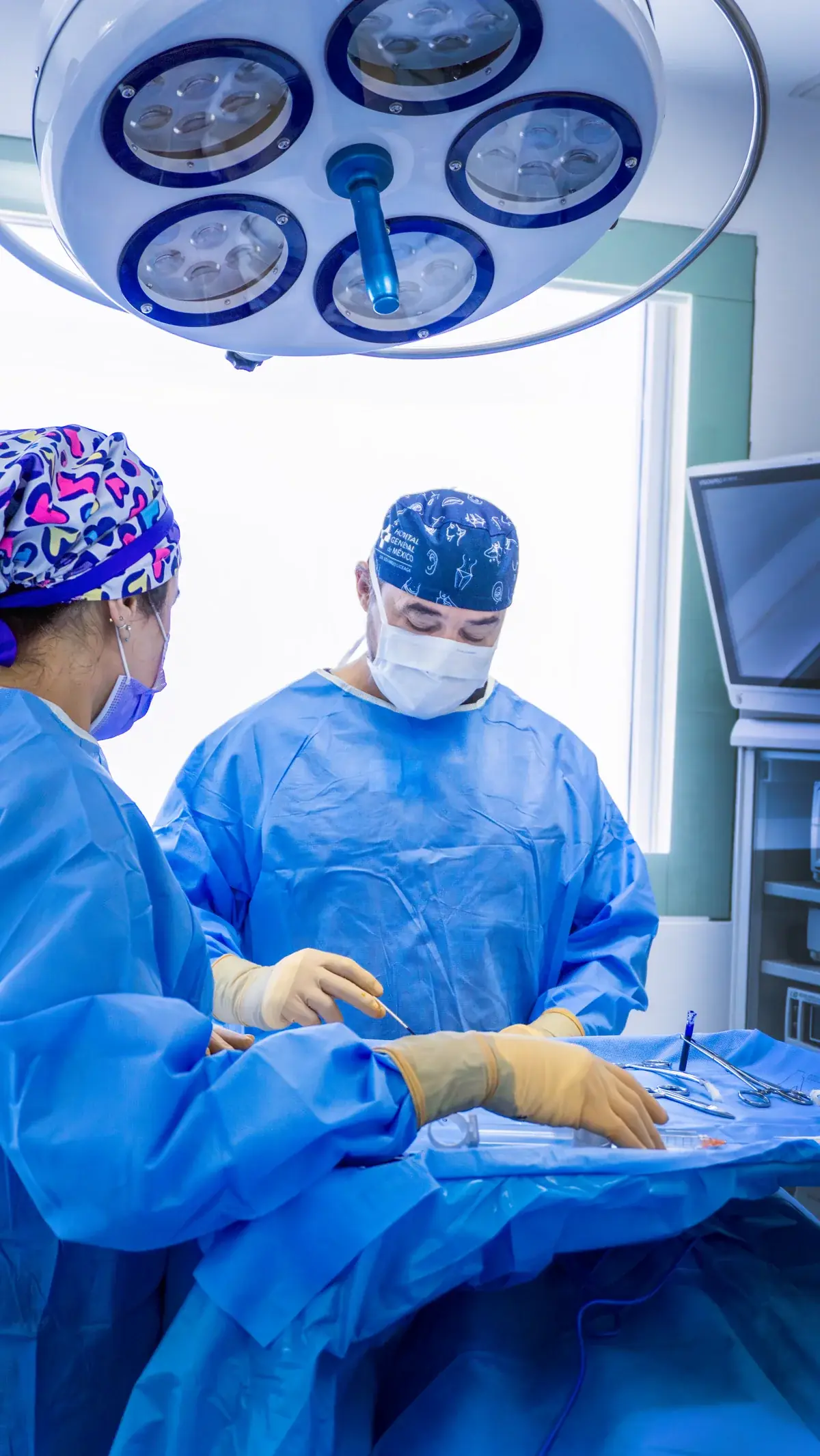
Every facelift in the world is performed somewhere along a spectrum of four anesthetic approaches, and it helps to see the whole menu before we argue about any single item on it.
At one end sits straight local anesthesia: numbing injections alone, a fully awake patient, no sedation at all. Almost nobody operates a full deep plane facelift this way; even the awake surgery advocates layer something on top. Next comes local anesthesia with oral sedation, a pill or two to soften anxiety while the tumescent solution does the real work of numbing. This is the model in the awake facelift literature, and in experienced hands it is a legitimate approach. Third is intravenous sedation, the “twilight” so many American patients ask about by name, where a continuous IV infusion keeps you somewhere between drowsy and lightly asleep while you breathe on your own. And at the far end is general anesthesia, complete unconsciousness with your airway secured and every vital function actively managed.
Here is what the menu framing reveals. The first three options all share one anatomical fact: your airway is unprotected. You are breathing for yourself, under drapes, while someone operates on the structures around your jaw and neck. That is perfectly workable when sedation is genuinely light and the team is disciplined about keeping it light. It becomes quietly dangerous when “twilight” drifts deep, because a deeply sedated patient with no breathing tube and no anesthesiologist is the classic setup for the airway emergencies that make headlines. Ironically, the anesthetic that sounds the gentlest is the one that most demands a vigilant, dedicated professional watching it.
General anesthesia sits at the other end with the opposite personality: it sounds the scariest and is the most controlled. Nothing is left to drift. Depth, breathing, pressure, temperature, all of it is actively set rather than passively hoped for. Neither end of the menu is virtuous by itself. But you should choose your point on the spectrum knowing what each point actually trades, not by which word sounds softest in a consultation.
Why I Want You Asleep for Deep Plane Work
A deep plane facelift is long, delicate work performed millimeters from the branches of the facial nerve, and I want a perfectly still, perfectly comfortable patient for every minute of it. That is the heart of my reasoning, and everything else follows from it.
The deep plane facelift is not a skin operation. I release and reposition the deeper muscular layer of the face and neck, working under the SMAS in the plane where the facial nerve branches live. With the neck work my patients usually need, this is a matter of hours, not minutes. An awake patient, even a well-numbed and well-sedated one, is a patient who can swallow, flinch at a sound, ask a question, or simply grow stiff and restless in hour three. Surgeons who do awake deep plane work have workflows built around managing exactly that, and I respect the skill involved. I have simply concluded, over thousands of operations, that the stillest field and the calmest patient give me my best and safest work.
There is also a consideration specific to my practice that a surgeon in Beverly Hills does not face. Most of my patients fly in from California and beyond. By the time you reach my operating room you have traveled, slept in an unfamiliar bed, and crossed a border, and however well my team has coordinated your arrival, some part of you is running on adrenaline. Asking that person to then lie awake for hours of facial surgery, listening to the instruments, in a country that is not theirs, is not a comfort I am willing to trade away for a marketing angle. Asleep, with a physician anesthesiologist whose only patient is you, is the calmer experience and, in my hands, the safer one.
Is Twilight Sedation Safer Than General Anesthesia?
No, not in any way the evidence can demonstrate, and the honest answer is more useful than the reassuring one. “Twilight” sedation, meaning intravenous sedation layered over local anesthetic, feels safer to patients because it sounds lighter. Lighter does not automatically mean safer.
Consider what the literature actually shows. A 2019 study in Aesthetic Surgery Journal followed 174 facelift patients operated under local anesthesia with oral sedation and found complication rates comparable to published general anesthesia outcomes. Meanwhile, a report in Plastic and Reconstructive Surgery reviewed more than 23,000 consecutive office-based plastic surgery procedures performed under general anesthesia and found no significant anesthetic complications. Both camps hold up their series, and both series are legitimate. What neither side possesses is a rigorous head-to-head trial showing that one approach protects you better than the other when both are executed by qualified teams in accredited settings.
Modern general anesthesia, for context, is remarkably safe. An analysis of United States death certificate data published in Anesthesiology found anesthesia listed as the underlying cause of roughly three dozen deaths per year across the entire country, on the order of one death per million people per year. The catastrophic anesthesia stories that circulate online almost always trace back to the settings and staffing around the anesthesia, not to the state of unconsciousness itself.
I also want to be honest about what the statistics cannot do. Anesthesia disasters in cosmetic surgery are rare enough that no realistic study will ever randomize thousands of facelift patients between sedation and general anesthesia and count catastrophes. The published series we lean on, mine included when I describe my own record, are reports from motivated, careful teams. They tell you what careful teams achieve. They say nothing about what a rushed clinic achieves with the same technique, which is precisely why choosing a label, awake or asleep, tells you so little, and why choosing a team tells you almost everything.
And sedation carries risks that patients rarely hear about. A sedated patient breathes on her own, without a protected airway, under surgical drapes, near her face, for hours. If sedation drifts deeper than intended, the person responsible for noticing and rescuing the airway had better be a dedicated anesthesia professional, not a surgeon glancing up from a nerve dissection. Deep sedation without a secured airway is, in some situations, the more demanding anesthetic to run safely. This is why the question I want you to carry out of this article is not “asleep or awake?” It is “who, exactly, is watching me, and is that their only job?”
The Blood Pressure Argument Deserves a Real Answer
The strongest card in the awake surgery deck is hematoma. A hematoma, a collection of blood under the skin flaps, is the most common significant complication after a facelift, as the surgical literature on cervicofacial rhytidectomy consistently reports. Blood pressure spikes drive bleeding, and the emergence from general anesthesia, those first minutes of waking, coughing against a breathing tube, and feeling pain, is a classic moment for pressure to spike. The awake surgeons argue their patients simply skip that dangerous window. It is a fair point, and I will not pretend otherwise.
Here is what a serious general anesthesia practice does with that fair point. Emergence is not an event that happens to us; it is a phase Dra. Garcia Bonilla plans like a descent. Pain is controlled before you wake, so you do not surface into distress. Anti-nausea medication is given before you need it, because retching raises pressure in the head and neck exactly the way a blood pressure spike does. Blood pressure itself is measured continuously through wake-up and treated immediately, with medications already drawn up, not fetched. And you are observed in recovery by people whose only task is to notice the earliest signs of trouble, in the very hours when a hematoma is most likely to declare itself.
I have managed this operation through every era of anesthesia practice since the 1980s. The lesson of those decades is not that one technique abolishes hematoma risk. It is that unmanaged blood pressure is dangerous under any anesthetic, and managed blood pressure is manageable under any anesthetic. The variable, again, is the team.
”Is It Safe to Go Under General Anesthesia in Mexico?”
This is the question underneath every other question my American patients ask, and they usually ask it apologetically, as if it were rude. It is not rude. It is the right question, asked about the wrong unit of measurement. Anesthesia safety does not live at the level of countries. It lives at the level of rooms, machines, medications, and people. There are operating rooms in the United States I would not let a family member enter, and there are operating rooms in Mexico that would pass any inspection in California. The flag on the roof tells you nothing. The accreditation certificate, the anesthesiologist’s credentials, and the transfer plan tell you nearly everything.
So evaluate my setup the way you would evaluate any American surgeon’s. The facility where I operate was the first in Mexico accredited by Quad A, the same body that accredits ambulatory surgical facilities across the United States, and it holds its COFEPRIS license, Mexico’s federal equivalent of state health department licensure. A board-certified physician anesthesiologist is present for every case, start to finish. Emergency medications, airway equipment, and a written hospital transfer protocol are inspected, not assumed. I have also held a California Physician and Surgeon license, number A 42463, since 1986, which means a United States medical board has had jurisdiction over me through my entire facelift career, and you can verify that record yourself before you ever email my office.
None of this makes surgery risk-free anywhere, and I would distrust any surgeon, in any country, who implied otherwise. What it means is that the border is not the variable that decides your safety. I have written at greater length about how to assess the whole question of whether a facelift in Mexico is safe, from credentials to facilities to follow-up, and I would rather you read it with a skeptical eye than take my word alone.
Who Is Actually Watching You Sleep
Ask any anesthesiologist what makes anesthesia dangerous and they will not talk about the drugs first. They will talk about attention. The drugs are excellent and have been for years. What fails, when things fail, is vigilance: a provider stretched across rooms, a monitor alarm silenced, a subtle trend missed for ten minutes.
A patient from Orange County put it to me memorably a few years ago. She had researched everything: my training, the facility, the technique, even the model of anesthesia machine. In the end she said the deciding fact was the simplest one I had told her: that the anesthesiologist who evaluated her on Thursday would be the same person standing at her head on Friday, and that this person would have no other patient that day. Her previous surgery in the United States, years earlier, had gone smoothly, but she had met her anesthesia provider for the first time ninety seconds before the drugs went in, and it had unsettled her more than the surgery itself.
That story is why the staffing model is the single most revealing thing you can ask any surgeon about, anywhere. In some practices, anesthesia is administered by a nurse under a physician’s remote supervision. In others, the surgeon directs the sedation while also performing the operation. In mine, one physician anesthesiologist runs one anesthetic for one patient, physically present for the entire case. Dra. Garcia Bonilla and I have worked together long enough that our communication in the operating room is mostly shorthand and mostly unnecessary, because we have already discussed you, your medications, your blood pressure history, and your specific plan the day before.
I will not tell you the other models are negligent; that would be untrue and unfair, and well-run practices exist under every model. I will tell you that when the person keeping you alive has no second patient, no second room, and no second job, the margin for error widens in your favor. That is the standard I chose for my own practice, and it is the standard I would demand for anyone I love.
How to Judge Any Surgeon’s Anesthesia Answer, Including Mine
When you consult with surgeons, in the United States or anywhere else, the anesthesia conversation usually gets five minutes at the end. Flip that. Ask early, and listen for specifics. A confident practice answers these questions instantly, because the answers are facts, not policies invented on the spot.
- A named, board-certified physician anesthesiologist who will be present for your entire procedure, and whose credentials you are invited to verify
- An operating facility accredited by a recognized body such as Quad A, The Joint Commission, or a national equivalent, with the certificate current and checkable
- A pre-operative anesthesia evaluation of your history, medications, and airway before surgery day, not in the hallway outside the operating room
- A written plan for emergencies, including transfer arrangements to a nearby hospital, that the staff can describe without hesitating
- Vagueness about who administers the anesthesia, or the phrase "our anesthesia team" with no name and no credential attached
- A provider covering multiple operating rooms at once, or a surgeon directing deep sedation while also operating
- Any suggestion that a lighter-sounding anesthetic removes the need for monitoring, resuscitation equipment, or an accredited setting
- Irritation at the questions themselves. A team proud of its safety infrastructure enjoys showing it off
Notice that this list works in every country and against every marketing style. It filters an unaccredited general anesthesia practice in the United States just as effectively as a corner-cutting clinic anywhere else, and it gives full credit to a rigorous awake surgery practice that has built genuine safety systems around its technique.
When Awake Surgery, or Another Surgeon, Is the Right Answer
I would rather lose a patient to honesty than win one with spin, so let me tell you when my answer is not the answer. Some people carry a deep, specific fear of general anesthesia, sometimes from a bad personal experience, sometimes from a family story. If that fear is immovable after a real conversation with an anesthesiologist, and a facelift still matters to you, then the right move is not to grit your teeth through general anesthesia with me. It is to seek out one of the surgeons who performs awake deep plane surgery routinely, week after week, with an established workflow. What you should not do is ask any surgeon to improvise an anesthesia plan outside their daily practice as a favor to your nerves. A team executing its standard playbook is a safer team, whatever the playbook.
Medical screening cuts the other way too. General anesthesia is not a formality, and I do not treat it as one. If your pre-operative evaluation raises concerns, severe untreated sleep apnea, unstable heart disease, poorly controlled blood pressure, Dra. Garcia Bonilla and I may ask for clearance from your physician at home, ask you to postpone, or tell you plainly that this operation is not a safe idea for you right now. Smaller procedures are a different conversation; something like eyelid surgery can often be appropriate under local anesthesia with light sedation, and I match the anesthetic to the operation, not the other way around. But I will not shrink the anesthesia to fit a patient who is not ready for the surgery. That trade never ends well.
And if what you are truly weighing is not the anesthetic but the whole question of whether a facelift is right for you at all, that deserves its own unhurried thinking, separate from anyone’s operating room preferences, mine included.
What the Anesthetic Means for Your First Days of Recovery
Patients imagine the anesthesia decision ends when they wake up. In practice it shapes your first two days. You will surface slowly and warmly, without the abrupt, shivering wake-up people remember from decades ago; modern agents clear quickly and Dra. Garcia Bonilla times your emergence deliberately. Nausea prophylaxis is given before you feel anything, because vomiting is both miserable and mechanically risky for a fresh face and neck. You spend your first night monitored, not alone in a hotel room, and my team checks the things that matter most in those hours: blood pressure, drains, and the symmetry and softness of your face and neck.
From there the rhythm is the one I ask all my fly-in patients to plan around: drains typically come out at 48 to 72 hours, sutures at about day 7, and I ask for roughly a 6 day minimum stay nearby so that every clinical task happens under my eyes rather than being mailed home with you. Flying itself waits until I clear you, because the days after surgery carry an elevated risk of blood clots, and a long flight is exactly the wrong place to spend that window. Grogginess from the anesthetic itself is usually gone within a day; the fatigue you feel in week one belongs to the surgery and to healing, not to the drugs. Individual results vary, and so do recoveries, which is why the schedule flexes around your body rather than around a brochure.
The Question Behind the Question
After all these years, I have come to believe that when a patient asks “will I be asleep or awake?”, she is rarely asking about pharmacology. She is asking: in the hours when I am most helpless, who will be protecting me, and how seriously do they take that job?
That is the question I have tried to answer in this article. Asleep or awake is a technique. Protection is a system: a physician anesthesiologist with one patient and no other job, an operating room that passes the same inspections American facilities pass, blood pressure managed through the most dangerous minutes, a recovery night under professional eyes, and a surgeon who has done this specific operation more than 3,000 times and still treats every anesthetic as the most important event of the day. Because for you, that day, it is.
If you are weighing a deep plane facelift and the anesthesia question is the one keeping you up at night, bring it to me directly. When you request a consultation, ask about Dra. Garcia Bonilla, ask to see the accreditation, ask how emergencies are handled, and ask anything else on your list. You will not offend me. Patients who ask hard questions tend to become patients who recover calmly, because they walked into the operating room with their fear already answered.