
A woman sat across from me last spring, pinched a fold of skin at her own cheek, let it go, and watched it drift back into place a half second too slow. “Look at this,” she said. “There is nothing here to work with. My skin is paper. I have been in the California sun my whole life and I quit smoking too late. Am I even a candidate, or am I wasting your time and mine?” She had already decided the answer was no. She had read the blogs that list the reasons a facelift will not last, seen sun damage and smoking and loose skin near the top of every one, and quietly disqualified herself before anyone examined her.
I told her what I will tell you here, which is that she had asked a smart question and drawn the wrong conclusion from it. Skin quality is real, it matters, and I will not pretend otherwise across the next several thousand words. But the worry that thin, sun-damaged, or post-weight-loss skin makes you a lost cause rests on a picture of the operation that is decades out of date. It imagines a facelift as skin pulled tight, in which case yes, the quality of the thing being pulled is everything. That is not the operation I do. Over 37 years and more than 3,000 facelifts, I have learned that the answer to “will my skin hold a facelift” depends far less on your skin than on what a surgeon chooses to hold with it.
The skin is not the scaffold
Here is the misconception that self-disqualifies more good candidates than any other. People believe a facelift works by cutting away slack skin and stretching what remains over the face like fresh upholstery. If that were true, then thin skin would tear, sun-damaged skin would not spring back, and loose post-weight-loss skin would simply have too much to remove. The whole premise of the worry is a skin-tension operation.
A deep plane facelift is not a skin-tension operation. The lift happens underneath, in a layer called the SMAS.
The superficial musculoaponeurotic system, a continuous sheet of muscle and fibrous tissue beneath the fat that connects the muscles of facial expression to the skin. It is the structural layer that descends with age.
The deep plane technique, described by Sam Hamra in 1990, releases the ligaments that tether that structural sheet and repositions the sheet itself, along with the fat and skin riding on top of it, as one composite unit back to where it sat when you were younger. The skin is then laid back over a foundation that is already sitting in the right place, and it is closed with almost no tension. Read that again, because it is the entire answer to your worry: with almost no tension. The strength of the result comes from sutures placed in the SMAS deep beneath your skin, not from the skin at the incision line. Your skin goes along for the ride. It is a passenger, not the engine.
This is why the surgeons who have studied deep plane outcomes over decades keep reporting durable results. A 2026 review in Facial Plastic Surgery and Aesthetic Medicine that followed deep plane patients across three decades found the lift’s longevity tracked with the deep structural repositioning rather than with skin redraping. When the load is carried by the layer underneath, the condition of the top layer stops being the thing that decides whether you are a candidate.
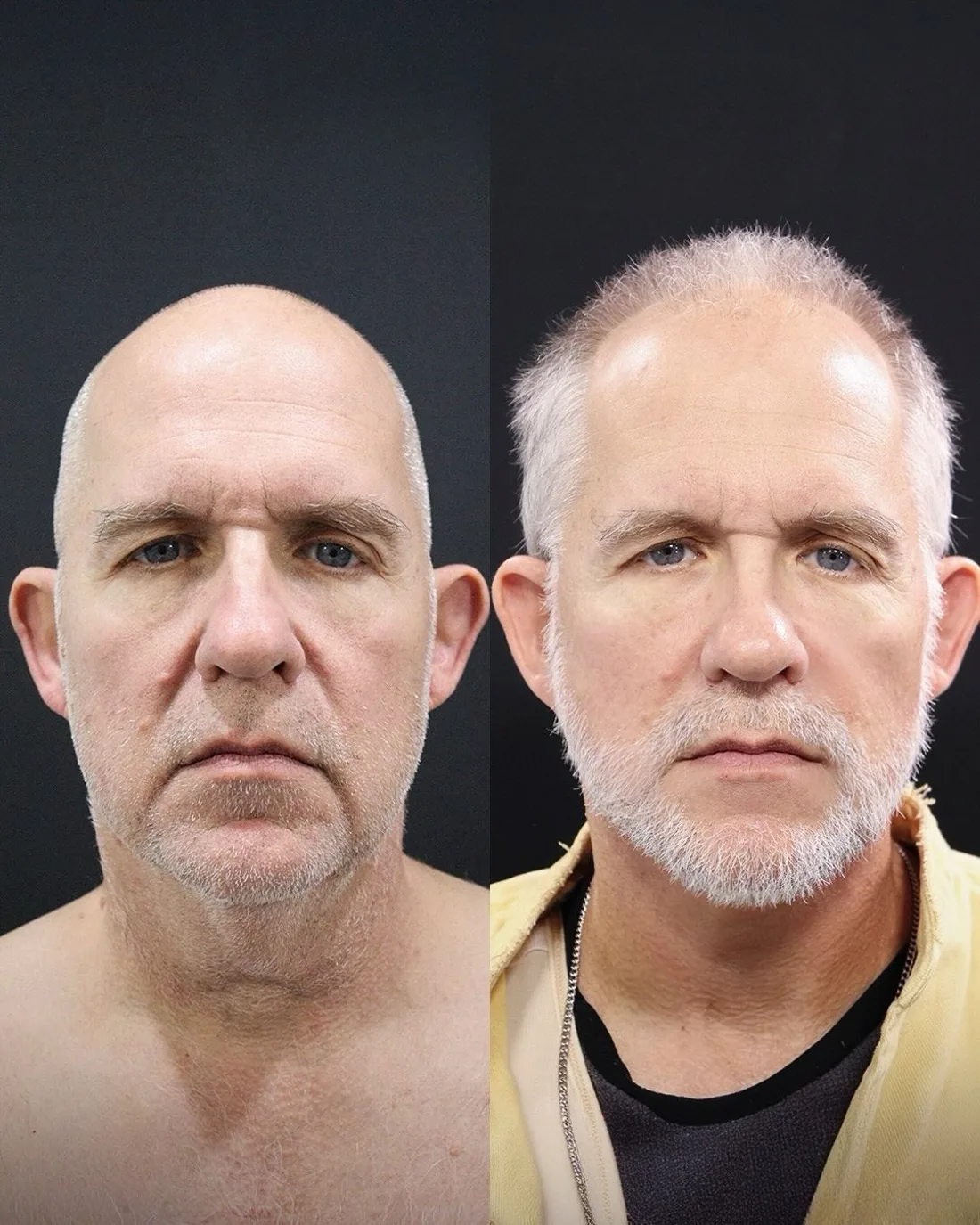
What thin skin actually changes
Thin skin does not disqualify you, but it does change how carefully I have to work and what I promise you about the surface. Let me separate two things that patients blur together, because the distinction is the whole of an honest answer.
The first thing is whether thin skin can hold a lift. It can, for the reason I just gave. The tension lives in the deep sutures. I have lifted very thin-skinned patients, many of them fair Northern European women in their late sixties and seventies, and the structure holds because the structure is doing the holding.
The second thing is what thin skin looks like afterward, and here I owe you candor. Thinner skin shows more of what lies beneath it. It reveals contour more honestly, which is often a gift, a cleaner jawline and a crisper transition at the neck. But it also shows fine surface lines, crepe texture, and small irregularities that thicker skin would hide. A facelift repositions your face. It does not iron your skin. If your complaint is the drape and the heaviness, thin skin is no obstacle at all. If your complaint is fine crepey texture on the cheek, I will tell you plainly that lifting will not erase it, and that resurfacing is a separate conversation. I offer CO2 laser and Morpheus8 for exactly that surface work, and I stage them apart from the lift so the skin is not asked to heal from two insults over one blood supply at the same time. Individual results vary, and I would rather set that expectation in the consultation room than have you discover it in a mirror.
There is a second reason thin skin makes me more, not less, careful, and it has to do with volume. Thin skin usually sits on a thin face, and a thin face has less of its own fat to hide the small steps and ridges that any dissection can leave behind. In a fuller face, the fat is a forgiving blanket. In a very thin one, it is not, so I take extra care with how I feather the transitions and I often plan a conservative amount of fat grafting into the deep hollows at the same sitting, not to inflate the face but to give the thin skin something soft to drape over. That is a judgment made face by face. It is also the sort of detail that never appears on a list of reasons your facelift will not last, because those lists are not written by someone who has to make the decision.
Sun damage, decoded
Every California face that has spent decades outdoors carries a specific kind of damage, and it has a name.
The accumulation of abnormal, clumped elastic tissue in sun-exposed skin, along with degraded collagen. It gives chronically sun-exposed skin its thickened, yellowed, leathery, deeply creased quality.
The biology is well described. Ultraviolet exposure drives enzymes that break down the skin’s collagen scaffolding, and it interferes with the signaling the skin uses to build new collagen. A study in the American Journal of Pathology showed that solar ultraviolet irradiation reduces collagen in photoaged human skin in part by blocking transforming growth factor beta, one of the master signals for collagen production. The net effect over a lifetime is skin with less of the springy framework that lets young skin snap back, more disorganized elastic tissue, and a surface etched with fine and deep lines.
So does this ruin your chances? No, and the reason is the same structural point, seen from a new angle. Solar elastosis is a disease of the skin and the very superficial layers. The SMAS, the deep structural sheet I reposition, lives below the zone that the sun degraded. Your sun took its toll on the passenger. The engine is largely intact. I routinely lift sun-belt patients whose skin, examined on its own, looks like poor raw material, and the lift holds because I am not relying on that raw material to hold it.
What sun damage does change is the surface story after the lift, and how I sequence care. Deeply photoaged skin still carries its wrinkles and its mottled pigment after surgery, because I moved the face, I did not replace the envelope. That is why I so often pair a plan with resurfacing done as a separate stage, and why sun protection after surgery is not a lecture but part of protecting your result. The difference between sagging and losing volume matters here too, because sun-damaged faces are frequently deflated as well as loose, and volume is answered with grafting, not with pulling. A sun-belt face often needs both a lift and a careful refill, and reading which problem dominates is a large part of what the exam is for.
Skin quality is a spectrum, not a pass or fail line. Almost the whole range is liftable with a deep plane approach, because the deep sutures carry the load. Where you sit on the band changes the surface expectations and the aftercare, not usually the answer to whether we can operate. Only the far fragile end, active disease or a blood supply already compromised, moves you out of range.
Loose skin after major weight loss
The GLP-1 medications have sent me a new kind of consultation, and it deserves its own honest paragraph. A patient loses a great deal of weight, quickly, and the face that emerges has skin that once held volume and now hangs with none. The instinct is to think there is simply too much skin, that no lift could take up that much slack, that the face is beyond help. I understand the instinct. It is also usually wrong.
Loose skin is not the problem a deep plane lift is worst at. It is close to the problem it is best at. When I reposition the SMAS, I move the whole descended envelope back up and back, and the skin that looked like a hopeless excess redistributes over a lifted foundation, with the true excess trimmed and closed under minimal tension. What the operation cannot do is restore the volume the weight loss took. A deflated, lax face has two separate problems, descended structure and lost fat, and they need two separate answers. I lift the structure and I refill the genuine hollows with your own fat, in that order, which is the whole argument of my longer piece on a facelift after GLP-1 weight loss.
There is one caveat I will not soften. I operate on the face you have the day I plan the surgery, so your weight has to have stopped moving. A face that is still shrinking is a moving target, and if you lose more after I lift, the lift loosens and the volume I restored no longer matches the frame. Wait until your weight has held steady, commonly for at least six months, before we set a date. That is not caution for its own sake. It is the difference between a result that lasts and one that quietly comes undone. Individual results vary.
Will an ex-smoker’s facelift hold
If you smoke now, I will not operate, and this is the one place where skin, or more precisely the blood supply to skin, genuinely can decide a candidacy. I want to be exact about why, because the honest version is more useful than a scolding.
Nicotine constricts the tiny vessels that feed the skin. The acute effect on the cutaneous microcirculation was measured decades ago; a 1984 study in the British Journal of Plastic Surgery documented a sharp drop in skin blood flow from tobacco smoking, and a broader overview in Skin Research and Technology described how cigarette smoking impairs the skin’s vasculature and lowers tissue oxygen. In a facelift, the skin at the edges of the lift survives on a blood supply that is already stretched thinner than normal by the surgery itself. Choke that supply further with nicotine and you invite the flap edge to die, which shows up as a black scab, delayed healing, and a worse scar. The classic facelift studies quantified this directly: Rees and colleagues, writing in Plastic and Reconstructive Surgery in 1984, found smokers had a markedly higher rate of skin-flap necrosis after facelift than nonsmokers, and Riefkohl’s group reported a similar association between smoking and skin slough after rhytidectomy. This is not folklore. It is one of the most reproduced findings in facelift surgery.
Now the part that should reassure the ex-smoker. The damage from nicotine to the microcirculation is largely a function of nicotine being in your system. Stop, let the vessels recover, and the acute constriction resolves. The elastin and collagen that smoking degraded over years do not come back, so your skin’s texture reflects your history, but the blood supply, the thing that actually threatens the operation, is restorable. That is why I ask patients to be fully off nicotine in every form, cigarettes, vapes, patches, gum, and lozenges, for about four to six weeks before surgery and the same after. Vaping is not a loophole; the problem is the nicotine, not the smoke, so a vape and a patch constrict the same vessels a cigarette does. I check, and I have postponed operations over it, because a healed scar is worth more than a kept date.
So will an ex-smoker’s facelift last? Yes, and here is the nuance patients miss. The longevity of a deep plane lift comes from the deep repositioning, which a former smoker holds as well as anyone. What smoking history affects is the surface, the texture and the fine lines, and how briskly you heal in the first two weeks. Get the nicotine out in time and you have converted the one genuine surgical risk back into a normal one, leaving only the surface story, which is cosmetic and manageable, not dangerous.
Does skin quality change how long a facelift lasts
This is the question underneath the question, so let me answer it without hedging and then explain. Skin quality has a modest effect on how a lift ages, and a large effect on how the surface looks along the way, but it is not the main driver of longevity. The main driver is the plane of the lift and the strength of the deep fixation.
Think about what “wearing off” even means. A facelift does not undo itself and snap back to before. It resets the clock, and then you age forward from a younger starting point. What people call a lift wearing off is really the slow continuation of the same gravity and volume loss that brought you in, now acting on a face that was repositioned years ago. If your lift was a skin-only lift, the skin was the only thing holding the result, and skin stretches, so a poorer skin envelope loosens sooner and the result fades faster. That is the world the alarming blog lists describe, and in that world skin quality really does govern longevity.
In a deep plane lift the deep sutures anchor the result, so the timeline is governed mostly by your ongoing structural aging, which everyone shares, rather than by the stretch of your particular skin. The long-term outcomes review I mentioned earlier found deep plane results measured in many years, not a couple, and that durability held across a range of patients. Does a person with beautiful, thick, elastic skin tend to hold a crisper look longer than a heavily sun-damaged one? At the margin, yes. But the difference is measured in the fine surface texture, not in whether your jawline and neck stay lifted. I would rather operate deep on average skin than superficially on perfect skin, every time, and so would the durability data. Put plainly, the phrase “wearing off” is less dramatic than it sounds, because a deep plane result does not fall; it simply continues aging from a younger place, and your skin’s quality shapes the fine texture of that slow journey far more than its direction.
Reading your own skin honestly
Patients want a way to judge their own skin before they ever reach a consultation, so here is the frame I actually use, translated out of the exam room. Some signs mean your skin is a strong partner for a lift. Some are cautions I want to know about in advance. And a few are genuine reasons to pause, treat something first, or reconsider the timing.
- Skin that still has some rebound when you pinch and release it, even if it is thin
- Loose skin from weight loss on a face whose weight has been stable for months
- Sun damage and fine lines on skin with a healthy color and good circulation
- A former smoker who has been completely off nicotine for the weeks around surgery
- A complaint about heaviness, jowls, and drape rather than about surface texture alone
- Active smoking or vaping, or any nicotine, in the weeks before and after surgery
- Skin over a face still actively losing weight, so the target keeps moving
- An expectation that lifting will erase fine wrinkles or mottled pigment on its own
- Signs of poor circulation, a wound that healed badly before, or uncontrolled disease that starves the skin of blood
- A history of thick, raised, spreading scars that has never been evaluated or planned for
Skin of color, keloids, and pigment
Much of my patient base is Hispanic and darker-skinned, and I would be doing you a disservice to write a whole article about skin quality and skip the concerns that actually keep my darker-skinned patients up at night. They are not the same concerns fair-skinned patients bring.
Two things matter more in richly pigmented skin: the tendency of some patients to form thick raised scars or keloids, and the tendency of the skin to respond to any injury with darkening, called post-inflammatory hyperpigmentation. Neither is a reason to avoid a facelift. Both are reasons to plan. I ask directly about your and your family’s scarring history, I place incisions where they hide and close under minimal tension precisely because tension feeds bad scars, and I have a low threshold to treat a scar early if it starts to thicken. For the pigment, sun protection and a gentler approach to any resurfacing are the levers. This is routine work in my practice rather than an exception, and the reason I raise it plainly is that darker-skinned patients are too often either scared off or waved through without a real conversation. You deserve neither. You deserve a plan built around how your skin actually behaves.
When your skin genuinely is too damaged
I promised honesty, so here is where I say no, or not yet. There is a small group for whom the answer to “is my skin too damaged for a facelift” is genuinely a pause.
If your skin’s blood supply is compromised in a way that will not recover, active smoking you are unwilling to stop, poorly controlled diabetes, a connective tissue or vascular disease that starves small vessels, then the flap is at real risk and I will treat the underlying issue or decline. If you have a history of aggressive keloids that has never been evaluated, I want that assessed and planned before, not discovered after. If your weight is still falling, I want you to wait. And if your true complaint is entirely about surface texture, the crepe and the fine lines, and not at all about drape and structure, then a facelift is the wrong first tool and I will point you toward resurfacing instead of selling you an operation you do not need. Some of these are permanent no’s. Most are “not until we fix this first.”
That distinction matters, and it is why I put so much into a real examination rather than a photo review. Skin quality is not a number you can read off a picture. It is rebound, circulation, thickness, scarring history, pigment behavior, and the specific complaint that brought you in, weighed together. A surgeon who tells you yes or no from a selfie is guessing. There is a fuller map of the genuine disqualifiers in my piece on who should not get a facelift, and it is shorter than most people fear.
What I do differently for fragile skin
Technique is where a worry about skin quality gets answered in the operating room, not just in reassurance, so let me show you the levers rather than just naming them.
The first is the plane itself. Because I lift in the deep plane and carry the skin and fat as one composite unit, the skin is dissected far less than in older techniques that raised a long thin skin flap. Less dissection means the skin keeps more of its own blood supply, which is exactly what fragile, sun-damaged, or once-smoked skin needs most. The technique that worried patients think is too much for their skin is in fact gentler on it than the old skin-tension lift they are picturing.
The second lever is tension, or the near absence of it. The deep fixation carries the load, so I close the skin loosely. Tension is what widens scars, what tips a marginal blood supply into necrosis, and what darkens skin in patients prone to pigment. Taking tension off the skin closure protects every one of the surface concerns I have described.
The third is sequencing. I do not stack a facelift and aggressive laser resurfacing on the same skin on the same day, because that asks one blood supply to heal two insults at once. I lift first, let the skin settle and reperfuse, and address surface texture as a separate stage when the tissue is healthy and calm. That patience is itself a form of respect for fragile skin.
And the fourth is drains, closure, and follow-up. Fly-in patients from California stay locally about six days, drains come out around 48 to 72 hours, and sutures at day seven, and I do not clear anyone to fly home until the healing is far enough along to be safe, which for fragile skin sometimes means an extra day of watching. My California license, A 42463, has stood since 1986, and I remain reachable from San Diego afterward, which matters most for exactly the patient whose skin needs a careful eye in the weeks after surgery. The recovery period is where thin, sun-damaged, or post-weight-loss skin is either respected or rushed, and I would rather be slow.
The reframe
The woman who pinched her cheek and pronounced herself hopeless had a good lift. I repositioned a structural layer the sun and the years had barely touched, laid her thin, weathered skin back over it with almost no tension, and left her surface texture for a later, gentler stage. Months on, her jawline held, her neck held, and the fine lines that had convinced her she was a lost cause were still hers, softened but present, because I moved her face, I did not replace her skin, and I told her so before we started. Individual results vary, and hers did not require a miracle, only a correct understanding of what the operation asks of skin.
The lists that tell you sun damage or smoking or weight loss will keep you from a facelift are describing an operation that pulls skin tight. If that were the operation, they would be right, and your worry would be well founded. It is not the operation. A deep plane lift asks your skin to be a passenger, not a support beam, and most skin, even thin, even weathered, even loose, even once smoked, can be a good passenger. The real questions are narrower and answerable: is your blood supply healthy, has your weight settled, are you off nicotine, and is your complaint about drape or about texture. Answer those honestly with a surgeon who examines you in person, and the odds are far better than the internet led you to believe. The place to find out is not a mirror at midnight. It is a real consultation, where your skin can be read for what it is.