
When a patient with brown or deeply pigmented skin sits across from me and asks, quietly, whether a facelift will leave her marked, I understand the weight behind the question. She is not asking about vanity. She is asking whether the surgery meant to make her look rested will instead leave a raised cord in front of her ear, or a dark shadow along the hairline that lingers for a year after everyone has forgotten she had anything done. Most of my patients over these many years have had exactly her skin: Hispanic, Mediterranean, Middle Eastern, South Asian, African, the full range of what dermatologists call skin of color. So this is not a special case I occasionally accommodate. It is the daily work of my practice on the border, and it has shaped how I place every incision, how I close it, and what I ask my patients to do for the months on either side of the operation.
The honest answer is that darker and Hispanic skin does carry real, documented differences in how it scars and how it holds pigment. Those differences are manageable. They are not a reason to avoid a facelift. But they are a reason to choose a surgeon who plans around them from the first photograph rather than hoping the skin behaves. Let me walk you through exactly what I watch for, and what I do about it.
The two things I am actually worried about
There are only two scar problems that behave differently in richly pigmented skin, and it helps to separate them cleanly, because they are not the same thing and they are not fixed the same way.
A thickened, often raised and red scar that stays within the boundaries of the original incision. It usually appears in the first weeks to months and tends to soften and flatten over one to two years. The first is a thickened scar. The second, and the one people fear by name, is the A scar that grows beyond the edges of the original wound, spreading into surrounding normal skin like a claw. Unlike a hypertrophic scar it does not regress on its own and it has a much stronger association with darker skin and family history.. A keloid is not just a bad scar. It is a scar that has outgrown its own wound, climbing into skin that was never cut. That distinction matters because the two things carry very different odds and very different treatments, and a surgeon who uses the words interchangeably has not thought carefully about your skin.
The third thing, separate from either scar type, is pigment. Darkening of the skin that follows inflammation or injury, caused by melanin the skin deposits in response to the insult. It is a color problem, not a texture problem, and in darker skin it can persist for months to years., or PIH, is a color change, not a lump. A scar can be flat and soft and perfect in texture and still show as a brown line for the better part of a year because the skin around it deposited melanin while it healed. In lighter skin that reaction is often faint and brief. In Latino and darker skin it can, in the words of the dermatology literature, outlast and outweigh the original injury that caused it. That is the part patients almost never anticipate, and it is the part I spend the most time preventing.
What the numbers actually say, and what they do not
Let me give you the real figures, because vague reassurance helps no one and neither does fear. In darker-pigmented populations, keloid scarring occurs in an estimated 4.5 to 16 percent of people, with the higher rates seen in individuals of African, Asian, and Hispanic descent. That is meaningfully higher than in fair skin, where clinically significant keloids are uncommon. Family history raises the risk further, which is why I ask about your parents and siblings, not to be nosy but because a genetic predisposition to keloids is one of the few things that would genuinely change my surgical plan.
Now read that range again, because the way you read it decides how you feel walking into surgery. Sixteen percent at the high end means that even in the highest-risk group, the substantial majority of people do not form keloids. And here is the piece that reassures me most: the keloid literature is dominated by high-tension body sites, the chest, the shoulders, the earlobes after piercing, the upper back. The pre-auricular skin in front of the ear, where the main facelift incision lives, is low-tension facial skin that keloids far less readily than a sternum or a deltoid. A history of a keloid from an ear piercing is not nothing, and I will factor it in. But it is not the same as a keloid on the face, and I do not let a shoulder scar make the decision for a cheek.
Pigment is the more universal issue. Post-inflammatory hyperpigmentation is common and more severe in Fitzpatrick skin types III through VI, exactly the range most of my patients occupy, and it can take months to years to fade on its own. It also worsens with ultraviolet light. Those two facts, that it is slow and that the sun feeds it, are the entire basis of how I counsel darker-skinned patients about the after.
Why the deep plane technique is quietly an advantage here
I want to be careful, because the internet is full of claims that one facelift method magically erases scars. No technique erases a scar. But there is a real, mechanical reason the deep plane facelift tends to leave a kinder incision in skin that scars readily, and it is worth understanding rather than taking on faith.
Every scar’s quality is decided, more than by anything else, by the tension across it as it heals. A wound closed under tension pulls at its own edges for weeks, and skin under tension answers with thickness, widening, and in a predisposed patient, keloid. Standard surgical teaching is blunt about it: if there is tension on the closure, the scar will not be acceptable once healed. That principle is not cosmetic folklore. It is the single most reproducible lever a surgeon has.
The older skin-only facelift pulled the skin itself tight and trimmed the excess, which meant the skin bore the load and the scar in front of the ear was often the price. In a deep plane lift, the lifting happens underneath, at the level of the SMAS and the released facial ligaments, and that deeper layer carries the weight of the repositioning. The skin is then laid back over the top and closed with almost no tension of its own, because it is no longer the thing holding the face up. When the skin is closed gently, the incision has the best possible chance to heal as a fine line rather than a raised cord. For a patient whose skin is already inclined to thicken a scar, taking tension off that closure is not a marketing detail. It is the whole game.
I will not oversell it. A deep plane lift is still surgery, it still leaves an incision, and a determined keloid-former can thicken even a tension-free scar. But if you are going to operate on skin that scars readily, you want the technique that asks the least of that skin at the closure. That is one of several reasons I do the operation this way.
Where I put the incision, and why placement matters more in your skin
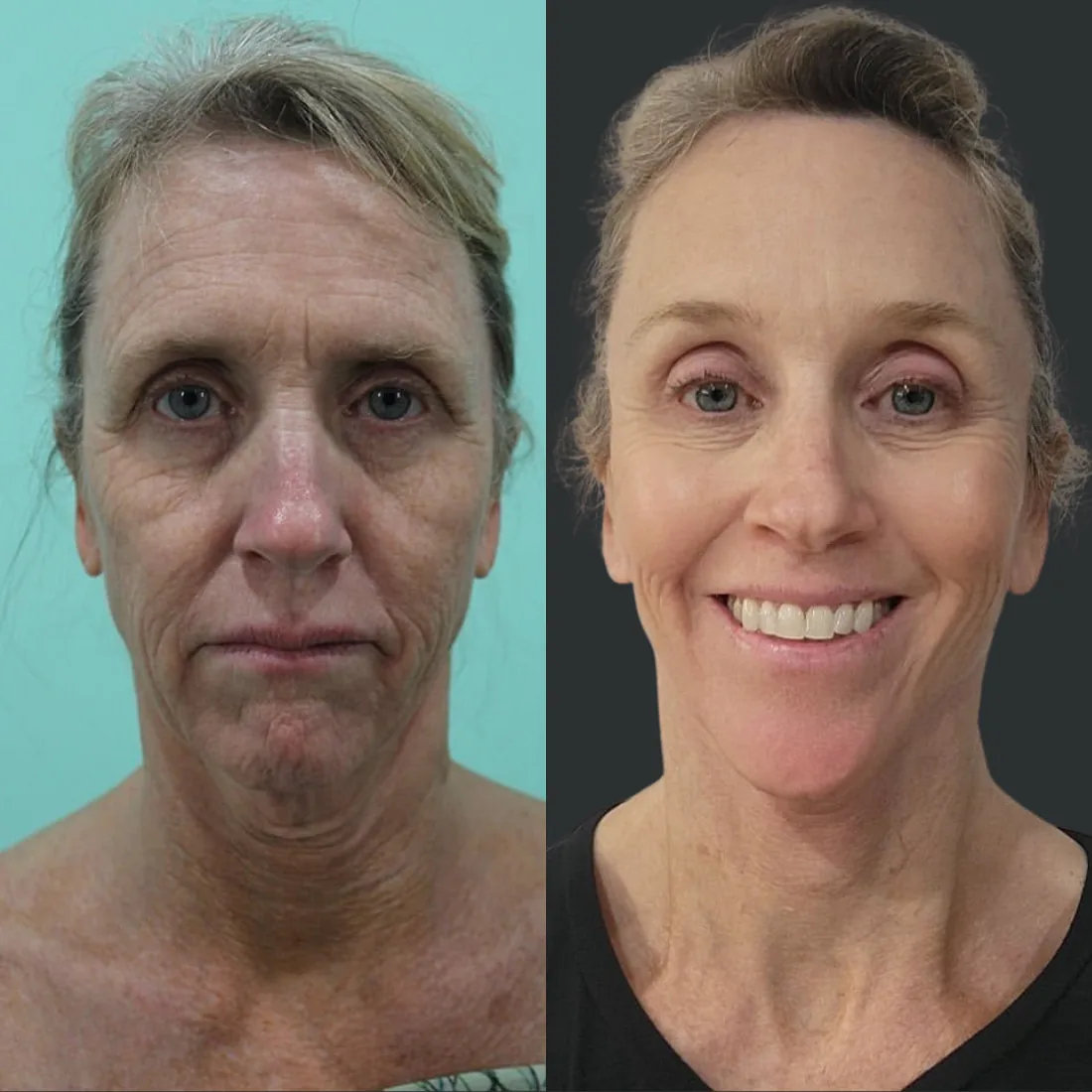
Placement is the part of scar planning that is entirely within my control on the day, and in darker skin I treat it as sacred. The goal is simple to state and hard to execute: put the incision where the skin already has a shadow, a crease, or a border, so that a healing line, even one that stays a shade darker for a while, hides inside an edge the eye already expects.
In practice that means tucking the incision into the crease where the ear meets the cheek, curving it inside the little cartilage bumps of the ear rather than straight down the flat skin in front, and carrying the back portion into the hairline behind the ear where a scar disappears among the follicles. The exact route I choose depends on your hairline, your sideburn, and whether you wear your hair up or down, and I plan it against your photographs before you are ever on the table. I have written more about where facelift incisions fall around the ear if you want the full map, but the principle for pigmented skin is this: the more of the incision I can hide in a natural border, the less it matters if that segment holds color a little longer than a lighter patient’s would.
There is a second placement decision people rarely ask about, and it is the earlobe. A scar dragged down onto the flat of the earlobe, the so-called pixie ear, is conspicuous on anyone and especially unforgiving on skin where the line stays visible longer. Keeping tension off the lobe and setting it correctly is part of the same low-tension discipline that protects the rest of the incision. I mention it because the earlobe is a classic keloid site from piercings, and a patient who keloided an earring hole is telling me something useful about how to handle that corner of the closure.
The two-sided decision most surgeons make one-sided
Here is a judgment that separates a surgeon who has operated on a lot of pigmented skin from one who has not: sometimes the right call in a keloid-prone patient is to do less, not more, and to say so out loud.
If you tell me you have formed true keloids before, not just thick scars but scars that spread into normal skin, we are going to have a longer conversation than usual, and it may end with me recommending a smaller operation, a staged plan, a test, or in rare cases advising against elective facial surgery altogether. A facelift is elective. It is supposed to make you look more like a rested version of yourself, and a person who scars catastrophically may be trading a tired jawline for a worse problem. Part of being the surgeon who has continuity with you, who is licensed in California and reachable from San Diego, is being willing to be the one who says not this, or not yet, or not this way. I have written separately about who should think twice before a facelift, and a strong personal keloid history sits on that list, not as an automatic disqualifier but as a genuine flag that deserves an honest weighing.
For most patients with darker skin, this conversation ends in reassurance rather than refusal. A tendency toward slightly thicker or darker scars is manageable and expected, and it is not the same as a keloid diathesis. But you deserve a surgeon who can tell the difference and who will not talk you into an operation your skin is telling both of us to approach carefully. Individual results vary, and in this domain that phrase is not a legal reflex, it is the literal truth of how differently two people with the same skin tone can heal.
Adapting the plan for your skin: a working checklist
These are the specific adjustments I make when I am planning and recovering a facelift on darker or Hispanic skin. Not every one applies to every patient, but this is the shape of the thinking.
- I take a real scar history: past keloids, thick scars, how ear piercings and C-section or other incisions healed, and family history of keloids
- I place incisions inside natural creases, cartilage folds, and the hairline so a healing line hides in an edge the eye already expects
- I lift in the deep plane so the SMAS bears the tension and the skin closes with almost none, the single biggest lever on scar quality
- I close gently and support the earlobe to avoid a dragged-down, conspicuous lobe scar
- I plan sun protection as part of the surgery, not an afterthought, because ultraviolet light darkens a maturing scar in pigmented skin
- I keep a low threshold to treat early: silicone, targeted steroid for a scar that starts to thicken, and a measured approach to pigment once the skin has calmed
- Ignoring a personal or family keloid history and operating as if all skin heals identically
- Closing skin under tension to get a tighter look on the table, then blaming the scar on your skin type
- Aggressive early lasering or peeling of fresh pigmented skin, which can inflame it and deepen the very hyperpigmentation it is meant to erase
- Promising a scarless or invisible result to anyone, in any skin tone
Sunlight is not a lifestyle footnote, it is part of the operation
I am emphatic with my darker-skinned patients about the sun in a way that surprises them, because they associate sun damage with fair skin and sunburn. But ultraviolet light does something different and just as important in pigmented skin: it drives melanin production, and a fresh scar or a recently operated cheek is primed to answer sunlight by turning brown and staying that way. The pigmentation literature is explicit that post-inflammatory hyperpigmentation worsens with ultraviolet exposure, which is exactly why photoprotection is treatment, not vanity.
So the plan is not subtle and it is not optional. For the first months after surgery, while the incision and the operated skin are maturing, I want that skin out of direct sun, shaded by a hat and by your hair, and covered with a broad-spectrum sunscreen once the incisions have sealed enough to tolerate it. Tinted mineral sunscreens with iron oxide are particularly useful in skin of color because they block the visible light that also contributes to pigment, not just the ultraviolet. This is the single most powerful thing you can do yourself to keep a well-placed scar from announcing itself, and it costs you nothing but discipline. A patient who protects the skin diligently for the first several months and a patient who suns the same incision will not have the same result, and the difference is almost entirely in their hands, not mine.
The border region where most of my patients live is sunny most of the year, which makes this harder and more important at once. I would rather tell you the uncomfortable truth, that you need to baby that skin through a San Diego or Tijuana summer, than let you undo careful surgery in a weekend at the beach.
Pigment after surgery: what is normal, and when I intervene
Let me set expectations honestly, because the pigment question is where darker-skinned patients most often panic unnecessarily, and occasionally where they should act.
In the first weeks after any facelift, bruising and discoloration are expected in every skin tone, and in richer skin the yellows and greens of a resolving bruise can read as brown and hang around a little longer. That is not hyperpigmentation, it is a bruise, and it resolves. Separately, the incision line itself often passes through a phase where it is darker than the surrounding skin. In lighter patients this fades quietly. In darker patients it can persist for months, and that is where patience and protection matter. Most post-inflammatory pigment does improve on its own, but the timeline in skin of color is measured in months, sometimes longer, not weeks.
My rule is to let calm skin calm down before I chase color. Intervening too early, with aggressive lasers or strong peels on freshly healed pigmented skin, can inflame it further and deepen the hyperpigmentation, which is the opposite of the goal. When pigment does need help, the gentler and better-evidenced path is topical: a disciplined sun-protection routine first, then, once the skin is stable, measured use of pigment-directed topicals, and only later and selectively any device-based treatment, chosen by someone who treats skin of color routinely and knows the settings that respect it. I offer resurfacing tools in my own practice, and precisely because I know what they can do to pigmented skin when rushed, I am conservative about when I reach for them after a lift.
If you scar thickly rather than darkly, the early moves are different: silicone sheeting or gel once the incision is closed, and a low threshold to inject a small, targeted dose of steroid into a segment that starts to raise, well before it becomes a fixed problem. Caught early, a scar heading toward hypertrophy can often be talked back down. Ignored for a year, it is a harder fight. This is one of the concrete reasons continuity of care matters more when you have crossed a border for surgery: someone needs to be watching that line at week six and month three, not just admiring it on the day the sutures come out.
One more distinction worth naming, because patients conflate them and then treat the wrong problem. A dark scar and a thick scar are not the same complaint, and the same patient can have one without the other. A flat, soft scar that is merely brown is a pigment issue, and the answer is time, sun protection, and eventually gentle topicals, never a steroid injection, which does nothing for color and can thin the surrounding skin if misused. A raised, firm scar that is the same color as your skin is a texture issue, and the answer is silicone, pressure, and possibly steroid, never a bleaching cream. In darker skin the two can arrive together, a line that is both raised and brown, and then the plan treats each on its own track. I raise this because a patient who holds the right vocabulary asks sharper questions and is far less likely to be sold one expensive treatment for a problem it was never going to fix. The careful scar and pigment history I take before surgery exists precisely so that we are both treating the right thing on the right timeline, rather than reaching for whatever tool is nearest.
The neck, the deeper work, and why I do not overreach
Patients sometimes arrive convinced that the more the surgeon does underneath, the better everything will be, including the scars. It does not work that way, and in skin that heals reactively, restraint below the skin protects the result above it.
The deep neck, the platysma, the position of the muscle bands, the fat under and above the muscle, all of that is real work that I do when your anatomy calls for it, and doing it properly is part of why the jawline and neck of a well-executed deep plane lift look the way they do. But there is a temptation, especially in marketing, to promise ever more aggressive dissection as though volume of surgery equals quality of result. In practice, dissection is trauma, and trauma is inflammation, and inflammation is exactly what drives both pigment and scar in the patients this article is about. I take what your anatomy needs and I do not go hunting for more, because in reactive skin the surgeon who does the least surgery that achieves the goal is often the one who leaves the cleanest healing behind.
That is a philosophy, not a slogan, and it is easy to test in a consultation. Ask any surgeon why they would or would not address your deep neck, and listen for whether the answer is about your anatomy or about their menu. In your skin especially, the right amount of surgery is the amount your face needs, no more, and a surgeon who cannot say no to themselves is a poor bet for skin that punishes excess.
What the first year actually looks like
Because expectations do more for satisfaction than almost anything, here is the honest arc of scar and pigment maturation in darker skin, laid out as a timeline. Yours may run faster or slower. Individual results vary, and the ranges below are the common path, not a schedule you are failing if you fall outside it.
- Weeks 1 to 3Bruising and swelling, not scarring. The discoloration you see now is a healing bruise and early swelling, which in richer skin can look browner and last a little longer. The incision is sealing. This is not the time to judge a scar.
- Weeks 4 to 8The line declares itself. The incision may look pink, red, or in darker skin frankly brown, and this is when I watch most closely. Sun protection is non-negotiable now, and any segment starting to thicken gets treated early rather than watched.
- Months 3 to 6The reactive phase. Thickness, if it is coming, shows itself here, and pigment is often at its most noticeable. Disciplined patients who protect the skin see color begin to settle. This is where diligence pays off or is regretted.
- Months 6 to 12 and beyondFading and softening. Scars soften and pale, and much post-inflammatory pigment lifts, though in skin of color the last of the color can take a year or more. What looked alarming at month two is usually quiet by now.
I show patients this arc before surgery specifically so that the brown line they see at week five does not send them into despair. It is, almost always, a normal station on a normal journey, not a permanent result. The people who struggle emotionally are the ones no one prepared, who assumed a facelift scar behaves in their skin the way it does in a magazine photo of paler skin, and who were never told that a slower, browner fade is the ordinary course.
Choosing a surgeon when your skin has memory
If you take one thing from this, let it be a set of questions to bring to any consultation, because the surgeon’s answers will tell you more than any before-and-after gallery.
Ask to see healed results on patients with skin like yours, not just the fairest cases in the portfolio. Ask how the surgeon places and closes the incision to keep tension off it, and whether they lift in the deep plane or pull the skin. Ask what their plan is for pigment in your skin, and if they look blank or wave it off, that tells you they do not routinely operate on skin of color. Ask who watches your scar at week six and month three, and how you reach them, which matters twice as much when you have flown in for surgery and gone home to another country. And tell them, without minimizing it, your true keloid and scar history, and watch whether they engage with it seriously or brush past it to keep the sale.
The reason I can write this article is that these are not hypothetical patients to me. The faces I have worked on over these decades are, in large part, brown, Hispanic, Mediterranean, and darker, and managing pigment and scar in that skin is not a specialty I bolted on. It is the ground I have always stood on. When you come in for a consultation, the scar and pigment conversation is not an afterthought I have if you raise it. It is built into how I read your photographs, plan your incisions, and decide how much surgery your particular skin should receive.
A facelift on darker or Hispanic skin can heal beautifully, with a fine line hidden in the folds of the ear and pigment that settles over the first year into skin that simply looks rested. It gets there through placement, through a genuinely tension-free closure, through respect for the sun, and through a surgeon willing to do the right amount and no more. None of that is exotic. It is just careful, and your skin deserves careful. Individual results vary, but the plan does not: hide the line, take the tension off it, keep the light off it while it heals, and watch it patiently through the year it takes to become quiet.