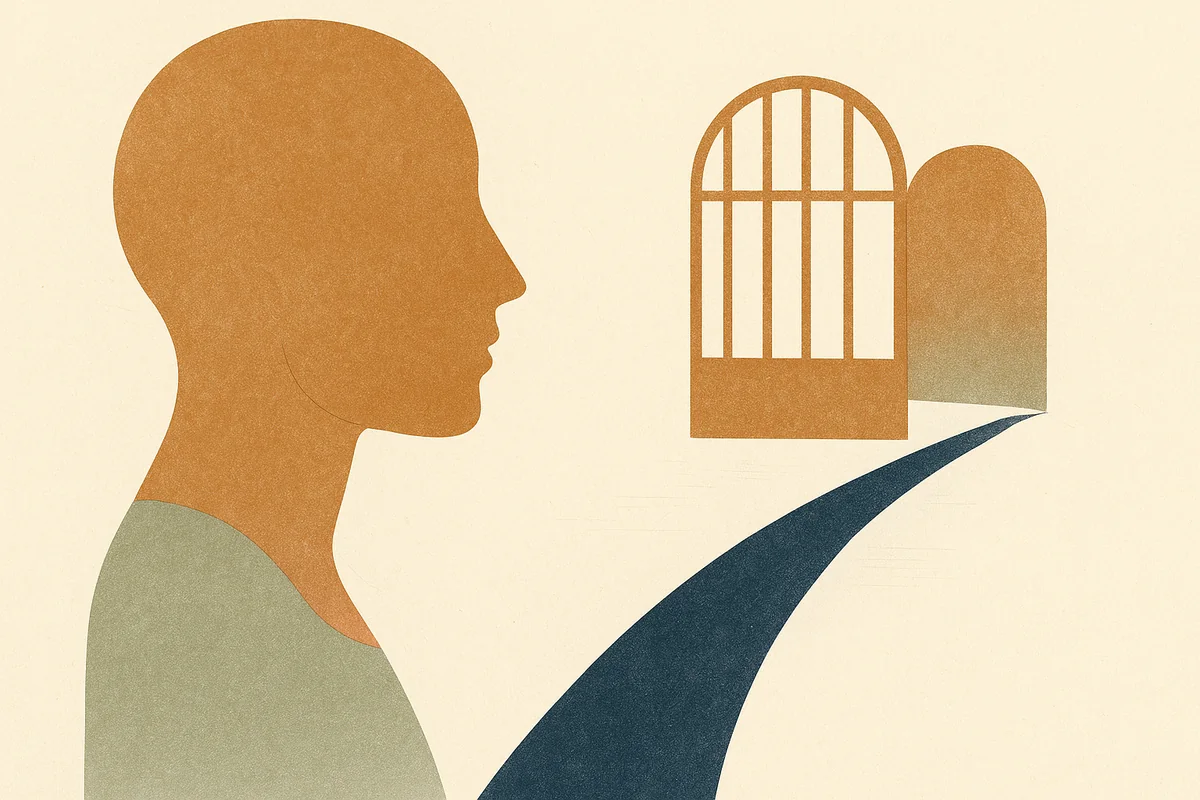
Patients are often surprised when I tell them that some of the most important work of my career happened in the consultation room, not the operating room, because it was the work of saying no. A facelift is elective surgery. Nobody needs it the way they need a bypass, which means the bar for doing it is not can I, but should I, and there are days when the honest answer is not yet, and a few when it is simply no. After 37 years and more than 3,000 facelifts, I can tell you the list of true disqualifiers is shorter than most people fear, that almost none of them are about worthiness or age, and that nearly all of them are about one thing: whether your body, on the day of surgery, can heal what I do and tolerate the anesthesia it takes to do it. This article is that list, told plainly, including the part where a surgeon looks at a healthy patient with perfect labs and still says no.
What actually disqualifies you from a facelift?
Very few things disqualify you outright; what stops a facelift is anything that makes healing unreliable or anesthesia unsafe on the day of surgery, and most of those things are temporary. When I review a patient’s file, I am really asking three families of questions. First: is anything starving the tissue I need to heal, which is where nicotine lives. Second: is anything changing how you bleed or how your heart and vessels will behave under anesthesia, which is where blood thinners, blood pressure, and the medical conditions live. Third: is the operation itself the wrong answer for what you actually want, which is where expectations live, and that third family disqualifies more people than patients ever guess.
Notice what is not on the list: your age by itself, the fact that you take medication, the fact that you carry a diagnosis. Those are the beginnings of conversations, not the ends of them. Every one of them is resolved case by case, at a consultation, with your own physicians in the loop, and never by a rule I publish on a website. Be suspicious of any practice that hands you a universal eligibility checklist before a doctor has studied your history; medicine that specific cannot be practiced by list.
- Smoking or any nicotine (cigarettes, vapes, patches, gum) in the weeks around surgery
- Blood pressure, diabetes, or a clotting problem that has not yet been brought under control
- A goal a lift does not treat, or an expectation surgery cannot meet
- A stable weight and an honest, complete medical history
- A problem the deep plane actually corrects, and the patience to optimize first when I say "not yet"
Do smoking and vaping rule you out?
Nicotine is the closest thing I have to an absolute rule, and it makes no difference whether it arrives by cigarette, vape, patch, gum, or pouch. Here is the mechanism, because I want you to understand the rule rather than merely obey it. Nicotine constricts small blood vessels. A facelift, any facelift, elevates the tissue of the face and then asks it to heal on the blood supply that remains, delivered through exactly those small vessels. Put nicotine into that system and you are narrowing the pipes at the precise moment the tissue is begging for flow. The plastic surgery literature has documented this for decades. When Rees and colleagues studied face lift patients in 1984, smokers suffered skin sloughs far more often than nonsmokers, and a few years later Riefkohl and colleagues tied that risk to occlusive changes in the small vessels of smokers’ skin, noting that patients who kept smoking after surgery fared worse than those who stopped. Patients with nicotine on board carry higher rates of wound healing problems and of skin loss along the incision lines, the complication surgeons call necrosis. Cigarettes add an insult on top of the injury, because the carbon monoxide in smoke also reduces how much oxygen your blood can carry to the wound.
I work in the deep plane, the technique Hamra described in 1990, which releases the deep structure beneath the SMAS and repositions it as one unit so the skin itself is not under tension. Patients sometimes ask whether that makes the nicotine rule softer for them. It does not, and I will not pretend otherwise. Tissue was still elevated. Incisions still have to knit. I treat no technique, including my own, as an exemption from biology.
Do nicotine patches, gum, and vaping count as smoking?
Yes. The wound does not know the delivery method; it only knows nicotine. Every year patients arrive having quit cigarettes and switched to a vape or a patch, genuinely believing they have satisfied the requirement. They have satisfied the word smoking while missing the point of the rule, because the molecule that narrows the vessels is the same molecule regardless of packaging. So when I ask about nicotine at consultation, I ask about all of it, and I ask you to answer honestly, not because I am policing your habits but because the skin over your cheekbone cannot lie to me three weeks after surgery even if the intake form did.
The question everyone asks next is how long before surgery nicotine must stop. I set that timeline case by case, at your consultation, based on your history and what you use, and I would rather give you a number that fits your file than a slogan that fits a webpage. If you want to know the expectation before you commit to anything, ask our coordination team when you call or write; that is exactly what they are there for.
Can you have a facelift if you take blood thinners?
Sometimes yes, sometimes no, and never, under any circumstances, by stopping the medication on your own. I want to be very direct about this, because it is the place where a patient’s eagerness can do real harm. Blood thinners exist because something in your history earned them. That medication is protecting you from a problem considerably more serious than facial aging, and the decision about whether it can be adjusted, bridged, or paused around an elective operation does not belong to you, and frankly it does not belong to me alone either. It belongs to the physician who prescribed it, working through the question with me and with the anesthesiologist who will be responsible for you in the room.
Why do these medications matter so much for a facelift specifically? Because the operation’s most watched early complication is the hematoma, a collection of blood under the healing tissue, and everything that changes how you clot changes that calculus. In the largest published facelift series, an analysis of more than eleven thousand patients, hematoma was the single most common complication. I have written separately about what a hematoma is and the warning signs that matter after surgery; before surgery, the same logic runs in reverse, which is why the bleeding question is settled on paper, ahead of time, with data.
So the honest answer to can I have a facelift on blood thinners is: bring me the complete picture and let the three doctors who share responsibility for you answer it together. That includes the full list of everything you take, prescriptions, over the counter medicines, and supplements, because some common pain relievers and some supplements patients think of as harmless also affect bleeding. At the consultation I will ask for all of it, and the anesthesiology review, by Dra. Nadiezhda Garcia Bonilla, weighs the same list from her side. Nothing about this is a form exercise. It is the difference between an operation planned around your biology and an operation planned around hope.
What about diabetes, high blood pressure, or autoimmune conditions?
None of these is an automatic no; each is a case by case medical decision made with your prescribing physician, and each is really a question about control, not about the diagnosis on the chart. Diabetes concerns me as a surgeon because of healing: the same small vessel and tissue repair machinery that nicotine attacks can also be affected by poorly controlled blood sugar. Blood pressure concerns me because of bleeding: pressure that is not well managed raises the stakes during surgery and in the hours after it, when a hematoma is most likely to declare itself. Autoimmune conditions concern me twice over, once for the condition’s own effect on healing and once for the medications that manage it, some of which quiet exactly the cellular activity a wound needs.
You will notice I am not publishing thresholds, target numbers, or a table of acceptable and unacceptable diagnoses. That is deliberate, and it is not evasion. I do not make these decisions by table; I make them file by file, with the physician who has managed your condition for years and knows things about your history that no intake form captures, and with the anesthesiologist’s independent review. A condition that is stable, well controlled, and well documented is a very different conversation from the same condition ignored. Your job is not to guess the verdict in advance; your job is to disclose everything and let the process work.
Does age itself disqualify anyone?
No. I screen health, not birthdays. What the pre-operative evaluation interrogates is anesthetic fitness and healing capacity, and neither of those reads a calendar. I have seen patients in their seventies whose files were cleaner than patients twenty years younger. What changes with age is only that the screening earns its keep more visibly, because the questions it asks become more likely to have interesting answers. The evaluation is the same for everyone, and the verdict belongs to the file, not the birth date. Individual results vary, and so does individual physiology, which is exactly why the screen exists.
What do the pre-op labs and EKG screen for?
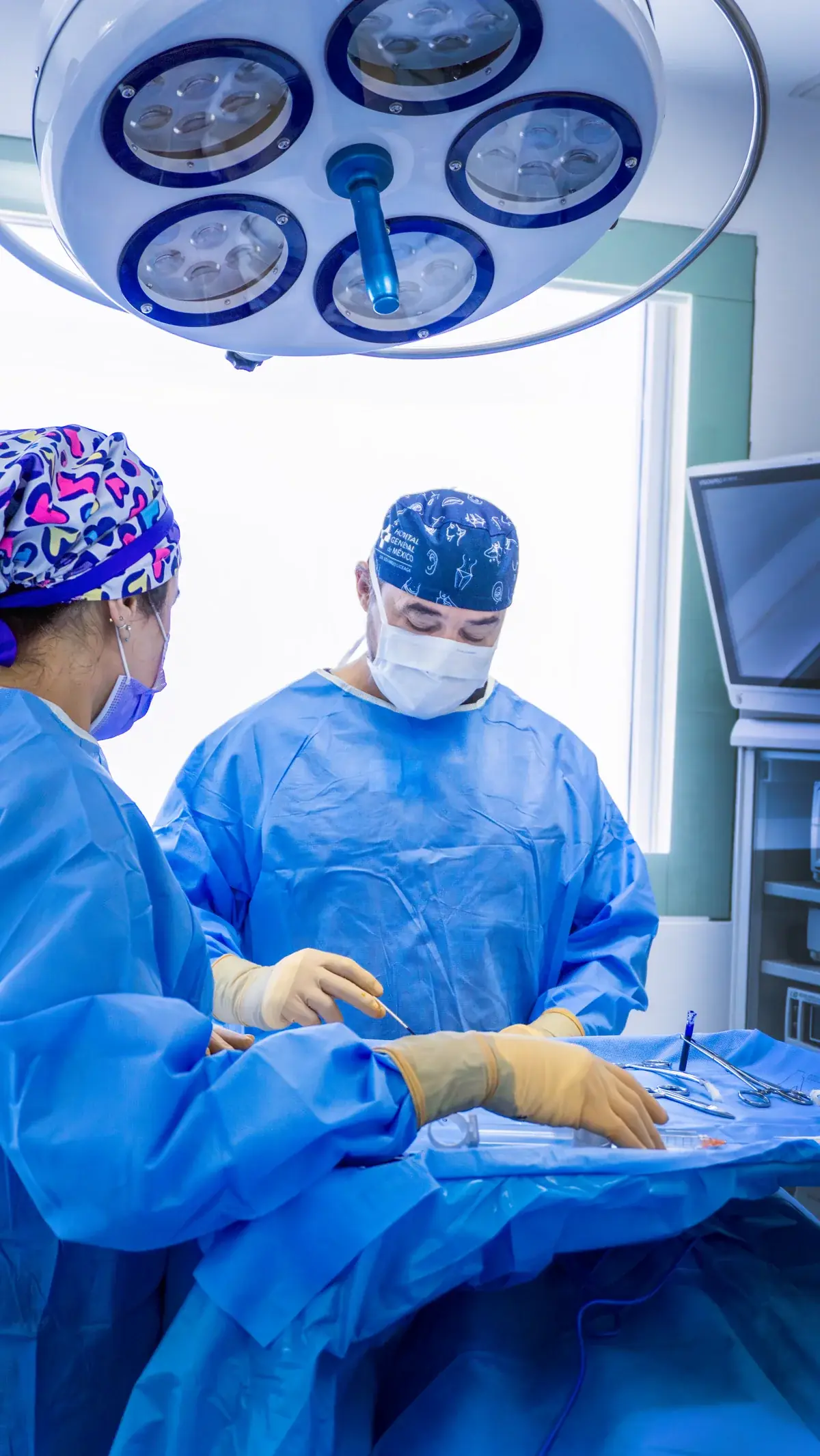
They are the gate in front of my operating room: blood work that shows how you clot, how you carry oxygen, and how your body chemistry stands, and an electrocardiogram that shows your heart’s electrical rhythm before anesthesia. Before surgery I require pre-operative labs and an electrocardiogram, and I review every file personally. Not a delegate, not a screening service, me. Dra. Nadiezhda Garcia Bonilla, the board certified anesthesiologist who is present for every procedure I perform, reviews the same file from the anesthesia side. Two sets of trained eyes, asking two different sets of questions, of the same data.
I want you to understand what this step is for, because patients sometimes experience it as bureaucracy. It is the opposite. Everything earlier in this article, the medication questions, the condition questions, the honesty about nicotine, converges here, where assumptions are replaced by measurements. The consultation hears your history; the labs check it. And the setting matters: this happens inside VIDA Wellness & Beauty, the first Quad A (AAAASF) accredited facility in Mexico, licensed by COFEPRIS, where the operation itself takes place. The full picture of the building, the accreditation, and the anesthesia care is on the facility and anesthesia page; the point here is simply that the screening is not a promise, it is a process with a paper trail, and I am the last signature on it.
Does your weight need to be stable first?
Stable is strongly preferable, because a face that is still changing makes a moving target of the operation. A facelift is designed around the face in front of me: its volume, its laxity, where its deep structure sits. Lose a significant amount of weight after surgery and you change the face the operation was built for; the volume that supported the result deflates, and laxity can return that no technique could have anticipated. This is why, when a patient tells me she is halfway through a major weight loss journey, my usual answer is the happiest kind of not yet I ever give: finish the journey first, hold the result, and then let me operate on the face you are actually going to live in. I have written a full discussion of that sequence, and of what surgery can do for the face after massive weight loss, at facelift after weight loss. As with everything in this article, the final call is made case by case at consultation, not by a number on a scale.
Can expectations alone disqualify someone?
Yes, and this is the disqualifier nobody screens for with a blood test: if what you want is not what a facelift does, the honest answer is no even when your labs are perfect. A facelift repositions deep structure that has descended. It restores a jawline, a neck angle, the architecture of the lower face. What it does not do is resurface skin texture, erase every line, change who you are, or hold back time indefinitely; I keep an honest inventory of those limits at what a facelift does not fix, and I ask patients considering surgery to read it before we talk. Even the longevity of a good result is a range, not a promise: in published data a deep plane result is commonly described as holding about ten to twelve years, and surface or SMAS lifts about five to ten. Individual results vary, and any surgeon who converts those ranges into a personal commitment is selling, not consulting.
There is a second, quieter version of this disqualifier. Sometimes a patient wants the operation to repair something surgery cannot reach, a divorce, a grief, a season of life that has come apart, and hopes a new face will carry the rest. Declining to operate in that moment is not a judgment; it is the recognition that I would be applying the right operation to the wrong problem, and the disappointment afterward would be mine to own. When I study your photographs and listen to what you actually want, part of what I am deciding is whether my operation and your goal are the same thing. When they are not, saying so is the most useful thing I can do for you, and it costs you nothing but a conversation.
Why is being told no a safety feature?
Because every no you hear at a consultation is the screening system working in your favor while the stakes are still zero. Think about the incentives for a moment. An elective surgery practice earns nothing by declining an operation. A practice that says yes to everyone has therefore made a decision about what comes first, and it was not you. When a surgeon turns down revenue because your file is not ready, you have just watched the safety culture of that practice operate in daylight, and it is the same culture that will govern a hundred decisions you will never see: in the operating room, in the recovery suite, at two in the morning when a judgment call is needed.
For patients traveling for surgery, this signal matters even more. The useful question was never which country, it was whether this specific practice screens, documents, and is willing to refuse; I have made that argument in full at is a facelift in Mexico safe, and the verification habits that go with it are the same ones I recommend for any surgeon anywhere. So when you are comparing consultations, add this to your checklist: did anyone ask hard questions about your health, your medications, your nicotine, your reasons? A consultation that produces a fast, unconditional yes has told you something important, and it is not that you are a perfect candidate. Over my 37 years, some of the decisions I am proudest of are operations I did not perform.
What happens when the answer is optimize first?
Most of my nos are really not yet, and a not yet always comes with a path back. If the obstacle is nicotine, the path is stopping it, on a timeline we set together at your consultation, and I mean stopping all of it, in every form. If the obstacle is a medication or a condition, the path runs through your own physician: the blood thinner conversation with your prescriber, the blood pressure or blood sugar brought under documented control, the autoimmune plan reviewed. If the obstacle is weight in motion, the path is finishing the journey and letting the face settle. And if the obstacle is expectations, the path is sometimes a different plan, sometimes a smaller intervention, and sometimes the genuinely respectful answer that no surgery is the right move at all.
When you come back, the gate does not move to accommodate the fact that you traveled it once already. The same consultation questions, the same complete medication list, the same labs and EKG at VIDA Wellness & Beauty, the same personal review of your file by me and the same anesthesiology review by Dra. Garcia Bonilla. That consistency is the entire point. A screen that flexes for persistence was never a screen. What I can tell you from decades of doing this is that patients who arrive through the not yet door, having quit the nicotine or stabilized the condition, tend to be my most prepared patients, because they understood the why behind every requirement before the day arrived. Recovery still asks its own patience of everyone, drains typically out at 48 to 72 hours, sutures out around day seven, the real result emerging over months, and the recovery page walks that road honestly. Individual recovery varies.
How do you find out where you stand?
Ask before you plan anything; the consultation exists precisely to answer whether you should have this operation, and I would rather answer it early than late. Do not spend weeks guessing whether your medication list, your history, or your habits rule you out; the guessing is almost always worse than the answer. Request a consultation, bring the complete and honest picture, everything you take and everything you use, and let me study your photographs and your history properly. Our coordination team, working from San Diego, handles the practical side and can answer the planning questions, including the nicotine timeline expectations, before you commit to anything. You can reach us at +1 (619) 738-2144 by phone, SMS, iMessage, or email.
And if the answer turns out to be not yet, hear it for what it is: not a door closing, but a surgeon telling you the truth while the truth is still free.