
“3 months ago I had a facelift. Both sides of my face are hard. It feels firm and waxy to the touch. Is this normal?”
A patient posted that question on RealSelf, and I could have answered it in my sleep, because some version of it reaches me nearly every week from my own patients. It arrives by text at odd hours, usually with a photograph taken too close and lit too harshly, and it always carries the same undertone: everything was going well, and now my face feels like it belongs to someone else. Hard. Woody. Waxy. Like a tabletop under the skin.
So let me give you the answer that patient deserved, up front and without hedging. Yes, in the great majority of cases, a face that feels firm, hard, or lumpy at three months after a facelift is normal healing, not a complication. What you are feeling is a combination of organized swelling and scar tissue in its stiffest phase, and it softens over the following months, most noticeably between months three and six, with the last firm islands fading over the first year. Individual recovery varies, and there are a handful of specific warning signs I will teach you to recognize below, because reassurance is only honest when it comes with the exceptions attached.
I have performed facelifts for 37 years, more than 3,000 of them, and I can tell you that the hard, waxy phase surprises patients more than almost anything else in recovery. Not the bruising, not the tightness, not the numbness. Those get mentioned in every consultation. The woodiness gets forgotten, or was never explained, and so it arrives at week six or month three like an intruder. This article exists so it never surprises you.
What the hardness actually is
Nobody operated on your face with cement. What your fingertips are reading is three layers of ordinary biology stacked on top of each other.
The first layer is fluid. Surgery interrupts the small lymphatic channels that normally drain the face, the quiet plumbing that carries protein-rich fluid back into circulation. Until those channels reroute and reopen, which takes months rather than weeks, fluid pools in the tissues. Early on, that fluid is soft and it shifts, the puffy swelling everyone expects. But swelling that stays put begins to organize. The proteins in it thicken, the tissue around it stiffens, and what once dented under a fingertip becomes firm. Surgeons sometimes call this firmness of soft tissue caused by organized swelling and early scar, the medical word for the woody feel patients describe after surgery., and it is the single most common reason a healing face feels hard rather than puffy.
The second layer is collagen. Every plane I lift and every edge I close heals by building scar, and scar is not laid down soft. In the proliferative phase of wound healing your body throws down a fast, disorganized scaffold of collagen, dense and stiff, like framing lumber before a house is finished. Only later, in the remodeling phase, does the body replace that early collagen with stronger, better organized fibers and slowly trim the excess. That remodeling runs for a year or more after any surgery, which is documented physiology, not my opinion. The stiff phase in the middle is what you are touching.
The third layer is the repair itself. A deep plane facelift repositions the deeper structural layer of the face and fixes it where it belongs. In the early months, the line of that repair can be felt in some patients as a firm band or ridge under the cheek or along the jaw. It is doing exactly what it was built to do, holding, and it softens into the surrounding tissue as everything heals together.
Fluid that organized, collagen that has not remodeled yet, and a repair that is still knitting in. Stack those three and you get a cheek that feels, in the words of more than one of my patients and half the surgeons who answer this question publicly, hard as wood.
Why does it feel waxy instead of just swollen?
The waxy quality is mostly a trick of numbness: you are touching skin that cannot feel you back.
During a facelift, the fine sensory nerve endings in the skin of the cheek and around the ears are unavoidably disturbed. They regrow slowly, over months, and while they do, the skin in front of the ears and along the jaw feels blunted, as if a thin layer of paraffin sat between the world and you. When you press on your own cheek, two sensations normally arrive together: your fingertip feels the cheek, and the cheek feels the fingertip. In the early months only the first arrives. The brain finds that half-signal deeply strange, and “waxy” is the word it reaches for.
Add the firmness underneath and the illusion completes itself. Firm tissue under numb skin does not feel like your face. It feels like touching someone else’s face, or a mannequin, and patients say exactly that, usually in a low voice, as if confessing something. You are not imagining it and you are not being dramatic. It is a predictable stage, it is temporary in the overwhelming majority of patients, and the return of normal sensation, often announced by itching, tingling, or little electric flickers, runs on the same slow calendar as the softening itself. Individual recovery varies.
A map of where the lumps live
Run your fingers over a healing facelift at two or three months and you will usually find the firmness is not everywhere. It has a geography, and knowing the map turns a frightening discovery into a recognized landmark.
In front of the ears, where incisions heal and skin was redraped, expect firmness and sometimes small discrete nodules along the incision line itself. Under the earlobes and behind the ears, where fluid settles with gravity, expect some of the longest-lasting fullness; this corner of the face drains last and softens last. Along the jawline, many patients feel a firm ridge or a row of small lumps, often more prominent on one side, because no face heals symmetrically. In the cheeks, over the area of the deep plane work, the firmness tends to be broader and flatter, a plate rather than a pebble. And under the chin, in patients whose operation included work on the neck, a firm band or a walnut of thickness in the middle is one of the most common findings of all, and one of the slowest to melt.
Two honest observations about that map. First, lumps you can feel but not see are the rule, not the exception. The fingertips detect texture the mirror will never show, and a lump that is invisible in every photograph is almost never a lump that worries me. Second, asymmetry of firmness is normal. One side of the face was operated first, one side swells more, one side is slept on. Patients fixate on the difference between sides, and I spend a good part of my follow-up visits explaining that the two sides of a healing face are siblings, not twins.
The strange middle, when the face gets harder while looking better
Here is the part that genuinely confuses people, so I will say it plainly. Many patients feel harder at six weeks than they did at two.
At two weeks the swelling is soft, watery, and mobile. It looks worse and feels better. By six weeks the watery swelling has drained, you look presentable, friends say you look rested, and yet under the skin the remaining fluid has organized and the early collagen has arrived in force. The face looks better and feels worse, or at least feels stranger. Patients read this as going backward. It is the opposite. Organized firmness is the stage after soft swelling, not a return of it, and it means the healing is moving through its sequence in the right order. The RealSelf patient at three months, both sides firm and waxy, was standing precisely in the middle of this stage, which is why every experienced surgeon who replied to her said some version of the same sentence: normal, give it time, it softens.
Why some faces stay harder longer than others
Two friends can have the same operation in the same month and compare notes at week ten, and one will be nearly soft while the other is still knocking on wood. Neither is healing wrong. A few variables reliably stretch or shorten the firm phase, and knowing them keeps the comparison game from becoming a source of worry.
Skin and tissue type come first. Thick, oily, sebaceous skin, which holds a facelift result beautifully in the long run, tends to swell more and stay firm longer than thin, fine skin. The extent of the operation matters just as much: a face and neck lifted together, with work under the chin, carries more raw surface area for fluid and collagen than a more limited lift, so it earns a longer woody season. Revision surgery, operating through the scar of an earlier facelift, heals stiffer and slower than a first operation, because scar drains poorly and remodels reluctantly. Age plays a quieter role, since lymphatics and collagen turnover both slow over the decades. And nicotine, in any form, narrows the small vessels that healing tissue depends on, which is one of several reasons I am strict about it before and after surgery.
None of these variables changes the destination. They change the pace. The thick-skinned patient with the full neck lift and the fine-skinned patient with the shorter operation both arrive at soft; one simply takes the scenic route, and the calendar below has to be read with your own starting point in mind.
How long until the lumps go away?
Most of the firmness softens noticeably between three and six months, and the final firm spots fade over the first year, roughly in step with the scar remodeling described in the wound healing literature. That is the honest range, and here is how it usually unfolds. Individual recovery varies, and I have watched patients land on both edges of every window below.
- WEEKS 1 TO 2Soft swelling, not hardness. The face is puffy and mobile. Drains and sutures come and go. Firmness has not truly arrived yet, and what you feel mostly dents and shifts.
- WEEKS 3 TO 6The firmness moves in. Watery swelling organizes and early collagen is laid down dense and stiff. Many patients feel harder now than in week two. This is sequence, not setback.
- MONTHS 2 TO 3The plateau. Hard, sometimes waxy, often lumpy along the jaw and under the chin. This is the stage that sends patients to the internet at midnight. It is also, in the great majority, the peak.
- MONTHS 3 TO 6Softening in patches. The firmness breaks up unevenly, edges first. A plate becomes islands, islands become pebbles. One side usually runs a few weeks ahead of the other.
- MONTHS 6 TO 12The last islands. Behind the ears, under the chin, and along incision lines the final firm spots quietly resolve as collagen remodels. By a year, most patients have to hunt to find anything at all. Individual results vary.
Notice what that calendar implies. If you are three months out and still firm, you are not late. You are on time. The softening that follows is not a cliff but a slope, and most patients notice it in retrospect: one day in month four or five you realize you have not thought about your cheeks in a week, and when you check, the plate has become a patch. I described the broader version of this settling arc, the one that covers swelling, tightness, and numbness together, in my month by month account of how a facelift settles, and the firmness is simply the chapter of that story your fingertips read first.
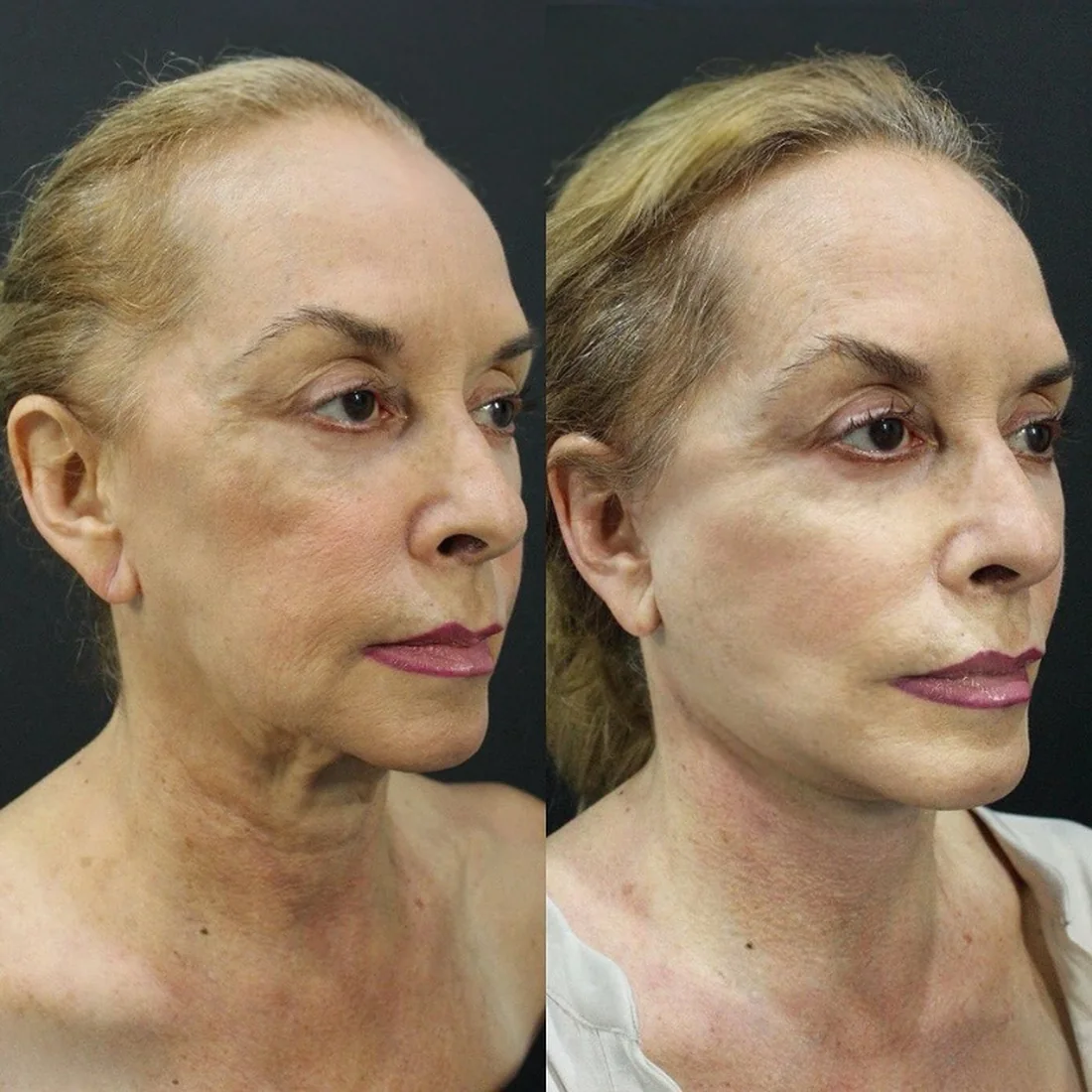
Does massage help, honestly?
There is a small industry of advice on this question, so let me separate what I know from what I merely hope.
The scientific evidence for scar massage is thinner than most people assume. A literature review in Dermatologic Surgery looked at the published studies on massage for scars and found the evidence weak and the protocols wildly inconsistent, even though many patients in those studies reported improvement, and even though the practice is widely recommended after surgery. So I will not tell you that massage dissolves lumps on a schedule, because nobody has proven that, and I promised you I would not dress hope up as data.
Here is what I can tell you from decades of watching faces heal. Gentle massage, once I have cleared a patient to begin, seems to do three real things. It moves organized fluid toward the lymphatic channels that are reopening, the same logic as lymphatic drainage. It keeps the healing tissue supple while collagen remodels. And, perhaps most underrated, it gives an anxious patient something useful to do with the hands that would otherwise spend the day prodding and worrying. The cost is nearly zero and the risk, done gently and at the right time, is nearly zero. That is a trade I recommend.
The technique matters less than the temperament. Fingertips, not knuckles. Slow circles and gentle upward strokes over the firm areas, a few minutes, a couple of times a day. Pressure that would be comfortable on your closed eyelid, not pressure that would tenderize meat. Aggressive, painful kneading does not speed remodeling, it inflames tissue that is trying to calm down, and I have seen enthusiastic self-treatment leave a face more swollen on Friday than it was on Monday. Start only when your surgeon says the repair is ready, which in my practice is typically a few weeks out, tailored to the individual operation.
Warm compresses deserve their own warning, because they sit at the intersection of two facts you now know: warmth feels soothing on firm tissue, and your skin is numb. Numb skin cannot warn you that a compress is too hot, and every facial plastic surgeon has seen or heard of a patient who burned a numb cheek with a heating pad or a microwaved pack that felt like nothing at all. If you use warmth, make it barely warm, test it on the back of your hand or on your forearm first, keep it moving, and keep sessions short.
What happens when a patient sends me the midnight photo
Because most of my facelift patients fly in from the United States, the firm and lumpy phase usually unfolds after they are back home in California or beyond. So this stage of recovery, in my practice, is managed the way it should be managed anywhere: with photographs, questions, and a surgeon who actually answers.
My team coordinates from San Diego, I hold California license A 42463 and have since 1986, and follow-up runs by phone, text, iMessage, and email for as long as the healing takes. When the message arrives, and it does, “is this lump normal,” here is my actual triage, the same questions I would ask you across a desk. How long has it been there? A firmness that has been present for weeks and is slowly improving tells one story; a lump that appeared this morning tells another. Is it changing, and in which direction? Shrinking or static firmness is healing; growth is a finding. What does the skin over it look like? Normal skin color over a firm area is reassuring; redness, warmth, or shine is not. Does it hurt? Ordinary induration is painless or mildly tender when pressed; spontaneous, increasing pain gets my attention. And is it one new thing on one side, or the same firmness you have had, explored at midnight with fresh anxiety? You would be surprised how often it is the second.
Nine out of ten of those conversations end in genuine reassurance with a plan: gentle massage, patience, a follow-up photo in two weeks so we can see the trend rather than the moment. The tenth is why the conversation must exist. Sometimes I ask for an ultrasound near the patient’s home. Occasionally, for a stubborn, discrete firm nodule that has stopped improving after several months, a tiny injection of dilute steroid into the spot can coax it to soften, a common and well-established tool, used sparingly because overuse can thin tissue. And rarely, what a patient calls a lump is actually a small collection of fluid that needs to be drained with a needle, a quick office procedure. The point is not that these interventions are common. The point is that the difference between “wait” and “act” is a judgment call that belongs to a surgeon who knows your operation, which is one of the reasons I built my practice around continuity of follow-up for patients who travel rather than a handshake at the airport.
Ordinary firmness or a warning sign
Most firmness is healing. Some findings are not, and the entire skill of self-monitoring after a facelift comes down to telling the two apart. Here is the honest dividing line I teach every patient before they go home.
- Firmness on both sides of the face, even if uneven, that has been present for weeks
- Hard or waxy areas that are slowly shrinking or unchanged month to month
- Lumps you can feel but cannot see in the mirror or in photographs
- Painless or only mildly tender when pressed, with normal skin color over them
- Tingling, itching, or odd flickers over firm areas, which usually mean nerves waking up
- A new lump or swelling that appears suddenly, especially on one side only
- A firm area that is clearly growing week over week
- Redness, heat, shiny stretched skin, or increasing pain over a lump
- Fever, drainage, or an opening in the skin near an incision
- In the first days after surgery: rapid one-sided swelling with pressure or pain, an emergency, not a lump question
That last line matters enough to underline in prose. A hematoma, a collection of blood under the skin, is the most common significant early complication of facelift surgery, and it announces itself with sudden, usually one-sided swelling, tightness, and pain, typically in the first hours to days. It is a different animal from the slow woody firmness this article is about, it is treated urgently, and I wrote about how to recognize it in my piece on the warning signs of a hematoma after a facelift. If anything on the red side of that checklist appears, you do not massage it, you do not warm it, and you do not wait for the morning to send the photo.
The short list of lumps that are not just healing
I promised honesty over comfort, so here is the differential, in plain language, of what a persistent lump can be when it is not ordinary induration. I list these not to alarm you but because a patient who knows the whole list is calmer than a patient protected from it.
A seroma is a pocket of clear fluid that the body walls off instead of absorbing. It tends to feel like a soft or springy swelling rather than wood, it can appear or persist after the early weeks, and if it is more than trivial it is drained with a fine needle, sometimes more than once. A small residual hematoma, blood that collected early and was not evacuated, can linger as a firm knot that the body breaks down slowly; most resolve on their own, and the large or stubborn ones are managed by the surgeon. Both of these are described in every serious review of facelift complications, including the one I cite below, and both belong to the surgeon’s follow-up, not to guesswork.
Along the incision lines, a persistent hard pea can be a suture granuloma, the body’s little fortress built around a buried stitch, or an early hypertrophic scar, a scar that heals thicker and firmer than it should. Here I will add something specific to my practice. A large share of my patients are Hispanic, and many have olive or darker skin, so I watch for thickened scars and post-inflammatory pigmentation as a matter of routine rather than as an afterthought; skin of color deserves a surgeon who treats that vigilance as standard. Managed early, with silicone, steroid injection when justified, and sun discipline, these almost never remain a long-term problem.
Rarest of all, and included only for completeness: firmness low in front of the ear can involve the parotid, the salivary gland that lives under that territory, and swelling there that fluctuates around mealtimes is worth a proper examination. I have seen it a handful of times across thousands of operations. It is managed conservatively in nearly every case, and it is exactly the kind of finding that separates an examined face from a reassured-by-forum face.
None of this list changes the headline. At three months, firm and waxy on both sides remains, overwhelmingly, normal healing. But “overwhelmingly” is not “always,” and the patients who do best are the ones whose surgeons taught them the difference before they needed it.
When I stop saying wait
Patience has a boundary, and you deserve to know where I draw it.
If a discrete lump is still hard, unchanged, and palpable at nine to twelve months, after the remodeling calendar has largely run its course, I no longer call it settling. I examine it, image it if the exam leaves doubt, and treat it, because at that point waiting is not a plan, it is procrastination with better manners. If a firm band under the chin or along the jaw remains prominent at a year, I want to see it in person or in properly taken photographs, and I say so plainly. And if a patient tells me at six months that something feels wrong, I have learned in 37 years to take the sentence seriously even when the photographs look perfect, because patients live in their faces and I only visit.
I will also say the quiet part about surgery done elsewhere. Every year I examine travelers who had a facelift with another surgeon, in another country, and were left without anyone to ask about exactly the findings in this article. Some of what they were told to wait out was normal induration. Some was not. The lesson is not that their surgeons were bad; most were competent. The lesson is that a lump at month four is a question for a surgeon who will still answer at month four, and you should confirm that arrangement exists before anyone ever marks your skin. It is one of the questions I would ask in any consultation, including one with me.
Your fingers will find what your mirror cannot
A last observation from the human side of follow-up, because the firmness phase is as much psychological as physical.
Patients in months two through four develop what I affectionately call the checking habit. The fingers drift to the jawline during phone calls, trace the ridge in front of the ear at red lights, press the walnut under the chin while reading. Every session of checking finds the same firmness and delivers the same small jolt of worry, ten or twenty times a day, and the lump feels bigger at midnight than it did at noon, not because it grew but because anxiety is a magnifying glass.
So I give my patients a rule, and I will give it to you. Check once a week, properly, in good light, with clean hands, the same spots each time, and if you like, write down what you find or take a photo. Trends are information; moments are noise. A weekly record that shows the plate becoming islands will do more for your peace of mind than a hundred midnight palpations, and it gives your surgeon something genuinely useful when you send it. The face heals on its own calendar whether or not you check, and the checking, unlike the massage, has no therapeutic dose.
Where the hardness fits in the longer story
Step back far enough and the woody phase is one movement in a longer piece. The first two weeks belong to swelling and bruising, which I walked through in my week by week account of deep plane recovery. The months after belong to settling, the slow emergence of the final result as deep swelling fades, scars mature, and sensation returns. The firmness sits in the middle of that arc, roughly weeks three through month six, peaking exactly where the RealSelf patient stood when she typed her question.
Which brings me back to her, because she deserves the full reply and so do you. Both sides of your face are hard at three months, firm and waxy to the touch. Is it normal? Yes. It is organized swelling and young scar doing what they always do, and if the surgeons answering you on that forum agreed on anything, it was this: it softens, mostly between months three and six, finishing over the first year. Massage it gently if your surgeon agrees. Keep warmth mild and tested, because your skin cannot yet protect you. Watch for the short list of true warning signs, sudden one-sided change, growth, redness, pain, fever, and send those to your surgeon the hour they appear. And then, hardest of all, let the calendar work. Individual results vary, and every timeline in this article is the pattern I have watched across thousands of faces, not a promise. But I have stood at the one-year mark with a very large number of patients who once described their cheeks as wood, and I can count on one hand the ones still talking about firmness instead of admiring the jawline it was busy building.