
It is one in the morning in an emergency room somewhere in California’s Central Valley. A woman in her sixties sits upright on a gurney because lying flat makes the pressure worse. One side of her face is tighter, harder, and more swollen than the other. She had a facelift nine days ago. The emergency physician on duty is competent and careful, and tonight he needs answers she cannot give him. Which plane was dissected. Whether her platysma was opened and sutured at the midline. What anesthetic agents she received and how she responded to them. Which antibiotic she has been taking, at what dose, and when she swallowed the last one. Whether the firm fullness behind her jaw is the ordinary landscape of early healing or a hematoma that needs to be drained before sunrise.
She tells him the only history she has: “I had it done in Mexico.”
I have spent 37 years operating on faces, and this scene troubles me more than almost anything else in medical travel. Not because the surgery abroad was necessarily bad. Sometimes the surgery was excellent. What failed her was cheaper than any operation and, in that moment, more important: paper. A folder that should have crossed the border in her carry-on and did not.
This article is that folder, opened page by page. If you have surgery with me in Tijuana, you will leave with every document I describe below, and I want you to check that you have them before the car takes you north. If you have surgery anywhere else, in Mexico, in the United States, or on the other side of the world, take this as your packing list and judge the clinic by how it responds when you ask for these things by name.
The most important thing you pack is paper
Patients preparing to travel for surgery ask me about hotels, recovery suites, drivers, pillows, and what to wear for the ride home. Almost no one asks about documents. Yet the CDC Yellow Book, the reference American clinicians use for travel medicine, is direct about this: medical travelers should obtain complete copies of their medical records before returning home, in English or translated into English, and share them with every clinician who cares for them afterward. The American College of Surgeons says the same thing in its statement on medical and surgical tourism: obtain a complete set of records before you leave, so the details of your care are immediately available to your physicians and surgeons back in the United States.
There is a reason two of the most conservative institutions in American medicine bothered to write that down. Published reviews of patients who came home from cosmetic surgery abroad and then developed problems describe, over and over, clinicians trying to manage complications with little or no information about the original operation. A review of 78 such patients treated at an academic center in Boston, published in Plastic and Reconstructive Surgery in 2018, catalogued infections, pain, and wound problems arriving in clinics that had no operative details to work from. A 2024 report in Aesthetic Plastic Surgery on patients presenting after aesthetic surgery abroad found the same pattern from the receiving side: documentation that was missing, incomplete, or not translated, complicating every decision that followed, including whether and how to attempt a revision.
None of this means surgery abroad is destined to end in an emergency room. It is not. The great majority of my patients heal quietly at home, and the folder I give them never leaves the drawer. But a medical record is like a seat belt. Its value is not measured on the average day. Its value is the one night you need it, and on that night nothing can substitute for it.
So here is what belongs inside, document by document, and why each one earns its place in your bag.
The operative report is the page I would grab in a fire
If you carry only one document across the border, carry the surgeon’s own written account of your operation: the diagnosis, the exact procedure performed, the plane of dissection, what was lifted, released, sutured, or removed, the materials and devices used, any drains placed, and how you tolerated the surgery. It is written or dictated shortly after the operation ends, and it is the single most useful page you can hand another physician. Everything else supports it.
For a facelift, a real operative report is specific in ways that matter enormously to the next doctor who touches your face. It should name the procedure precisely, not “facelift” but, in my case, a deep plane facelift, and describe where the incisions ran, how the flap was elevated, at what depth, and what was done beneath it. It should say what happened to the SMAS and the platysma, whether the retaining ligaments were released, in which direction the deep tissues were repositioned, and with what sutures. It should record whether fat was grafted and where, whether drains were placed and what kind, how the skin was closed and with which materials, the estimated blood loss, and any intraoperative findings worth knowing.
Why does an emergency physician in Fresno care about the plane of dissection? Because a collection of blood sits differently, and drains differently, depending on where the surgery created space. Why does a future surgeon care? Because the position of scar tissue and the previous handling of the facial nerve branches change how any revision must be planned. When a patient comes to me for revision work after surgery elsewhere and brings a proper operative note, I can plan with confidence. When she brings nothing, I am operating partly on archaeology, and the Aesthetic Plastic Surgery report I mentioned above describes exactly that problem in patients returning from surgery abroad.
Be alert to a common substitute: the “surgery certificate.” A decorative page saying that you underwent a procedure on a certain date, with a signature and perhaps a seal, is not an operative report. It certifies that something happened. It tells nobody what. In my practice the operative note is prepared after your surgery and given to you in English, on paper and as a PDF, before you leave. You do not have to request it, but I tell every patient to confirm it is in the folder anyway, because the habit of checking is the point.
What did the anesthesiologist give you?
Nobody remembers their anesthesia. That is precisely what it is designed for, and precisely why the anesthesia record exists: it remembers for you.
A complete anesthesia record includes the pre-anesthetic evaluation, your airway assessment, the agents used for induction and maintenance, the medications given during surgery including antibiotics, anti-nausea drugs, and pain medications, your vital signs across the whole operation, the fluids you received, and any response out of the ordinary. If your airway was difficult to manage, that fact belongs in writing, because it can change how a future anesthesiologist keeps you safe in an operation that has nothing to do with your face. If you received a medication and reacted to it, that is now part of your permanent medical story, and it only protects you if it travels with you.
There is also an immediate, practical use. In the days after surgery, if a physician at home needs to prescribe something for you, knowing what you already received, and when, prevents interactions and duplications. A sedative here, an opioid there, an antiemetic on top: these decisions are safer when the record is on the table instead of reconstructed from a groggy memory.
At my facility, anesthesia for facelift surgery is delivered by dedicated anesthesiologists in a fully equipped surgical environment, and their record is part of what you take home. If you are evaluating any clinic, ours included, it is fair to ask exactly who will administer your anesthesia and what documentation of it you will receive. I describe how we structure this in detail on the page about our facility and anesthesia standards, and I would encourage you to hold any operating room, in any country, to that same line of questioning.
Medications, written in generic names
Picture a pharmacy counter in San Diego on a Sunday afternoon. A patient hands over a box with a brand name the pharmacist has never seen, purchased in another country, half the label in Spanish. The pharmacist is not being difficult when she hesitates. She genuinely cannot verify what the medication is without more information.
Brand names are local. Generic names are universal. The same antibiotic can wear a different commercial name in Mexico than it does in the United States, and the same is true for pain relievers, anti-inflammatory drugs, and nearly everything else. This is why your medication list must be written in generic names, with the dose, the route, the frequency, the start date, the stop date, the purpose, and the name of the prescriber. “Cephalexin 500 mg by mouth every eight hours for seven days, for surgical infection prevention, prescribed by Dr. Quiroz” is a sentence any American physician or pharmacist can act on instantly. A brand name alone is a puzzle.
The list matters even after the pills are gone. If you develop a fever two weeks after surgery, the physician evaluating you needs to know which antibiotic you already completed, because that changes what infection is likely and what to prescribe next. If you were given a steroid to reduce swelling, that is relevant to your blood sugar, your sleep, and your mood. If you took a sedative to sleep during the first nights, your doctor should know before adding anything else that quiets the nervous system.
Two practical notes for the border itself. Keep medications in their original labeled packaging rather than loose in a pill organizer, and keep the written prescriptions with them, so that what you are carrying is self-explanatory to any officer or any pharmacist who looks at it. And before you leave the clinic, confirm you have enough of each medication to finish the course, plus the written prescription information your doctor at home would need if a refill or a substitution ever became necessary. What I will not do, and what no clinic should do, is send you north with unlabeled envelopes of pills and a verbal explanation. That is not convenience. That is a records failure you can hold in your hand.
If anything was placed in your face, get its paperwork
A facelift, as I perform it, is a repositioning of your own tissue, so most of my patients have nothing implanted at all. But surgical plans vary. Some patients have a chin implant placed to support the jawline. Some have fat transferred. Skin may be closed with particular suture materials, and occasionally tissue adhesives are used.
Anything that stays in your body, or was applied to it, deserves its own line in your records: the product name, the manufacturer, and, for implants, the reference and lot numbers from the packaging. This is standard practice in accredited surgical settings, and it exists for sober reasons. If a product is ever recalled, the lot number is how you find out whether it concerns you. If you ever need imaging, radiologists appreciate knowing what they are looking at. If an implant needs to be exchanged or removed years later, the surgeon doing it wants to know exactly what is in there before making an incision.
Ask for this even when it feels excessive. Especially when it feels excessive. A clinic with good habits will have the sticker from the implant packaging already fixed into your chart and will copy it into your take-home documents without blinking. A clinic that cannot tell you the manufacturer of something it placed inside your face has told you something important about its habits.
A surgeon a stranger can find and call
Return to that emergency room at one in the morning. The single most valuable thing after the operative note is a working way to reach the surgeon who did the operation. Not a general clinic inbox answered on Monday. A direct line, written on the documents themselves, that connects a physician in California to the person who was inside the patient’s face nine days earlier. In my practice, my direct contact information and the facility’s contact information are printed on the discharge summary, the operative note, and the warning-sign instructions, because the moment someone needs them is not the moment to search.
Reachability has a quieter cousin: verifiability. A physician treating you at home has more confidence acting on records signed by a surgeon whose credentials can be checked in systems that physician already trusts. I have held a Physician and Surgeon license from the Medical Board of California since 1986, license number A 42463, with a clean public record, and anyone, including you, right now, can verify it at search.dca.ca.gov. One practical tip: the board’s record spells my name “QUIROZ, ALEJANDO J,” an old typographical quirk, so search by the license number rather than the name. My Mexican board certification in plastic surgery, Consejo Mexicano de Cirugía Plástica certificate No. 293, held since 1984, is verifiable in the AMCPER directory. To be clear about what that California license means and does not mean: your surgery happens in Tijuana, not in California, and I am not claiming to treat you across state lines. What the license means is accountability and reachability. I am locatable within a system American physicians and patients already know how to check, and my professional record there is public.
I wrote a longer, step-by-step guide on how to verify a plastic surgeon in Mexico, and I would give you the same advice about any surgeon in any country: if you cannot verify them before surgery, your doctors will not be able to reach them after it.
Warning signs belong on paper, not in a hallway conversation
Here is a truth every physician learns early: patients retain very little of what they are told on discharge day. This is not a criticism of patients. You will be tired, relieved, medicated, and thinking about the journey. The solution is not to talk slower. The solution is to put it in writing.
Your take-home folder should include a written, specific list of warning signs with thresholds and instructions, not vague advice to “call if something feels wrong.” Sudden swelling on one side of the face, pain that is escalating instead of easing, tightness that feels different from the day before: these deserve a call immediately, at any hour, because a hematoma is treated best when it is treated early. Fever above a stated temperature, spreading redness, or drainage with a foul odor: written down, with the number to call first. Any difficulty breathing or swallowing: written down, with the instruction to seek emergency care first and call us on the way. The page should say who to contact in what order, what to do if you cannot reach us, and what information to give an emergency physician, which is, of course, the rest of the folder.
Recovery from a deep plane facelift is, for most patients, a story of steady quieting: swelling that peaks and recedes, numbness that wakes up slowly, results that emerge over weeks. Individual results vary, and so do complications, which is exactly why the instructions must be written for the exceptional night, not the average one. I describe the normal arc, and how to tell it apart from trouble, in my article on what the first weeks back home after a facelift actually look like. The written warning list in your folder is the condensed, actionable version of that article, signed by me.
The follow-up plan, dated, before you leave
A follow-up plan is not a sentiment, it is a schedule. Before any patient of mine crosses back into California, the folder contains dates: when I saw you after surgery and what I found, when your sutures come out and who removes them, when you send photographs and to whom, when we speak by video, and when I want to see your face in person again.
This matters because the published experience of medical travel shows that follow-up is where continuity most often breaks down. The American College of Surgeons statement on medical and surgical tourism specifically urges patients to organize follow-up care before traveling, and the CDC’s guidance echoes it, precisely because so many returning patients end up improvising their aftercare. The reviews I cited earlier, from Boston and from Europe, are essentially catalogues of improvised aftercare: patients presenting to whoever would see them, with whatever paper they had.
Geography is my answer to a large part of this. My operating facility is 15 minutes from the San Diego border crossing, and we arrange pickup at San Diego International Airport and San Ysidro. For my California patients, an in-person follow-up is a drive, not a transcontinental flight, and that changes what aftercare can honestly be promised. A patient in Los Angeles who calls me with a concern on day 12 can be in front of me the next morning. That is not a luxury add-on. It is the difference between follow-up as a plan and follow-up as a hope. Your folder should also name a realistic understudy at home: I ask patients to identify their primary care physician before surgery, so the plan on paper includes who examines you locally if something needs eyes on it sooner than you can reach me. Individual results vary, and a good plan is built for the version of recovery you actually get, not the one on the brochure.
Open the folder before you cross the border
The night before you go home, or the morning of, sit down with your folder and check it against this list. Do it while you are still in Tijuana, while the person who can fix an omission is a hallway away instead of an international phone call.
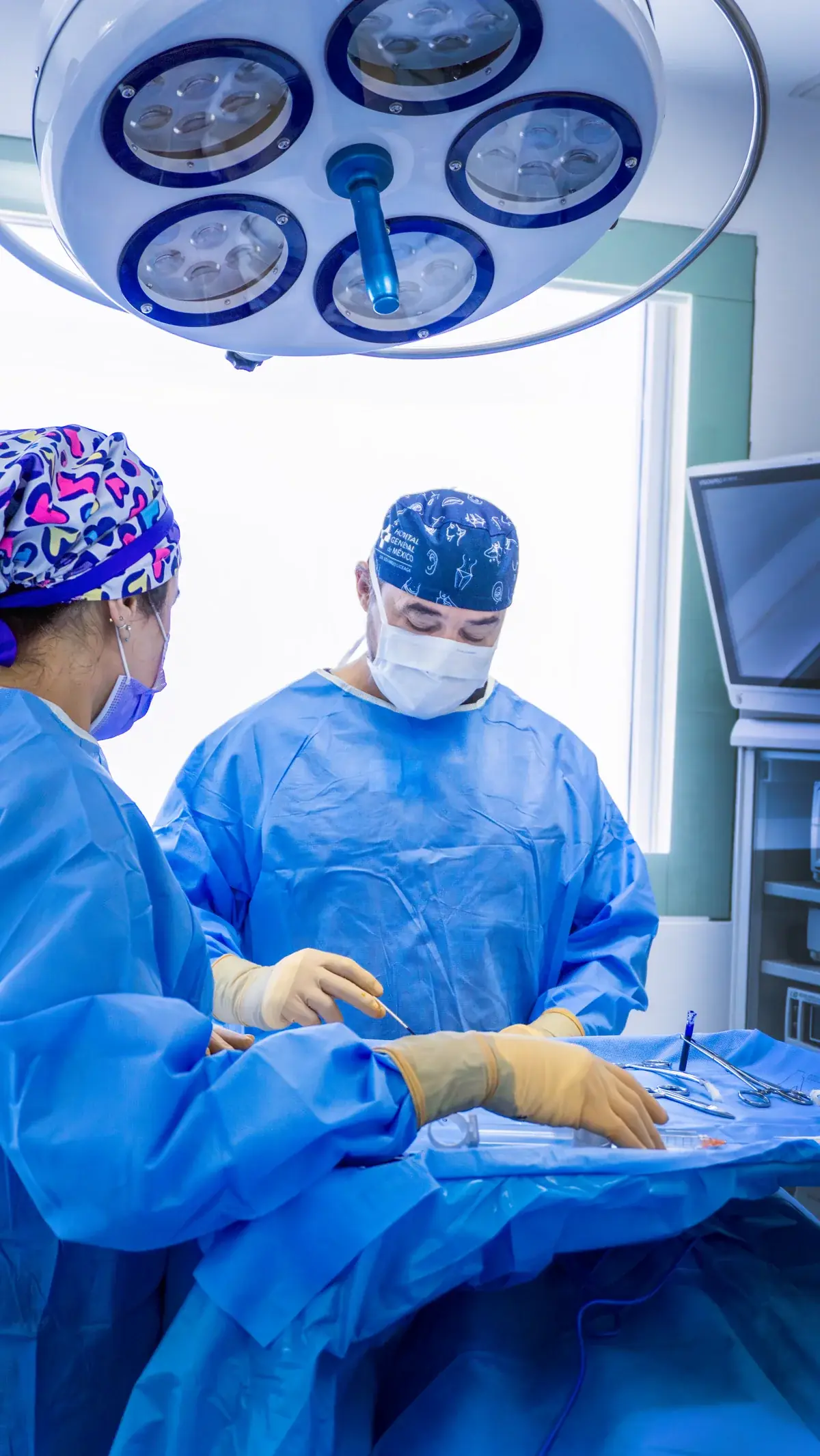
- An operative report in English that names the procedure, the plane of dissection, what was done to the SMAS and platysma, the closure materials, and any drains
- The anesthesia record listing every agent and medication you received and how you responded
- A medication list in generic names, with dose, frequency, purpose, and stop dates, plus the medications themselves in labeled packaging
- Manufacturer, reference, and lot details for anything implanted, injected, or grafted
- Your surgeon's direct contact and the facility's contact, printed on the documents themselves
- Written warning signs with specific thresholds and who to call first, in what order
- A dated follow-up plan naming who removes sutures, when photos and video visits happen, and when you return in person
- A decorative "surgery certificate" with a seal and no clinical detail
- Verbal instructions only, delivered on your way out the door
- Loose pills in unlabeled bags or brand names no U.S. pharmacist can verify
- A messaging number that stops answering once the surgery is done
- A promise that the records will be emailed to you later
Notice what the second half of that list has in common: none of it is malicious, exactly. It is lax. A clinic that hands you a certificate instead of an operative note has probably done it countless times without consequence, because most patients heal and never ask. You are not most patients. You are the one who read this far, and you are allowed to be politely immovable: no folder, no border.
And watch how the clinic reacts to the request. In my experience, the reaction is the diagnosis. A well-run surgical practice finds this list boring, because everything on it already exists as a matter of routine. A defensive or evasive reaction to a records request is one of the most honest signals you will ever get from a medical organization, and unlike surgical skill, you can test it before you ever book.
What the records are for once you are home
The folder is not a souvenir. It has three jobs after you unpack.
First, give a copy to your primary care physician even if your recovery is perfect. The CDC advises returning medical travelers to share their complete records and travel history with the clinicians who see them afterward, and there is a quiet benefit beyond emergencies: your facelift is now part of your medical history, and your doctor’s chart should say so, the same way it records your appendectomy. When records move between offices, they move under the same privacy expectations as any American medical record, so there is no reason for a U.S. practice to refuse to file them.
Second, digitize everything. Photograph or scan every page the day you get home and store it where you can reach it from your phone. Paper folders stay in drawers; emergencies happen in other cities. If I have done my job, you already have PDFs from us, but your own copies, in your own storage, belong to you in a way nothing else does.
Third, use it to tell the whole story whenever you see a new clinician. “I had a deep plane facelift in Tijuana on this date, here is the operative note, here is what I took, here is my surgeon’s contact” is a history that takes half a minute to give and changes the quality of every decision made about you. Patients sometimes feel sheepish disclosing surgery abroad, as if a doctor at home will scold them. Bring a complete record and watch that dynamic invert: nothing earns a clinician’s respect faster than a patient who arrives organized.
The trip home is part of your medical record too
There is one more piece of paper I want in your folder, and it is about the journey itself: written guidance about travel after surgery, agreed with your surgeon, not improvised at the airport.
Recent surgery is a recognized risk factor for venous thromboembolism, the family of clots that includes deep vein thrombosis, and prolonged immobility during long-distance travel adds its own contribution, which is why the CDC Yellow Book devotes a chapter to clots and travel and recommends that travelers with risk factors take specific precautions. This is one of the honest, structural advantages of having surgery close to home rather than far from it. Most of my California patients go home by car through the San Diego crossing, a short ride with stops as needed, rather than folding a freshly operated body into a long-haul flight. If you do need to fly, the timing, the walking, the hydration, and any additional measures should be decided with your surgeon based on your personal risk, and the plan should be written down like everything else. Ask the question directly: “When am I cleared to fly, and what should I do during the flight?” If the answer is a shrug, you have learned something about the aftercare culture you are buying.
The travel plan also includes the mundane logistics that make the medical plan work: where you stay the first nights, who drives you, when you cross. I laid out the whole rhythm, day by day, in your facelift itinerary in Tijuana, and the records folder is designed to fit that itinerary, with every document in your hands before the northbound drive, not trailing behind you by email.
When traveling for surgery is the wrong idea
I would rather lose a booking than pretend this section does not belong in the article.
Some patients should not travel for a facelift, to me or to anyone. If you have a complex medical history that needs your own specialists nearby, if you take anticoagulants for a condition that makes stopping them a serious negotiation, if you have no one at home to help you through the first week, or if you know yourself well enough to say that you will not do the follow-up, the photographs, the calls, the return visit, then the honest answer is that the logistics of distance will tax you more than the surgery itself. A facelift is elective. It deserves conditions that let it be boring.
And there is a subtler mismatch worth naming, because this article is really about it. People consider surgery in Mexico because surgery in the United States is genuinely expensive, and it is true that patients pay a much smaller share of the burden here for the same operation. But the saving should come from economics, from what it costs to run an operating room in Tijuana versus California, never from subtraction. If a clinic’s lower quote is achieved by trimming exactly the things in this article, the anesthesia staffing behind the record, the follow-up behind the plan, the time it takes to write a real operative note, then you are not paying less for the same thing. You are paying less for less, and the difference is invisible until the one night it is everything. When you compare clinics, in any country, put the folder on the table next to the quote and evaluate them together. The paperwork is the X-ray of the practice.
The folder is the operation, still speaking
Let me rewrite the scene we started with. It is one in the morning in that same emergency room. The same woman, the same swollen cheek, the same competent physician. But this time she puts a folder on the gurney. The operative note tells him a deep plane facelift was performed, in which plane, with what closure. The anesthesia record rules half his worries out. The medication list tells him what she has taken and when. The warning-sign page, the one that told her to come in tonight instead of waiting for morning, has a phone number on it, and when he calls it, the surgeon who did the operation answers, pulls up her photographs, and talks him through what he is feeling under his fingers.
Same night, same face, entirely different medicine. The difference weighed a few ounces and cost nothing but diligence.
Surgeons like to say that the operation is only half the work. The records are how the other half travels. Whether you come to Tijuana or stay within a mile of your house, insist on leaving surgery with the story of your surgery, complete, legible, and in your own hands. If a clinic will not give you that, it has answered your most important question before you ever asked it.