The question underneath all the other questions
A patient from Orange County sat across from me not long ago with a folder of printouts in her lap. She had researched anesthesia, recovery, credentials, the operating room, the recovery suite. When I asked what worried her most, she closed the folder. “Honestly, none of this,” she said. “I am afraid I will wake up looking like someone else. I have been this face for 58 years. I do not want a new one.”
I have heard a version of that sentence for most of my 37 years in practice, and I want to answer it seriously, because it is the deepest fear in all of facial surgery and it deserves more than a pat on the hand. The fear is not the surgery. It is looking like you had one. It is walking into your daughter’s kitchen and catching the small flicker of recalibration in her eyes. It is passing a store window and needing half a second too long to claim your own reflection.
So here is my answer, and the rest of this article is the anatomy behind it. A deep plane facelift, done properly, does not change who you look like. It changes how old and how tired you look. Your bone structure, the shape of your eyes, the architecture of your smile, the proportions people have recognized since your twenties, none of that is touched. What the operation moves is the soft tissue that slid downward over the decades, and it moves that tissue back to where your own face used to carry it. The result reads as you after the best sleep of your life. Individual results vary, and later in this article I will be specific about what does change, but “a different person” is not the honest risk of this operation done well. It is the signature of a different and cruder technique, and the difference between the two is mechanical, visible, and worth understanding before you trust anyone with your face.
Aging moved your face. It did not replace it.
Start with what the years actually did, because the fear of losing yourself rests on a quiet misunderstanding of what aging is.
Your face is built in layers. Skin on the surface, then a layer of fat, then a continuous sheet of muscle and fascia called the SMAS, first mapped in the anatomy laboratory by Mitz and Peyronie in 1976 (PMID 935283). I have written a full explanation of what the SMAS actually is, but for this conversation you need only one idea: the SMAS and its fat are the part of your face that moves, and beneath them sit short, strong retaining ligaments that tether everything to the bone.
Time does not redesign this system. The ligaments mostly hold their ground while the soft tissue between them loosens and slides. The cheek fat that once sat high over your cheekbone drifts down and forward. The tissue that crossed your jawline smoothly pools past a ligament and becomes a jowl. The neck loses its angle. Every one of those changes is a displacement, a change of position, not a change of identity.
Meanwhile, the things that make you recognizable never went anywhere. The spacing of your eyes. The tilt at their corners. The shape of your lips and the asymmetry of your smile, because everyone’s smile is asymmetric and everyone’s family knows exactly how. The muscles of expression and the habits of movement you have practiced since childhood. That is why you can look at a photograph of your grandmother at 30 and at 80 and never doubt for a moment it is the same woman. Age moved her tissue. It did not replace her.
Once you see aging as displacement, the logic of the operation becomes almost obvious. If the problem is that your own tissue slid out of position, the solution is to return your own tissue to its position. Not to stretch something over the problem. Not to add anything foreign. To put you back where you were. An operation that does exactly that has no mechanism for making you look like someone else, because someone else’s face was never involved.
Where the “operated” face actually comes from
The pulled, windblown, unmistakably done face is real. You have seen it, and it is the reason you are reading this. But it is not what a facelift does. It is what a specific kind of facelift does, and the mechanics are worth spelling out, because once you understand them you can walk into any consultation and ask the questions that matter.
The earliest facelifts, and cheaper quick lifts to this day, treat the face as a skin problem. The surgeon lifts the skin off the deeper layers, pulls it sideways toward the ears, cuts away the excess, and sews it under tension. Everything wrong with the operated look follows from that one decision.
Skin is elastic wrapping. It was never the structure that fell, so pulling it cannot reposition what fell. Pulled laterally and tight, it flattens the cheek, drags the corner of the mouth toward the ear, and gives the midface that swept, wind-tunnel geometry that no natural face of any age has ever had. And because the closure carries all the tension, the tension leaves fingerprints: scars that stretch and widen, an earlobe tugged down into the pulled shape surgeons call a pixie ear, a sideburn hoisted upward, a hairline notched where it should flow. Within a year or two the skin, being elastic, relaxes, the sag returns, and the distortions stay.
A superficial SMAS operation that tightens the deep layer without releasing its ligament attachments can produce a subtler version of the same problem, tension fighting anatomy instead of moving it. I have explained the full technical contrast in my comparison of a deep plane facelift versus a SMAS facelift, and I would add one more ingredient that has nothing to do with surgery at all: years of stacked filler, layered into cheeks and folds until the face changes shape by volume alone. Many of the “facelifts” people fear on television are not facelifts. They are a decade of accumulated filler sitting on top of one.
Here is the sentence I want you to carry out of this section. The done look is not the price of surgery. It is a list of specific, avoidable mechanical errors, and every one of them comes from moving the wrong layer, in the wrong direction, under tension.
The composite flap, the mechanical heart of the answer
In 1990, Sam Hamra published the operation that changed my field, the deep plane rhytidectomy, in Plastic and Reconstructive Surgery (PMID 2359803). Strip away the surgical vocabulary and his idea is simple enough to say in one line: stop separating the skin from the structure. Lift them together, as one piece, and move the piece.
That one piece is called the the skin, the fat beneath it, and the SMAS layer kept attached to each other and raised as a single connected unit, so the surface of the face and its foundation travel together instead of being pulled separately. In a deep plane facelift I enter underneath the SMAS, and from that point onward the skin, its blood supply, its fat, and the muscular layer stay married to each other across the cheek. When the flap moves, everything moves in concert.
Think about what that does to the surface you present to the world. Every freckle, every pore, every soft landmark of your face keeps its exact relationship to the structure underneath it, because the two were never divided and repositioned separately. There is no layer sliding over another layer, so there is nothing to shear, nothing to flatten, no geometry that exists only because two surfaces were tensioned in different directions. The face that arrives in the new position is the same face that left the old one, intact, in its original arrangement, simply higher.
It also changes what happens at the incision, and this is the part patients underestimate. Because the lifting force is carried deep in the fascia, where I set it with sutures into strong tissue, the skin at the closure carries essentially no load. It is laid down, not stretched down. Skin sewn without tension heals as a fine line, keeps the earlobe where nature put it, and leaves the hairline alone. Nearly every visible tell of a facelift is a tension injury, and the composite flap removes the tension from the only layer anyone can see.
There is one more advantage, quieter but just as important: a flap that keeps skin, fat, and muscle together keeps its blood supply robust, which is part of why this technique heals the way it does. Strength and safety turn out to live in the same place, in not taking the face apart.
Nothing left under tension
A composite flap alone is not enough, and this is where the modern operation goes beyond what even Hamra first described. If you lift the deep layer but leave its retaining ligaments attached, the ligaments act like nails through a carpet. Pull the carpet without removing the nails and you get puckering, resistance, and the temptation to pull harder. Pulling harder is how faces get distorted.
So the ligaments are released first, deliberately and under direct vision. The extended deep plane technique described by Jacono frees the zygomatic ligaments of the cheek, the masseteric ligaments along the jaw, the mandibular ligament near the chin, and the cervical retaining ligaments of the neck, precisely so the composite flap can move as a unit without fighting its own anchors (PMID 30268241). Once nothing is tethering the tissue in its fallen position, it glides back up with almost no force. I am not pulling your face anywhere. I am releasing it, repositioning it, and fixing it where it now rests without argument.
That phrase, without argument, is the whole aesthetic. Tension is what the eye reads as surgery. A cheek held up by force looks held. A cheek sitting where its released anatomy naturally rests looks like it was always there, because in a real sense it always was. The sutures I place in the fascia are not winches straining against a load. They are holding a relieved structure in place while your body heals it there, and after those weeks of healing, your own anatomy does the holding, not my stitches.
When patients ask me why some facelifts look tight and mine should not, this is the answer in one line: a face can be pulled into a new shape or released into its old one, and only one of those looks like you.
Up, not sideways
Gravity is a vertical force. Your cheek did not migrate toward your ear over 20 years; it descended, along a mostly vertical path with a slight forward drift. So the honest correction is the reverse journey, back up along the path it came.
This is the vector question, and it is the last mechanical piece of why identity survives. When a composite flap is repositioned more vertically, the tissue returns to coordinates your face has already occupied. The high cheek it restores is your high cheek, the one in your photographs. The clean jawline is the jawline you had before the jowl crossed it. A vertical lift can only produce arrangements of your face that have already existed, which is why the result reads as memory rather than novelty.
A lateral pull, by contrast, manufactures a face with no precedent. Your tissue never sat closer to your ears than it does today; dragging it there creates a version of you that has never existed at any age. The eye of everyone who loves you registers this instantly, even when they cannot name it. People do not say “her vector was excessively lateral.” They say “she looks different,” and they are being precise. She does.
Does a facelift change your expression?
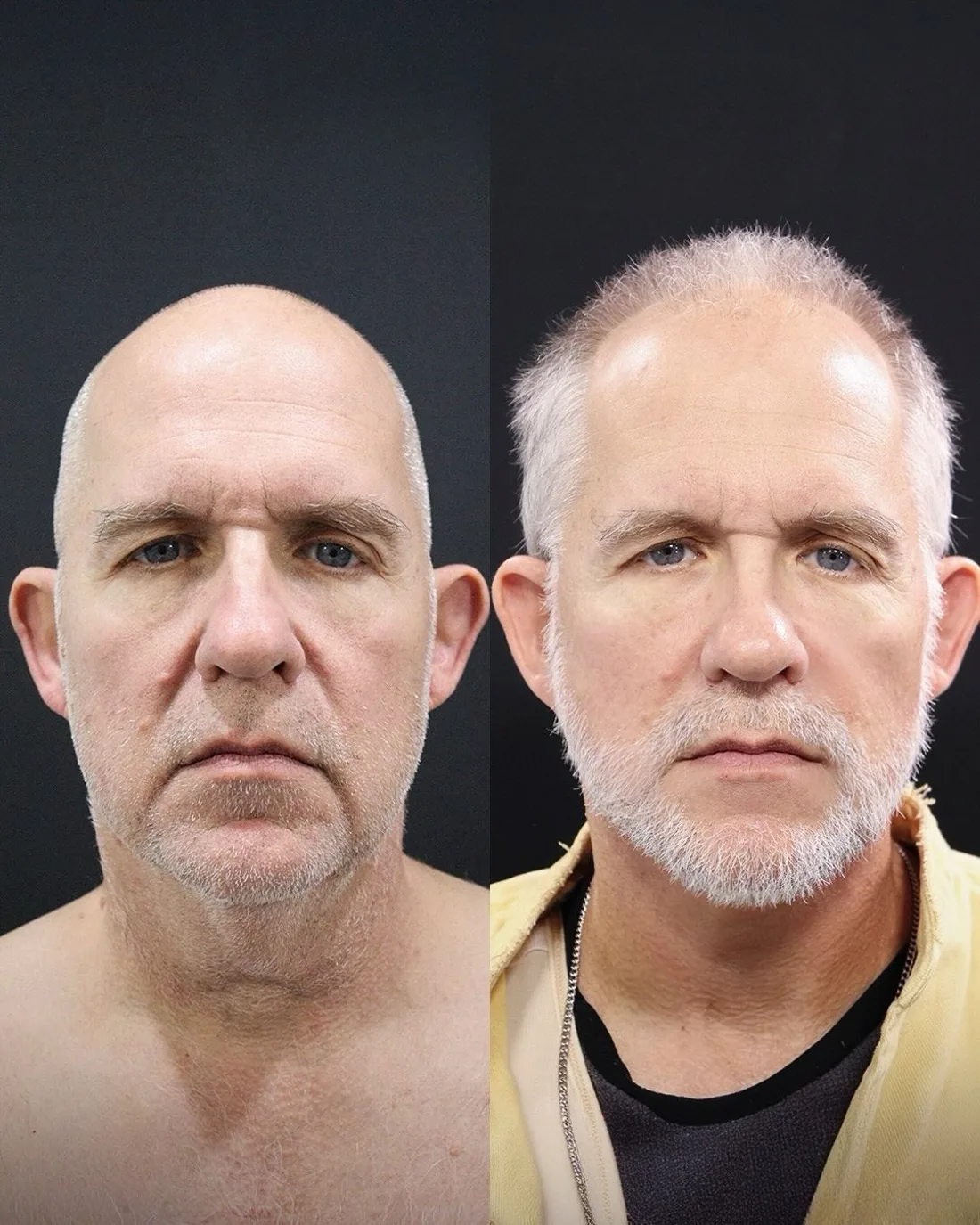
A deep plane facelift performed correctly does not change your smile, your laugh, or the way your face moves, because the muscles of expression are repositioned, not cut, and the nerves that drive them are respected throughout the dissection. That is the direct answer, and the anatomy supports it. The muscles that animate your face, the zygomaticus muscles that lift your smile, the orbicularis that crinkles your eyes, work as they always have. In the deep plane I dissect along defined anatomic planes that pass over these muscles, freeing the tissue around them while leaving the muscles and their nerve supply in continuity. Your smile is not an arrangement of skin. It is a pattern of muscular firing you have rehearsed your entire life, and nothing in this operation edits that pattern.
I owe you the honest numbers, though, because “the nerves are respected” is a plan, not a promise, and facial surgery deals in probabilities. The largest pooled analysis of SMAS based facelift techniques, covering 183 studies, found temporary facial nerve weakness in roughly 1.5 to 1.9 percent of patients undergoing the more extensive techniques, and, importantly, the risk of permanent nerve injury did not differ significantly between deep plane and simpler approaches (PMID 30768122). Temporary means what it says: a branch bruised by proximity, an asymmetric smile for some weeks while it recovers, which it almost always does. Permanent injury is rare in experienced hands, and I review my own numbers with every patient at consultation rather than hiding behind the literature’s.
One more honest note about the early weeks. Swelling stiffens expression. At day ten your smile may feel wooden and your face may not quite obey you, and patients sometimes panic quietly at exactly this stage. That is fluid, not damage, and it lifts as the swelling does. Judge your expression at three months, not three weeks. Individual results vary.
The eyes stay yours, and that matters more than anything
Ask any portrait artist where a likeness lives and you will get the same answer: the eyes, and after them the mouth. Get those two regions right and the portrait is recognizable even when everything else is loose and approximate. Get them wrong and no amount of accuracy elsewhere rescues it. Human recognition is not democratic across the face; it is concentrated, fiercely, in the zones that do the communicating.
Now map the territory of a deep plane facelift against that. My dissection lives in the midface, the jawline, and the neck. The periorbital region, the eyes and everything immediately around them, is not part of the operation. The lips and the philtrum are not part of the operation. The two most identity-dense zones of your face are never on the table. What the lift restores is the frame around them: the cheek that fell away from the lower eyelid, the jawline that lost its border, the neck that blurred. The portrait’s subject is untouched. Its frame is repaired.
Patients sometimes combine a facelift with eyelid surgery or a brow procedure, and that is a separate decision we make separately, with its own logic and its own restraint, because conservatism around the eyes is not a stylistic preference, it is identity protection. But the facelift itself asks nothing of your eyes. It simply stops the fallen midface from dragging on the region where everyone who knows you looks first.
Will people know you had a facelift?
After the early weeks of swelling, most people cannot tell, because recognition runs on your eyes, smile, and proportions, and a deep plane lift leaves all three exactly as they were. Here is what my patients actually report, and after 3,000 facelifts the consistency of it still delights me. Nobody says “you had surgery.” They say: you look rested. Did you go somewhere? Did you change your hair? Are you sleeping better? One patient’s husband complimented her new skincare regimen for a month. A San Diego patient told me her book club spent an entire evening trying to figure out what was different and settled, collectively, on new glasses.
People do not carry a high resolution map of your face in their memory. They carry an impression, a gestalt built mostly from your eyes, your smile, your proportions, and the general energy you project. A deep plane lift leaves the first three untouched and improves the fourth. So the impression still matches. The observer’s brain finds you, confirms you, and registers only that the tired signal is gone. The recognition machinery in other people works in your favor, as long as nothing trips it.
What trips it are the tells, and by now you can name them yourself, because every one is a tension artifact: the earlobe pulled into the jaw, the sideburn lifted where hair should not be, the hairline notch, the blunted tragus, the shiny over-stretched skin, the sweep of a lateral vector. Recognition survives a well executed lift. It does not survive distortion. This is why the technique conversation and the “will people know” conversation are the same conversation.
Who notices also depends on how often they see you. The people closest to you, the ones who see you daily, often notice least of all, because they watch the change arrive gradually through the weeks of settling and their internal image of you updates in step. It is the friend who has not seen you in five years who delivers the strangest compliment: she compares you to a memory, finds you closer to it than she expected, and concludes that you have simply held up remarkably well. Both reactions are the operation working.
And a candid word: in the first two to three weeks, before the swelling and bruising settle, anyone who sees you will know something happened. Discretion in that window comes from planning your calendar, not from the technique. After it, the operation’s discretion is its own.
Will your phone still recognize you?
A patient asked me last year, only half joking, whether her iPhone would still unlock after surgery. I love this question, because it is the ancient fear wearing new clothes: if even the machine does not know me, who am I?
Let me answer it prudently, because I am a surgeon, not a software engineer. A 2022 systematic review in the Journal of Craniofacial Surgery looked at 39 studies of facial recognition algorithms applied to surgically altered faces and found accuracy varied enormously depending on the algorithm and method, from as low as roughly 19 percent to over 85 percent (PMID 35968973). So no one can responsibly promise you anything about every phone, every border kiosk, and every piece of software, and I will not.
But there is a more interesting study, and it points the other way. In 2021, researchers in Plastic and Reconstructive Surgery ran facelift patients’ photographs through neural networks trained to estimate age. The software read the postoperative faces as about 4.3 years younger on average, while the patients themselves felt they looked 6.7 years younger, and the machine’s perceived rejuvenation correlated with patient satisfaction (PMID 34181603). Sit with what that experiment actually shows: the algorithm had no trouble reading these as the same measurable faces. What changed, in the machine’s cold arithmetic, was not identity. It was age.
Anecdotally, my patients’ phones recognize them in the recovery suite, swollen, wrapped, and days out from surgery, more reliably than their own first glance in the mirror does. I offer that as an observation, not as data. But I find the asymmetry telling. The technology struggles most with faces that have been geometrically distorted. A face that has been returned to its own earlier coordinates is not a puzzle. It is the same answer, dated earlier.
What does change, and you should want it to
I would be selling you a fantasy if I claimed the mirror will show no difference, so let me be precise about what a successful deep plane facelift changes, because you are paying for change and you deserve it.
The jowl is gone, and the jawline runs clean from chin to ear again. The midface sits high, so the fold beside your nose softens and the flat, dragged look of the lower cheek fills back into a curve. The neck angle returns, that line under the chin that photographs steal first. In some patients the neck needs more than repositioning: when the exam and photographs show heavy deep structures, a full submandibular gland or thick digastric muscles beneath the deep fascia, I address those directly during surgery. Most surgeons avoid the deep plane of the neck, and I want to be careful here, because not every neck needs deep work and I decide it case by case from your anatomy, never as a routine add-on. When it is indicated, it is the difference between a good neck and a great one.
Expect an arc, not a reveal. The first two weeks you will look swollen and unlike yourself, and I tell every patient to treat that stranger in the mirror as scaffolding, not architecture. By weeks three to six you look like you again, presentable and photographable. The refinement continues quietly for months as the last swelling resolves and the tissues settle into their healed positions. Individual results vary, in timeline and in degree, and anyone who tells you otherwise is marketing.
What you should not expect is new skin. The lift repositions; it does not resurface. Sun damage, fine etched lines around the mouth, skin quality, pigment, none of that changes because tissue moved. Those have their own treatments, and honest planning separates the two problems instead of promising one operation will solve both.
When I am the wrong surgeon for you
Some of the most important consultations of my career ended with me declining to operate, and this article would be incomplete without telling you who should not be in my operating room.
If you bring me a photograph of an actress and ask me to take you toward her, I will say no, gently and without judgment. It is not that the request offends me. It is that the operation I perform is mechanically incapable of honoring it. A deep plane facelift returns your tissue to your former coordinates. It has no setting for someone else’s face, and a surgeon who claims he can steer it there is describing a different operation, one whose results you have already seen and feared.
If your face has not yet meaningfully descended, if you are in your early forties with good ligament support and your complaint is texture, dullness, or early hollowing, I will likely tell you to wait, and tell you why. Operating on descent that has not happened yet buys little and spends recovery, and there are better tools for what is actually bothering you. I have written honestly about what a facelift does not fix, and I would rather lose your booking than your trust.
And if, in our conversation, I sense that the face in your mirror carries weight no operation can lift, if the distress seems larger than the anatomy, or the hope is that surgery will repair a marriage or a grief, I will slow everything down. Surgery moves tissue. It does not move lives. The patients who thrive after a facelift are the ones who already like who they are and simply want the mirror to agree with them again. If that is not yet you, the kindest thing I can do is say so.
Bring me the photograph
At a consultation, somewhere in the first half hour, I ask every patient the same thing: bring me a photograph of yourself from 10 or 15 years ago. One you love. Not for nostalgia, and not as a promise, but because it defines the target with a clarity no words manage. We are not designing a face. We are aiming at one that already existed, yours, and the photograph keeps us both honest about it.
The woman from Orange County, the one with the folder, brought a picture from her daughter’s college graduation. We operated last autumn. At her follow-up months later she told me her daughter had studied her across a dinner table and finally said, “Mom, you look happy. You look like you again.”
Notice she did not say younger, though she was seeing younger. The words people reach for after a good deep plane lift are always identity words. Like yourself. Like you again. That is not an accident of phrasing. It is an accurate description of what the operation does: skin and structure moved as one piece, ligaments released so nothing sits under tension, tissue returned upward along the road it came down, expression left exactly as your life built it. There was never a new face on the table. There was only yours, and the years of fatigue we lifted off of it.
The fear is not the surgery. It is looking like you had one. And the answer to that fear is not courage. It is anatomy.