
Usually, yes. In my practice a deep plane facelift and a neck lift are usually planned as one operation, a face and neck lift, because the face and the neck age together and the jawline they share does not respect the boundary between them. The exception is real but narrower than most people expect: when the midface and jawline still hold and the loosening lives only below the jaw, a neck lift on its own is the right operation. This page answers that one question directly. The deeper anatomy, the neck examination, and the money conversation each have their own page, and I will point you to them as we go.
What does a deep plane facelift actually lift?
A deep plane facelift lifts the structure of the midface, the jowls, and the jawline by releasing the layer beneath the SMAS and repositioning it as one unit, so the skin is never asked to carry the lift under tension. The SMAS is the superficial musculoaponeurotic system, the sheet of muscle and fascia that gives the face its structure, first mapped by Mitz and Peyronie in 1976, and working beneath it rather than pulling on it is what makes a deep plane result read as natural. Releasing that layer and repositioning it as one unit is the technique Hamra described in 1990, and the full anatomy of that operation belongs to the deep plane facelift page. What matters for this question is where the territory ends: at the jawline. Everything below it, the loose neck, the softened angle under the chin, the vertical banding, is the territory of the neck lift, and the examination that maps a neck properly lives on that page.
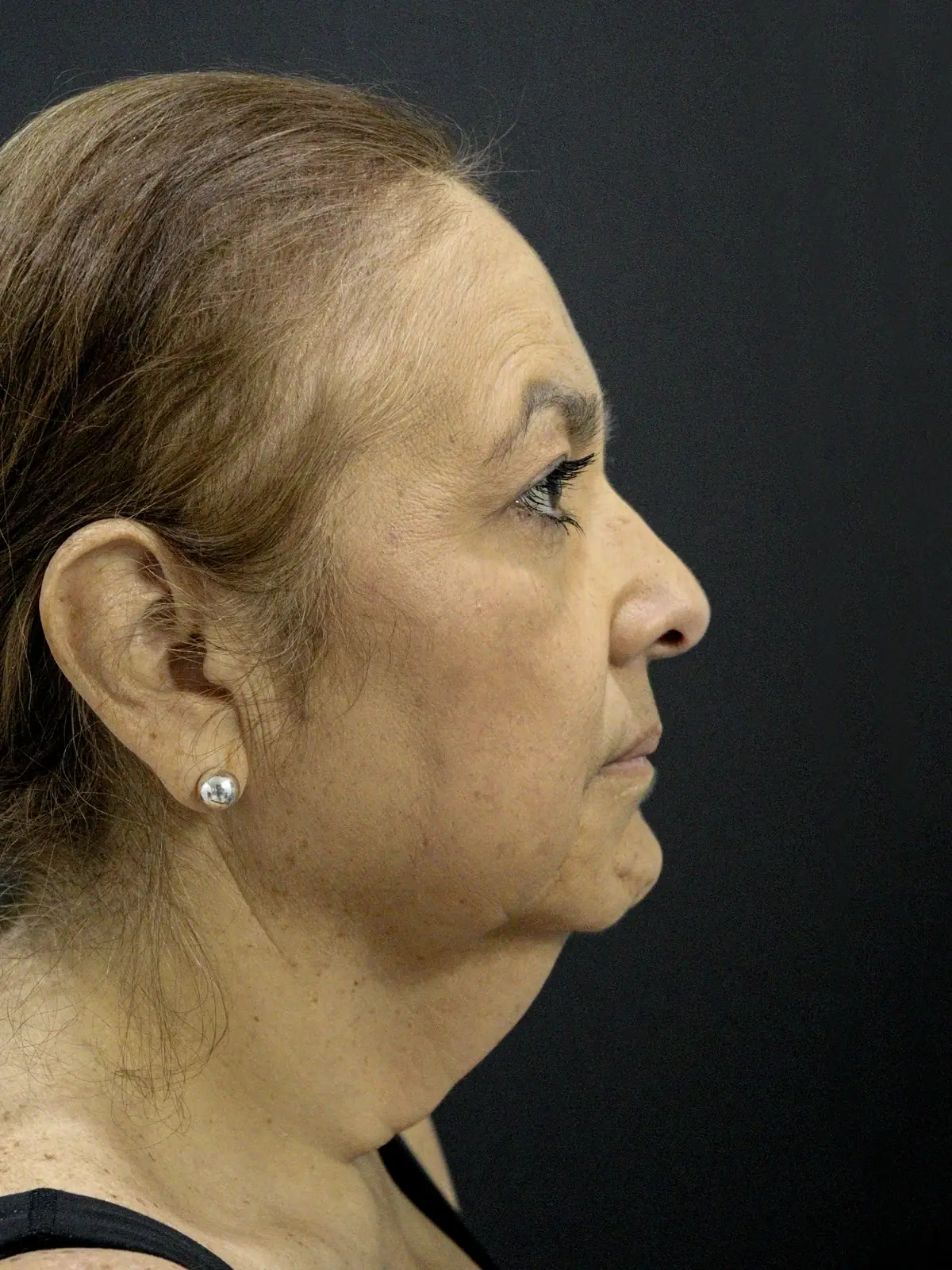
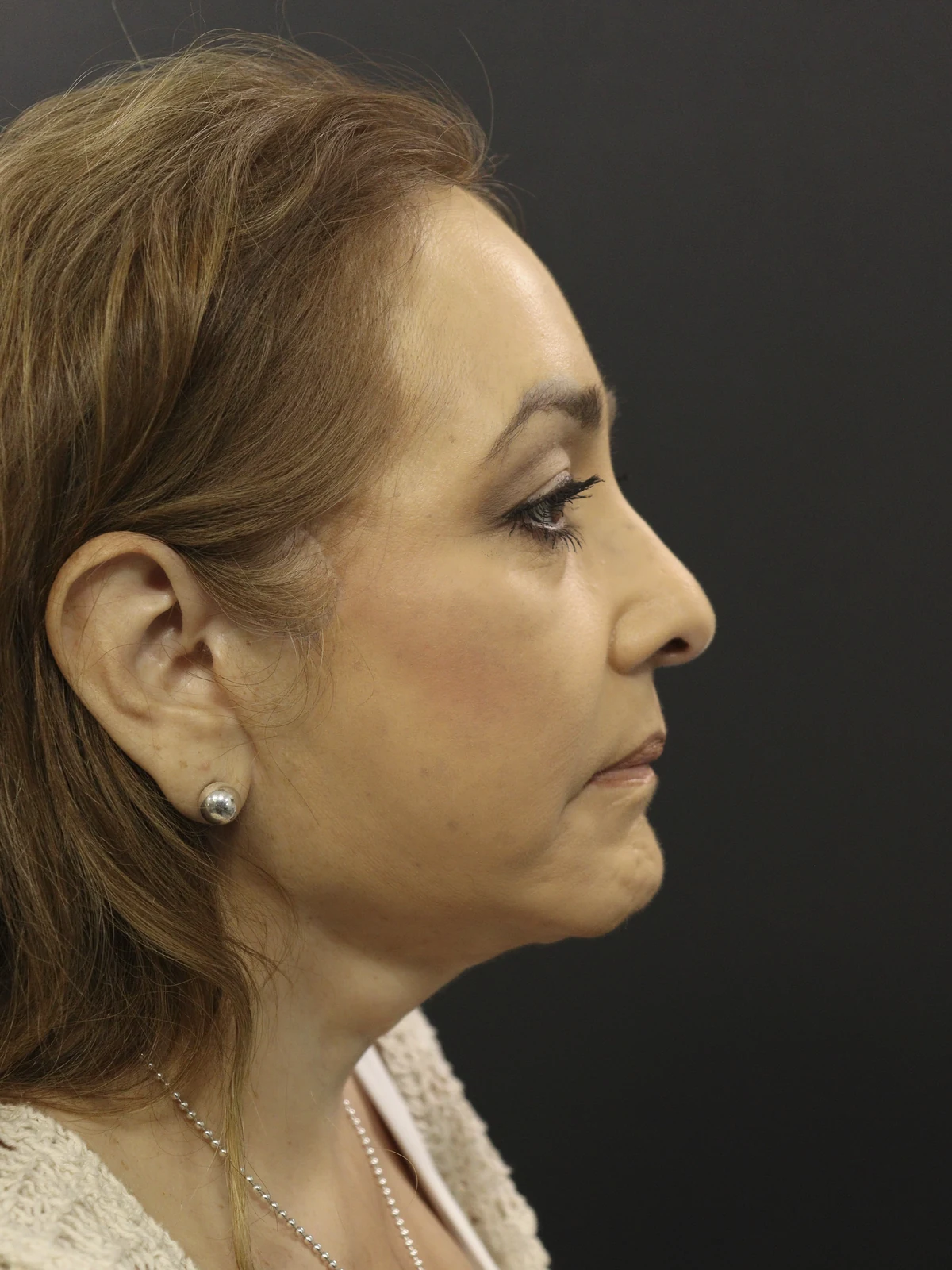 BeforeAfter
Drag to compare. In a deep plane lift the jaw and neck move as one continuous line, not as two separate operations. A real result, photographed with consent. Individual results vary.
Does a deep plane facelift fix jowls?
Yes. Jowls are descended deep structure gathering at the jawline, and repositioning that structure is exactly what the deep plane operation does. Jowls are not a skin problem, which is why tightening skin does not solve them for long, and repositioning the deeper structure holds better; in published long-term series most patients do not return for a revision until roughly a decade out. Jowls are the visible edge of a deeper descent, and because they sit at the border between face and neck, they are also the clearest everyday sign of why this question matters: the same descent that creates a jowl above the jawline has usually loosened the neck below it. A lift that repositions the structure carries the jawline with it, and individual results vary.
Why are the face and neck usually treated together?
Because they age together, and in my experience correcting one while ignoring the other risks a mismatch you can see. After 37 years and more than 3,000 facelifts, the pattern I see most often in the photographs patients send is both at once: a jawline that has softened and a neck that has loosened beneath it. There is an anatomical reason this pairing is so common: the SMAS does not stop at the jaw, it becomes continuous with the platysma, the muscle of the neck, so the structural sheet a lift repositions is one connected layer running from face to neck rather than two separate ones. A refreshed face sitting above an aged neck does not read as rested. It reads as operated. That is why, for most faces, the honest plan is one operation that carries the correction continuously from the cheek, across the jawline, and through the neck, rather than two operations negotiated separately. One face, one plan. Individual results vary.
When is a neck-only lift the right operation?
When the midface and jawline still hold and the aging lives entirely below the jaw. Some faces loosen from the bottom first. The cheeks still sit where they should and the jawline is still clean, but the angle under the chin has softened or vertical bands have appeared in the neck. For that face, a neck lift on its own is the honest recommendation, and that page covers what the operation treats and how a neck is examined. The decision is not made from a menu. It is made from standardized photographs at the consultation, where I tell you directly which operation your face is actually asking for, including when the answer is the smaller one.
What does the combined operation mean for your stay in Tijuana?
One combined operation means one anesthesia, one recovery, and one stay, not two of each. That is the practical argument for treating the face and neck together, and it matters most for patients traveling from the United States. Plan on a minimum local stay of about six days at the in-house Recovery Boutique, with nursing 24 hours. Drains are typically out at 48 to 72 hours, sutures come out on day seven, and social recovery is near fourteen days for most patients, the same arc whether the neck was included or not. The surgery takes place at VIDA Wellness & Beauty, and the week-by-week account of healing covers the rest. Swelling keeps settling over the months that follow, and individual recovery varies.

What does the combined lift not include?
The face and neck lift stops at the territories it owns: it does not treat the eyes, the brow, the surface of the skin, or lost volume. A combined operation is wider than a facelift alone, but it is not everything, and knowing the boundary is part of deciding well. The honest map of what sits outside the operation, from under-eye bags to sun damage, lives in what a facelift does not fix. When the eyes or brow genuinely belong in the plan, that is a conversation at the consultation, decided face by face and never sold as a package.
One last note, because it is usually the next question. When the plan is one combined face and neck lift, the price conversation is about that one plan, and what a facelift in Mexico costs, and what a serious quote should include, is covered on the facelift cost in Mexico page. If you want the direct answer for your own face, send photographs and ask. That is what the consultation is for. Individual results vary.