
Usually not, and I would rather tell you that plainly before you spend money on the wrong operation. Jowls do not live in the neck. They form above it, at the jawline, from descent that begins in the midface, and a neck lift works below the jaw. Tightening the neck can sharpen the angle under your chin and smooth the vertical bands, and it will leave the jowl sitting exactly where it was. Over my 37 years I have met many patients who learned this the expensive way, with a neck that had been operated on and a jawline that had not changed. So this page is about one boundary, drawn carefully: where the territory of the neck lift ends, why the jowl sits on the other side of the line, and which operation actually owns it.
What actually causes jowls?
A jowl is facial structure that has descended and gathered at the jawline. It comes from above, from the midface and the tissue along the jaw, not from the neck below it. The face is carried by a deep supporting layer called the SMAS, the superficial musculoaponeurotic system, a sheet of muscle and fascia beneath the skin that Mitz and Peyronie first mapped in 1976. With time that support slackens and slides downward. The jaw is a fixed border, so the descending tissue does not fall forever. It collects where the bone stops it, and that soft pocket interrupting the clean line of the jaw is the jowl. Anatomical studies of the aging jaw describe exactly this, distinct fat compartments that gather along the mandibular border as the tissue that once held them gives way.
Two things follow from that, and they decide everything else on this page. First, a jowl is not mainly a skin problem. The skin is draped over structure, and it is the structure that moved, which is why creams and surface tightening leave it essentially where it was. Second, the jowl’s origin is above the jaw, so any operation that intends to correct it has to work up there. Geography is the whole argument.
Why the neck lift is the wrong tool for a jowl
Put a fingertip on the edge of your jawbone, right where the jowl breaks the line. Everything a neck lift treats sits below your fingertip. The jowl hangs above it.
A neck lift is an operation on the neck: the platysma, which is the broad sheet of muscle in the neck, the tissue under the chin, and the neck skin. The platysma is continuous below the jaw with the SMAS of the face, which is exactly why this confusion is so common; the layers are one family, and from the inside the lower face can feel like a single zone. But the neck lift addresses the neck’s share of that family. It does not release the descended structure of the midface and jawline, and it does not reposition it. Tightening below a structure that has fallen from above does not lift it, any more than straightening a curtain’s hem rehangs the rod. The operations are cousins. They are not interchangeable.
What does a neck lift actually treat?
A neck lift treats the neck itself: the slackened platysma, the vertical bands its inner edges can form, fullness beneath the chin, and loose neck skin, with incisions typically placed around and behind the ear. Within that territory it has real range. Platysmaplasty tightens or sutures the platysma, often joining those medial bands down the midline, the corset repair Feldman detailed, to sharpen the cervicomental angle, the angle between chin and neck that reads as youth in profile. For a patient whose skin still has good tone, a submentoplasty through a small incision under the chin may be all the neck needs. The full examination, and how I decide between those versions, lives on the neck lift page.
I want to be clear that none of this is criticism of the operation. Done for the right problem, a neck lift is one of the most satisfying procedures I perform, alone or combined with a face lift. This article exists because the jowl is not that problem.
A patient who asked me for a tighter neck
A woman once came to me after a neck operation done elsewhere. The work itself was respectable. Her neckline was cleaner than in her photographs from before, the bands were quiet, and she was still unhappy, because what bothered her, what had always bothered her, was the soft pocket at either side of her chin. She pointed at her jowls and asked me to tighten the neck harder.
I had to tell her the operation had done its job. It had simply been aimed at the wrong target, because nothing pulled through the neck was going to move tissue that had descended from her midface. What her face was asking for was a lift that worked above the jaw. In my experience this conversation is common, and it almost always starts the same way: the patient feels the lower face as one zone, my neck and my jowls, and reaches for the smaller operation hoping it covers both. I understand the hope. Anatomy does not negotiate.
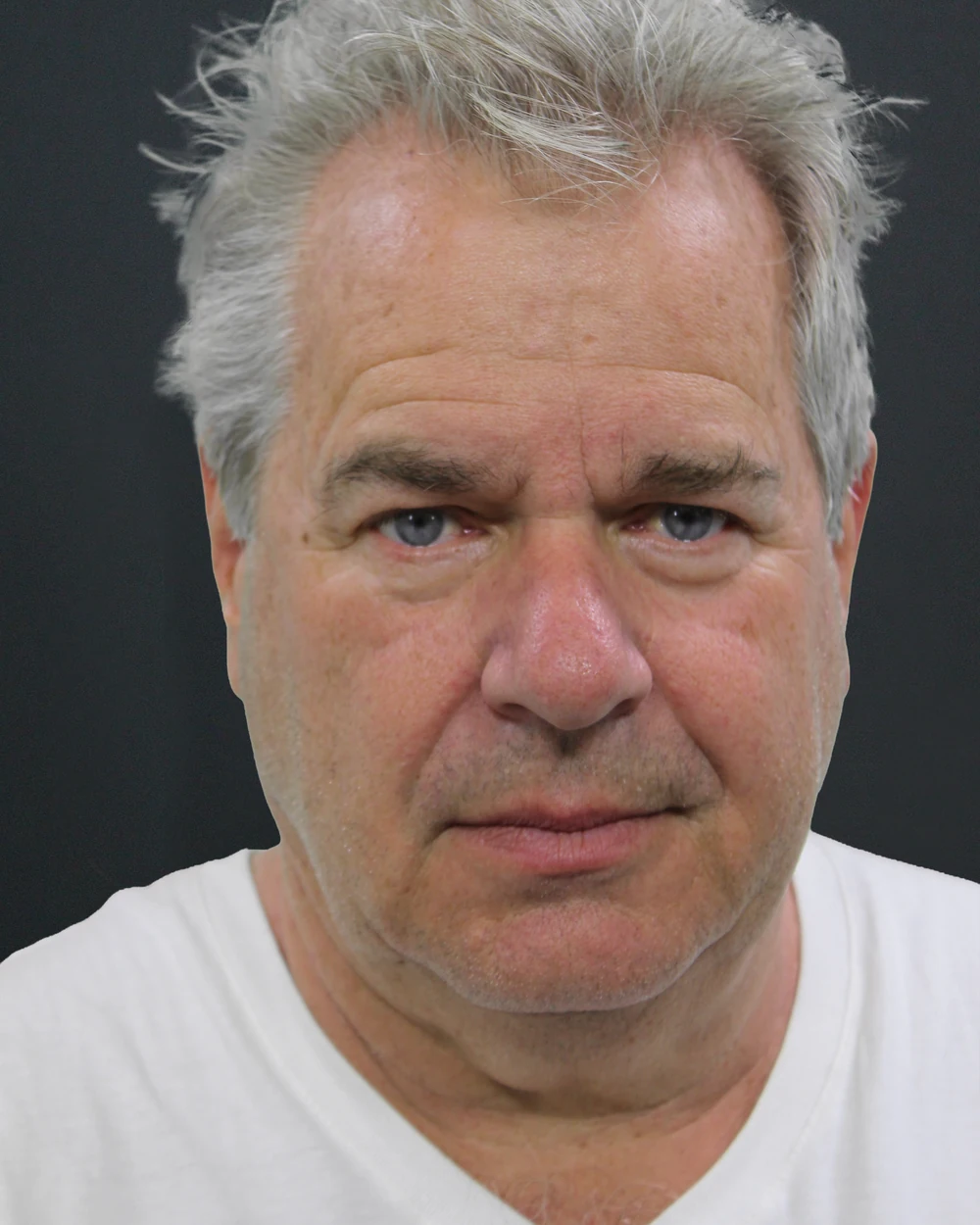
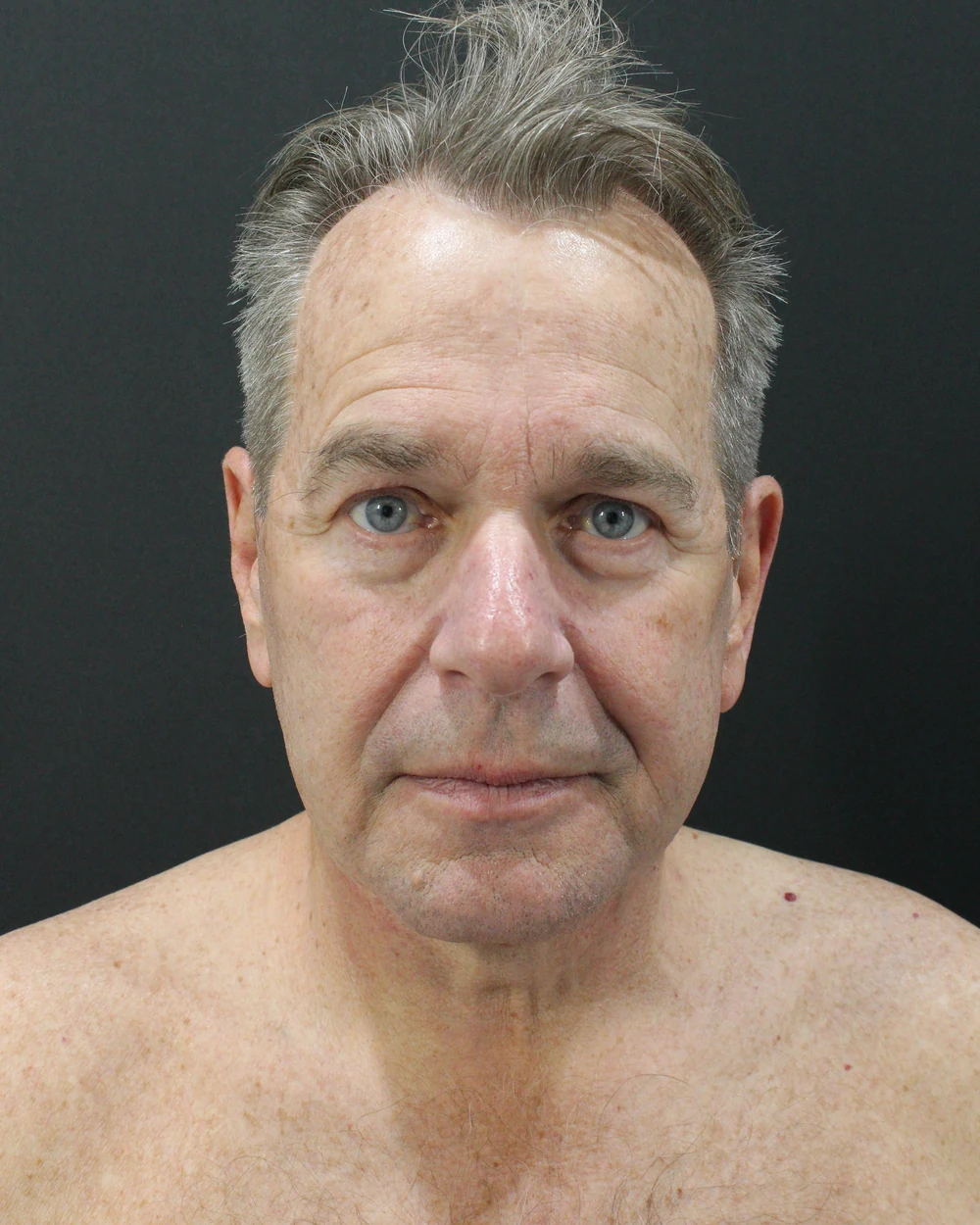 BeforeAfter
Drag to compare. The jowl and jawline are what a lift repositions; the neck below the jaw is a separate territory. A real result, photographed with consent. Individual results vary.
What actually fixes a jowl?
A jowl is corrected by a lift that works above the jaw, a lower face lift, and in my practice that usually means the deep plane facelift, because it repositions the descended structure itself instead of tightening around it. The deep plane, described by Hamra in 1990, releases the deep layer beneath the SMAS and repositions it as one unit, so the jawline is restored by returning the structure to where it came from and the skin is never asked to carry the lift under tension. A structural answer to a structural problem. The full anatomy of that operation is on the deep plane facelift page.
Surgeons debate whether the deep plane or a SMAS technique is the better vehicle for this correction, and it is a real debate that deserves more than a paragraph, so I keep my complete answer in one place: deep plane versus SMAS. Here I will say only what matters for the jowl. It responds to repositioning, and how deep and how complete that repositioning is happens to be what the debate is about. Honestly, the published evidence weighing the two techniques head to head is still thin, and the largest review to pool the data could not crown one as better overall. After more than 3,000 facelifts, I have my position, and I hold it as clinical judgment rather than settled proof. Individual results vary.
A cleaner neck can make the jowl easier to see
Sometimes a neck-only operation leaves the jowl looking more obvious, and not because anything went wrong. When the angle under the chin is sharpened and the bands are quieted, the eye gains a crisp new reference line, and a jowl sitting above a clean neckline reads more plainly than it did above a soft one. Nothing worsened. The frame improved, and the untouched part of the picture stayed the same. In my experience this is one of the quiet reasons patients return after neck work asking about their jawline, and it is worth knowing before you choose the smaller operation for the wrong reason.
Can you improve jowls without a full facelift?
You can scale the operation, but you cannot skip the territory: whatever corrects a jowl has to work above the jaw, on the structure that descended. So the honest version of this question is not how small the surgery can be, but which layer and which territory it actually reaches. A smaller lift is still a face question, not a neck question, and whether a limited lift can genuinely reposition your jawline is exactly what I weigh in mini facelift versus deep plane facelift. What I will not offer is a shortcut through the neck, or skin pulled tight and called a lift, because skin tension over descended structure neither looks natural nor holds.
There is one more honest wrinkle. Many faces that have formed a jowl have also loosened below the jaw, and for them the right plan treats the face and neck as one continuous territory rather than choosing between them. How that combination works in this practice is covered in does a deep plane facelift include a neck lift. And the jowl is only one line on the larger map of what lifting surgery does and does not correct; I have drawn the whole map in what a facelift does not fix. Individual results vary.
Three checks you can make in a mirror
Before you write to any surgeon, including me, stand in front of a mirror in even light and ask your own face three questions.
- Straight on: where does the line of the jaw break? A soft interruption at or just above the jawline is the jowl, and it belongs to the face.
- In profile: has the angle under your chin softened or filled in? That blunted neckline belongs to the neck.
- Front of the neck: vertical cords running down from the chin are the edges of the platysma, and they belong to the neck as well.
Most aging faces show something in more than one territory, which is why the face and neck are so often treated together. This is not a diagnosis, and I am not asking you to make one. It is a way to arrive at the conversation already understanding why I may answer your neck question with a facelift recommendation, or the reverse. Photographs settle the rest.

Which operation is your face actually asking for?
If you are weighing the two operations directly, I have written a full side-by-side comparison in neck lift or lower facelift. But no article decides this, because the decision is read from a face, not from a page. Send me photographs. My team coordinates U.S. patients from San Diego, and you can reach us by phone, SMS, iMessage, or email at +1 (619) 738-2144. I study the pictures myself, and I will tell you directly which territory has loosened and which operation owns it, including when the answer is the smaller operation, or none at all. If we proceed, I operate at VIDA Wellness & Beauty in Tijuana, and the details of the consultation are a page of their own.
After 37 years, I have learned that the most expensive operation is the one aimed at the wrong target. The jowl is not a neck problem. Choose the tool that reaches it. Individual results vary.