A patient sat across from me a few weeks ago with a folder of screenshots. Instagram clips of a glowing jawline, a quote from a med spa for a package of Morpheus8 sessions, and one question written at the top in her own handwriting: can this tighten my jawline, or do I need the surgery?
I am probably the right person to ask, and possibly the last person you would expect to answer the way I do. I own a Morpheus8 machine. I use it, along with CO2 laser and other resurfacing treatments, in my own practice, often in the very same session as a facelift. I am not a surgeon who dismisses devices to protect his scalpel. And still, my answer to her is the same one I will give you here: Morpheus8 firms skin and refines texture along the jawline. It does not lift a jowl, and it does not rebuild a jawline that has structurally descended. Those are two different problems, and after thousands of facelifts over my 37 years in practice, I can tell you the most expensive mistake in aesthetic medicine is treating the second problem with a tool built for the first.
That is not a warning against Morpheus8. It is a case for using it in the right order, for the right job. In this article I want to give you what the brochures will not: the honest size of the result, the honest risks, and the honest logic for when the device is the answer, when the operating room is the answer, and when the correct sequence is both.
What Morpheus8 is actually doing under your skin
Morpheus8 is a branded form of A treatment that inserts rows of very fine needles into the skin and releases radiofrequency energy from their tips, heating the deeper layers to trigger new collagen while the surface is relatively protected., and understanding that mechanism tells you almost everything about what it can and cannot do.
Rows of fine, mostly insulated needles enter the skin to a chosen depth, measured in fractions of a millimeter up to a few millimeters. At the tip of each needle, radiofrequency energy creates a small, controlled zone of heat in the dermis and, at deeper settings, the upper layer beneath it. The body responds to that controlled injury the way it responds to any injury: it remodels. New collagen is laid down, elastin reorganizes, and over the following months the treated skin becomes measurably firmer, smoother, and better draped.
This is not marketing theater. A comprehensive critical review in Dermatologic Surgery examined dozens of higher quality studies, randomized or blinded, and concluded that RF microneedling is an effective intervention for skin rejuvenation, that it can be repeated and combined safely with other treatments, that it can be used in darker skin phototypes, and that the remodeling continues to improve for as long as six months after a treatment.
Read those conclusions carefully, though, because the vocabulary matters. Rejuvenation. Texture. Skin quality. Remodeling. What you will not find in that literature is the word that fills the promotional videos: lift. The needles remodel the fabric of the skin. They do not touch the structures underneath it that determine where your jawline actually sits.
Does Morpheus8 work on jowls?
Not on a true jowl, no, and I say that as someone who owns the machine and uses it every week.
A jowl is not a skin problem. It is a structural event. The deep soft tissue of the cheek, the SMAS layer and the fat compartments riding on it, loses its ligamentous support with age and slides downward and forward. That descending tissue piles up against a fixed anchor point near the front of the jaw, the mandibular ligament, the way snow piles against a fence. The bulge you see interrupting your jawline is displaced deep tissue, sitting well below the layer any microneedle reaches with therapeutic heat.
So when a device heats the dermis over a jowl, it is ironing the curtain while the curtain rod sags. The fabric looks a little crisper. The rod has not moved. The only way to move the rod is to go under the fabric, release the ligaments that have the deep layer tethered in the wrong position, and reposition it. That is precisely what a deep plane facelift actually repositions, and it is the difference between firming a jawline and rebuilding one.
There is a simple test I give patients over video. Pinch the bulge along your jaw between two fingers. If what you are holding is a thin sheet of loose skin, energy devices have something real to offer you. If what you are holding is a fold of substance, tissue with weight in it, tissue that moves when you talk and settles back when you stop, no needle and no wavelength repositions that. Surgery does.
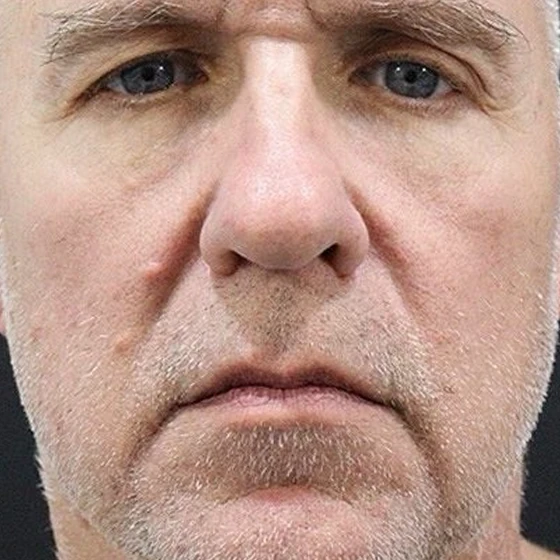
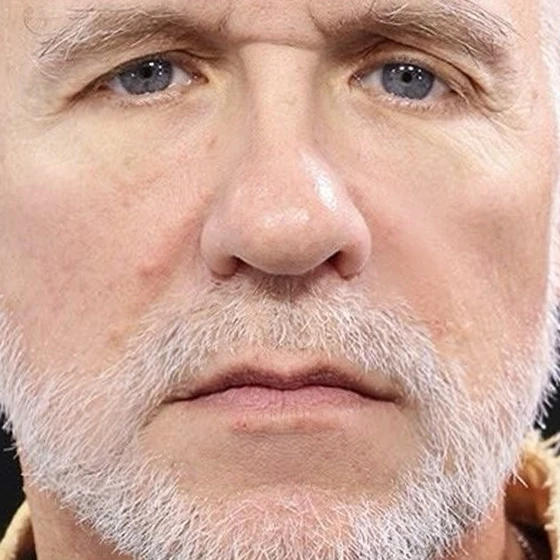 BeforeAfter
The honest size of a Morpheus8 result
Let me tell you about a patient where the device was the right call, because I do not want you to hear only what it cannot do.
A woman in her mid forties came to see me from San Diego convinced she needed a facelift. Her weight was stable, her neck was clean, and when I examined her jawline there was no true jowl, just skin that had lost some of its snap, a faint crepe below the ear, and texture that made her look more tired than she felt. I told her the truth: an operation would be premature, and what she wanted was mostly a skin quality problem. We did a short series of Morpheus8 sessions. Months later her jawline read cleaner in photographs, not because anything had been lifted, but because the skin along it had firmed enough to follow the bone instead of hovering over it.
That is the honest size of the result: a firmness change, a texture change, a change you appreciate best in good light and in photographs taken months apart. In the right patient it is absolutely worth having. It is also quiet. If you walk in expecting the jawline of a surgical after photo, you will be disappointed, not because the device failed, but because it was asked to do a job it was never built for. Individual results vary, and they vary most with how much of your concern is skin and how much is structure.
How I use Morpheus8 in my own practice
I did not buy the machine to compete with my operating room. I bought it because my operating room has a blind spot.
A facelift, even the most thorough deep plane lift, repositions tissue. It does not change the quality of the skin that drapes over the repositioned tissue. Sun damage, fine crepe, open pores, the etched texture of decades, all of that comes through surgery untouched. For years the honest answer to a beautifully lifted face with tired skin was a second appointment somewhere else. Now it is part of my plan. In appropriate patients I treat the skin with Morpheus8, CO2 laser, or both in the same session as the lift, while the patient is already comfortable, so the structure and the surface improve together instead of one exposing the other.
People ask how I choose between the tools in that same session, so let me open the toolbox. Radiofrequency needles are my instrument for laxity of the skin itself and for firmness through the deeper dermis, because they deliver heat from below. The CO2 laser is my instrument for the surface, for sun damage, etched lines around the mouth, and the overall finish of the skin, because it works from above. Some faces need one, some need both in different zones, and the judgment is made on your skin, not on a package menu. What never changes is the division of labor: the lift does the moving, the energy does the finishing.
The second role is maintenance. Your facelift resets the position of the deep tissue, but your skin keeps aging at its own biological pace afterward. Periodic RF microneedling or light resurfacing in the years after surgery is one of the honest ways to keep the skin worthy of the foundation underneath it, and it is how I help my patients protect a result rather than watch it weather. Individual results vary, and maintenance is tailored, not sold by the bundle.
And yes, there is a third role: the standalone patient, like the woman from San Diego, whose problem genuinely lives in the skin. She exists. She is simply not the patient with a jowl.
Can Morpheus8 cause facial fat loss?
It can, rarely, and this is exactly why energy dosing and operator experience matter more than the brand name on the machine.
Under the skin of your jawline sits the The thin layer of fat directly beneath the skin that gives the face its smooth, youthful contour. It varies in thickness across the face and does not regenerate well once lost., a layer that gives the lower face its soft, even contour. Radiofrequency heat, pushed too deep or too hot into that layer, can injure it. Fat that is injured this way does not reliably come back.
This is not a rumor. In late 2025 the FDA issued a safety communication about certain uses of RF microneedling devices, citing reports of burns, scarring, fat loss, and nerve injury. A subsequent analysis of the FDA’s device reporting database, covering January 2013 through October 2025, identified 114 reports describing 224 adverse events, with textural changes in about a quarter of them, pigment changes in roughly one in five, and fat loss in about one in nine.
Now let me put that in proportion, because proportion is where the internet fails you. Those reports accumulated over more than a decade during which an enormous number of treatments were performed worldwide, and the database has no denominator, so it cannot tell you a true complication rate. What the pattern in those reports does tell you, and what the FDA emphasized, is that trouble clusters around aggressive settings, excessive depth in thin areas, and inexperienced hands. The face is not one thickness. The skin and fat over the jawline, the cheek, and just in front of the ear differ by millimeters that matter enormously when a needle is delivering heat at its tip.
So my conclusion is not “avoid the device.” My conclusion is the one I practice: choose needle depth zone by zone, dose energy conservatively over thin fat, stage the work across sessions instead of chasing a dramatic single treatment, and respect the anatomy underneath. The fat loss discussion in the literature is the argument for judicious dosing by someone who knows facial anatomy in three dimensions. It is not an argument for fear.
One more point, because it is relevant to the patients I serve. Many of my patients have olive, brown, or deeper skin tones, and energy devices have a complicated history with melanin rich skin. One genuine advantage of needle delivered radiofrequency is that the heat is released below the surface rather than absorbed by pigment at the surface, which is part of why the review literature supports its use in darker phototypes. That safety is real, but it is conditional: it assumes correct depth, correct energy, and a practitioner who treats darker skin routinely rather than occasionally. Ask that question directly of anyone who proposes to treat you.
Put two fingers on your jawline
Do this now, while you are reading. Look straight ahead in a mirror, relax your face, and place two fingers flat along the line of your jaw, just in front of the corner.
If what breaks the line is a soft laxity of the skin itself, something that smooths completely with the gentlest touch and has no body when you pinch it, you are likely in device territory, and a modest, staged plan may genuinely satisfy you.
If there is a pocket of tissue there, something with substance that folds over the jawline when you tilt your chin down and reappears every time, you are looking at descent. You can heat the skin over that pocket for years and spend a great deal doing it, and the pocket will still be there, a little lower each birthday.
You do not need me for this test. You only need me for what comes after it.
Will Morpheus8 before a facelift cause problems later?
This question comes up constantly with my U.S. patients, usually phrased with a hint of guilt, as if the med spa sessions were an infidelity I will discover on the operating table. Relax. In my experience, a properly dosed course of RF microneedling does not ruin a future facelift.
I operate regularly on faces that have had energy treatments, and in the great majority the surgical planes are exactly where I expect them to be. What I do occasionally find, most often after repeated, aggressive, deep treatments, is a subtle extra firmness in the layer just under the skin, a fine scar response that makes the dissection slower and more deliberate. It has not, in my hands, changed an outcome, but it is real, and it is one more reason the dosing philosophy from the previous section matters. The published literature on sequencing device treatments before surgery is still thin, so I offer you experience there rather than citations, clearly labeled as such.
The practical guidance is simple. Tell your surgeon everything you have had done, when, and how many sessions, and bring records if you can get them. Device history is one of the specific things I go through during a consultation, alongside your photographs and your health history, because it shapes both my surgical plan and my advice.
And one piece of sequencing advice that will save some of you real money: if an examination makes clear that you will likely want surgery within the next year or so, do not buy a device package now in the hope of postponing it. The device will not stop the descent, and the texture work it does well can be done in the same session as your lift, under the same anesthesia, as a complement rather than a substitute.
How many sessions, and when you will actually see it
Nobody should sell you a single magic session, and nobody should sell you an endless subscription either.
For jawline skin quality, the typical plan I use is a short series, most often two to three sessions spaced about four to six weeks apart. The biology sets the calendar, not the front desk: collagen remodeling is slow, the earliest changes appear over the first several weeks, and the literature supports improvement continuing to build for up to six months after treatment. That means the photograph that convinces you will be taken months after your last session, not the day you leave the clinic slightly pink and slightly swollen, when what you are seeing is temporary edema doing a flattering impression of the final result.
Downtime is one of the device’s honest advantages, and worth describing plainly. Expect redness and a feeling of warmth for a day or two, some pinpoint marks where the needles entered, mild swelling that can flatter you for a week before it fades, and skin that should be babied with gentle cleansing and diligent sunscreen while it heals. Most of my patients are presentable within a few days and back to their routines almost immediately, which is a fraction of the recovery an operation asks of you. That asymmetry is fair to weigh in your decision, as long as you weigh it against what each one actually delivers. A small recovery buys a small change; a surgical recovery buys a structural one. Individual results vary, and so does healing.
After the initial series, maintenance is occasional, not constant. In my post facelift patients I plan it around the state of their skin, usually no more than once or twice a year, sometimes less. If someone proposes an open ended monthly program for your jawline, ask them precisely what each session is adding. Individual results vary; the honest variables are your skin’s thickness, your sun history, your age, and how much of your concern was ever a skin problem to begin with.
Is Morpheus8 a nonsurgical facelift?
No. There is no such thing as a nonsurgical facelift, no matter how many times the phrase is typed into a brochure, and Morpheus8’s own best evidence never claims to be one.
A facelift is defined by what it moves: the deep supporting layer of the face, released and repositioned, with the excess managed and the neck addressed. A device conditions the envelope that covers those structures. Calling skin conditioning a facelift is like calling new upholstery a new chair frame. Both have value. Only one changes the shape.
I hold my own field to the same standard, by the way. Surgery has real limits too, and I have written honestly about what a facelift does not fix: it does not resurface sun damage, it does not erase etched lines, it does not change skin quality. That is precisely why the surgeon who tells you a lift makes devices unnecessary is making the mirror image of the med spa’s error. The face has a structure and a surface. Mature care addresses each with the tool built for it.
Where I stand on ultrasound tightening
You may notice that I offer Morpheus8, CO2 laser, and other resurfacing treatments, but not Ultherapy or Sofwave. That is a deliberate choice, and you deserve my reasoning rather than my adjectives.
Microfocused ultrasound is a legitimate, studied technology that delivers focused heat deeper than RF needles reach. My hesitation is about the size and consistency of the visible payoff for the patient with real laxity, the patient I most often meet. In one of the more careful prospective trials, blinded evaluators comparing photographs judged that 58.1% of patients had improved lower face skin laxity at 90 days after treatment. Read that from the other side: expert eyes could see no change in roughly four out of ten treated patients. The same study found results notably weaker in patients with a higher body mass index, where more than half showed no detectable change.
For mild laxity, in well selected patients, in experienced hands, ultrasound tightening can be a reasonable option, and I have colleagues who use it thoughtfully. But for the jawline with a true jowl, or the neck with real descent, I could never look a patient in the eye and endorse that probability of visible change at that level of expense. When the odds are close to a coin flip that a trained observer will see any difference, and the alternative is a repositioning that reliably changes the shape of the jawline for years, I know which conversation I owe you.
Notice this is a different judgment from the one I make about my own devices. I do not claim Morpheus8 lifts, so I never have to defend a lifting claim it cannot keep. I use it for skin quality, where the evidence and my own patients’ results satisfy me. Skepticism about a modality being sold as a lift for advanced laxity is not skepticism about energy devices as a category. It is just honesty about job descriptions.
Complement or operation: how I sort it in the exam chair
Here is the sorting logic I actually use, stripped of sales language.
- Your jawline softness is thin, pinchable skin without substance, and it smooths with the lightest touch
- Your main complaints are texture, crepe, pores, or dullness rather than shape
- Your weight is stable and your neck is still clean under the chin
- You have had a facelift and want to protect the result as your skin keeps aging
- You expect firmer, better quality skin, not a new jawline, from a device
- You can pinch a fold with real substance that crosses your jawline and returns every time
- Loose bands or hanging skin have appeared in your neck
- A surgeon has already told you that you need a lift, and you are shopping devices to avoid hearing it again
- You are budgeting for repeated device packages, year after year, while the descent visibly advances
- You expect any device, at any setting, to move tissue that hangs
If your honest answers live in the first half of that list, Morpheus8 or a resurfacing plan may be all you need for now, and I will tell you so. If they live in the second half, every device session you buy is a payment toward postponing the only treatment that addresses your actual anatomy.
The patients I tell to buy neither
Some weeks the most valuable thing I do is decline to treat.
If you are in the middle of significant weight loss, on a GLP-1 medication or otherwise, I want your weight stable for several months before we make structural decisions, because your jawline at the end of that journey is a different jawline. If your skin quality is genuinely good and the flaw that brought you in is visible only in one unflattering photograph taken from below, I will say so, and I will suggest a better photographer before I suggest a needle. If your expectations and your anatomy cannot be introduced to each other, no tool I own will make you happy, and the ethical answer is no tool at all.
And there is a younger group I see more of every year, patients in their early thirties with excellent skin asking for preventive Morpheus8 for a jawline that has nothing wrong with it. My advice is usually sunscreen, a retinoid, patience, and an invitation to spend the money on something they will remember. Prevention has its place, but a device cannot prevent ligaments from aging, and unneeded treatments are not an investment. They are a subscription.
The order matters more than the tool
If you remember one idea from this article, let it be this: Morpheus8 versus facelift is the wrong fight, because they are not candidates for the same job. The real question is sequence.
Structure first, surface second. If your jawline has structurally descended, the operation rebuilds it once, decisively, at the deep layer where the problem lives. Devices then do what they genuinely do well: refine the surface at the same session and defend the skin in the years that follow. Run the sequence backward, surface first while the structure keeps sliding, and you spend years and considerable money firming skin over a jowl that grows a little heavier each season, until you eventually have the operation anyway, later than you should have.
I have watched the same logic play out with injectables, where years of filler chase a shadow that was always structural, and the arithmetic ends the same place. I walked through that comparison in detail when I wrote about how jawline surgery compares with filler over the long term, and the conclusion transfers word for word to energy devices: tools that soften the evidence of descent are not tools that correct descent, and the patient’s mistake is never using them, it is using them instead.
The person who benefits most from Morpheus8 in my practice is, ironically, the facelift patient. Her structure has been rebuilt, so every improvement the device makes to her skin is pure gain on a sound foundation. That is the device at its best, and it is why I will keep offering it without ever once calling it a lift.
If you want my honest read on your jawline
I examine jawlines for a living, and I promise you the assessment is faster and kinder than the months people spend deciding which internet camp to believe.
Send photographs, or sit with me on a video call, and I will tell you plainly which of the three patients you are: the skin quality patient who should start with Morpheus8 and skip surgery for now, the structural patient who needs a repositioning and should not spend another cent trying to heat the problem away, or the combined patient, most common of all past fifty, whose best plan is a lift with the skin work built into the same session and the device kept afterward as maintenance. Because both tools live under my roof, my recommendation is not a referral to someone else’s cash register. It is a sequence, built for your anatomy.
Whatever you decide, decide it with accurate expectations. Firmer skin is a real and worthy result. A rebuilt jawline is a different and larger one. Individual results vary with anatomy, skin, and health, and the surgeons and practitioners worth your trust are the ones who tell you which result they are actually selling before you pay for it.