
A 9D facelift is a marketing term, not a surgical procedure. There is no operation called a 9D facelift, no board that defines it, no textbook that teaches it. The name describes a package of non-surgical treatments, most often some combination of focused ultrasound, laser sessions, dissolvable threads, Botox, filler, and radiofrequency microneedling, bundled together and sold under a number that sounds like a technology upgrade. Some of those tools are genuinely useful. I use several of them in my own practice. But stacking them does not add up to a facelift, because none of them does what a facelift does: reposition the deep structures of the face that have descended with age.
I have performed facial surgery for 37 years and more than 3,000 facelifts, and in the last few years I have watched the number in front of the word “facelift” climb the way megapixels once climbed on cameras. Patients arrive at my a clinic-invented package name for a series of non-surgical treatments, commonly ultrasound, laser, dissolvable threads, Botox, filler, and radiofrequency microneedling, sold together as though they were one defined procedure. The number is branding, not anatomy. consultations holding brochures and asking whether they should do “the 9D” instead of surgery. It is a fair question, and it deserves a fair answer, not a dismissive one. That is what this article is.
Where the number comes from
The genealogy is worth understanding, because it explains why the term is so slippery. One laser manufacturer, Fotona, markets a legitimate multi-step laser protocol under the name Fotona 4D. It is a real, defined sequence of laser passes for skin quality, and clinics that offer it are describing something specific. The trouble started when the number came loose from the protocol. Competing clinics began advertising 5D, 6D, 7D, 8D, and now 9D “facelifts,” and at that point the number stopped referring to any defined sequence at all. It became a bid in an arms race. If the clinic down the street offers 8D, you offer 9D.
Ask three different clinics what their 9D facelift includes and you will get three different lists. That is the tell. When I perform a deep plane facelift, any surgeon in the world can read my operative note and know exactly what I did, because the procedure has a shared anatomical definition. A 9D facelift has no such definition. It is whatever the clinic selling it decides to put in the package that month.
I want to be careful here, because the individual ingredients are not fraudulent. Most of them are established treatments with real, published evidence behind them for specific purposes. The problem is not the tools. The problem is the framing: taking treatments designed to improve the surface and quality of skin, bundling them, and borrowing the word “facelift,” which describes something categorically different.
What is usually inside the bundle
A patient of mine, a teacher in her late fifties from Orange County, once spread a clinic’s quote on my desk and asked me to translate it line by line. I have done that exercise many times since, and the contents are fairly consistent. Here is what the packages usually contain, and what each ingredient honestly does.
Focused ultrasound, sold under names like HIFU or Ultherapy, is usually the anchor of the package because it sounds the most like surgery. high intensity focused ultrasound. The device focuses sound energy beneath the skin to create tiny points of heat, which makes collagen contract and slowly rebuild. Nothing is cut, and no tissue is moved to a new position. The energy creates small thermal coagulation points a few millimeters under the surface, reaching roughly 5 mm deep at most, and the healing response tightens tissue modestly over the following months.
Laser treatments, whether the Fotona family or fractional CO2, work on the skin itself: texture, sun damage, fine lines, pore quality, pigment. Done well, on the right skin, they are excellent at exactly that.
PDO threads are dissolvable barbed sutures passed under the skin with a needle to snag and slightly reposition soft tissue. They produce an immediate small change that relaxes as the threads dissolve and the tissue settles.
Botox relaxes specific muscles, which softens the wrinkles those muscles create and can subtly reshape how the face moves. Filler adds volume where volume has been lost, and the FDA describes most fillers as temporary, absorbed by the body over time. Radiofrequency microneedling, such as the Morpheus8 platform I use in my own clinic, delivers heat into the dermis through fine needles and is well supported in the literature for improving skin quality and mild laxity, safely and repeatably.
Read that list again and notice what every item has in common. Each one treats the skin, the volume, or the muscle activity of the face. Not one of them repositions the deep supporting layer that has slid downward. That layer is where a jowl actually lives.
Is a 9D facelift a surgery? No.
A 9D facelift is not a surgery, and adding sessions or dimensions to the name never makes it one. It involves no incision, no lifting and repositioning of the SMAS, the muscular fascia layer of the face, no release of the retaining ligaments that tether it, and no closure. Nothing is moved and fixed into a new position. Whatever else it may be, it is not surgery, and calling it a facelift is a naming decision made by a marketing department, not a medical one.
That is not automatically a criticism. For many people, “not surgery” is precisely the appeal, and for some of them it is also the right call. But you cannot make a good decision about your face until the vocabulary is honest. A facelift is an operation. A 9D facelift is a subscription.
What these tools do well, and I say this as someone who uses them
It would be convenient for me, a facelift surgeon, to tell you that every device is a waste of your time. It would also be false, and my own practice would contradict me. I offer Morpheus8, CO2 laser, and other energy-based treatments, and I use them constantly, because they solve problems that surgery does not touch.
A facelift repositions tissue. It does nothing for the quality of the skin draped over that tissue: the sun damage, the crepe texture, the fine etched lines around the mouth, the enlarged pores. A sixty-year-old who gets a beautiful deep plane lift but still has the skin surface of a sixty-year-old sun worshipper has an incomplete result. This is exactly where lasers and radiofrequency microneedling earn their place, and the published reviews support them for it. In my practice they serve three honest roles: improving skin quality in people who do not yet need surgery, refining the canvas before or after a lift, and maintaining a surgical result over the years that follow. I have written elsewhere about where the line sits between Morpheus8 and a facelift for the jawline, and the short version is that the device wins on texture and the operation wins on position. Individual results vary with skin type, age, and how faithfully the plan is followed.
So when a clinic includes RF microneedling or a quality laser in a package, that part of the offer can be perfectly legitimate. My quarrel is never with the ingredients I recognize. It is with the promise printed above them.
In fact, the most honest version of a multi-modality plan already exists in good surgical practices, mine included, and nobody there calls it 9D. For a patient with both true descent and sun-damaged skin, my recommendation is often sequential: the deep plane operation to restore structure, then, once healing allows, laser or Morpheus8 to bring the skin surface up to the level of the new foundation, and a simple maintenance rhythm after that. Same tools you will find in the packages. The difference is that each one is aimed at the layer it can actually reach, in an order that anatomy dictates, and the surgical part is named as surgery instead of hidden behind a numeral. When patients ask me what I think of combining treatments, my answer is that combining is exactly right. It is the substitution I argue with.
The millimeter problem
Here is a number worth more than any marketing suffix. In the rater-blinded study that helped establish focused ultrasound for facial tightening, the mean measured brow elevation at 90 days was 1.7 mm. Not centimeters. Millimeters, and fewer than two of them, in a study designed to show the technology at its best.
I do not offer HIFU in my practice, so let me be transparent about my position: I am not neutral, but I am also not guessing. I have read the literature and I have examined, over many years, the faces of patients who spent serious money on ultrasound packages before coming to see me. For mild laxity in a younger face, focused ultrasound can produce a real, if modest, tightening, and there are careful practitioners who use it honestly within those limits. But a true jowl, the fold of descended deep tissue that sits over the jawline and deepens the marionette shadow, represents descent on a scale of centimeters, driven by ligaments that have let go. Heating the tissue does not put it back. I went deeper into this evidence in my comparison of Ultherapy and Sofwave against a facelift for jowls, and the conclusion has not changed: the physics of an external energy device caps what it can move, and that cap sits far below what an established jowl requires.
The honest framing is this. Energy devices remodel collagen where they heat it. Surgery repositions structures. These are different verbs, and no accumulation of the first verb becomes the second. Adding a sixth or seventh device to the package, and a higher number to the name, does not change the verb.
A word about threads
Threads deserve their own paragraph because they are the one ingredient in the 9D bundle that at least gestures at repositioning. A barbed dissolvable suture does physically pull tissue, and in the mirror, on the day of treatment, the change can be genuinely visible. The difficulty is what happens next. The threads dissolve over months. The tissue they were holding was never surgically released from its ligaments, so it remains under the same tension that created the descent in the first place. A systematic review in Plastic and Reconstructive Surgery examined the published evidence on thread lifts and found it thin, with the measurable effect in earlier studies short lived.
I do not use threads for jowls, and when a patient with real descent asks me about them I say plainly that she would be renting a small correction rather than buying a durable one. In a narrow band of younger patients with early, mild laxity who understand the timeline, a thread lift chosen with open eyes is a defensible bridge. Inside a package that promises facelift results, it is usually the ingredient doing the heaviest advertising work and the lightest anatomical work.
Non-surgical does not mean risk-free
There is a comfortable assumption hiding inside the 9D pitch that deserves its own correction: that because nothing is cut, nothing can go wrong. Every treatment in the bundle carries its own risk profile, and a package of nine treatments carries nine of them.
Energy devices are heat, and heat in the wrong hands or the wrong settings burns. Focused ultrasound delivered off target can injure a nerve branch, usually temporarily, or melt small amounts of facial fat, which is not temporary. Radiofrequency microneedling is well documented as safe when protocols are respected, including in darker skin, but aggressive settings chosen by an inexperienced operator can leave pigment changes that take far longer to fade than the laxity took to treat. Threads can dimple, migrate, become palpable, or occasionally work their way to the surface, complications the surgical literature on thread lifts records plainly. And filler, the most casual-seeming item on the list, carries the most serious rare risk of all: the FDA identifies unintentional injection into a blood vessel as the most concerning complication, capable of causing tissue loss, vision problems including blindness, and stroke. Rare, yes. Fictional, no.
None of this is a reason to avoid these treatments. It is a reason to ask the same question of a device package that you would ask of a surgeon: who exactly is performing each step, what is their training, who examines you first, and who manages the complication if one arrives. In some package-driven clinics the person holding the device met you eleven minutes ago and the physician whose name is on the door is nowhere in the building. The machine does not supply the judgment. The operator does.
What a bundle can do, and what should make you pause
Before you evaluate any multi-device package, including a well-intentioned one, it helps to separate the promises that are physiologically honest from the ones that should make you slow down.
- Better skin texture, tone, pigment, and fine lines from laser and RF microneedling sessions
- Modest tightening, measured in millimeters, in a younger face with mild laxity
- Softer dynamic wrinkles from Botox and restored volume from filler, both temporary by design
- Maintenance and refinement of a surgical result in the years after a facelift
- Any promise of facelift-level correction of jowls or a loose neck without surgery
- Before and after photos with different lighting, angles, makeup, expression, or visible smoothing
- A package prescribed before anyone has examined your face or asked about your anatomy
- Pressure to prepay a long series of sessions on the day of your first visit
- The claim that surgery is outdated and devices have replaced it
Notice that the green column is not empty. That is the point of this whole article. The honest answer to “does any of this work?” is yes, for the right problem. The red column is where the 9D framing usually lives.
Does a 9D facelift work?
A 9D facelift works for what its ingredients treat, which is skin quality, and does not work for what its name implies, which is lift. The fair way to judge it is to split the question in two.
If the question is “will a series of laser, ultrasound, injectable, and microneedling sessions make my skin look better?”, then in a well-selected patient, treated by someone skilled, the answer is often yes. Texture improves. Pigment evens. Fine lines soften. There can be a subtle overall freshness that friends notice without being able to name. Individual results vary, and the changes build gradually over months rather than arriving in a single reveal.
If the question is “will a 9D facelift do what a facelift does?”, the answer is no, and no honest practitioner will tell you otherwise. The bundle cannot reposition a descended SMAS, cannot re-suspend the deep tissue of the neck, cannot erase a true jowl. What it can do, and this is where I ask you to be careful, is create photographs that appear to say otherwise. Immediately after threads and filler there is swelling and fresh mechanical lift that flatters the camera. Add warmer lighting, a slightly raised chin, makeup, and the gentle smoothing that many clinic phones apply by default, and the after photo can imply a transformation the mirror will not sustain at month six. I have sat with patients quietly comparing those photographs with their own faces, feeling that the failure was somehow theirs. It was not. The arithmetic of the promise was wrong before they ever lay down on the treatment table.
There is also a quieter cost to the overpromise, one I see in my consultation room. A patient spends two or three years cycling through packages, watching the jowl return every time the swelling settles, and concludes that nothing works on her face. In fact nothing was ever aimed at the actual problem. The right diagnosis on day one would have saved her the money, the time, and that particular discouragement.
9D facelift vs deep plane facelift
The comparison sounds absurd once the terms are defined honestly, but patients ask it constantly and search engines feed it, so let me take it seriously.
A deep plane facelift is an operation performed under anesthesia in which I open a plane beneath the SMAS, release the retaining ligaments that have tethered the descending tissue, reposition the entire deep layer of the cheek and jawline upward along its natural vector, and secure it there, so the skin can be redraped without tension. The jowl is not tightened over. It is returned to where it came from, which is the midface. Because the correction happens at the structural layer and is fixed in place, it endures: not forever, since the face keeps aging, but on the order of many years. Tens of thousands of facelifts are performed in the United States every year according to ASPS procedural statistics, and the reason the operation has survived every wave of device marketing for decades is simple. It is still the only thing that does this.
A 9D facelift, whatever a given clinic pours into it, works at the surface and just beneath it. Its results arrive gradually, need ongoing sessions to hold, and top out well short of structural change.
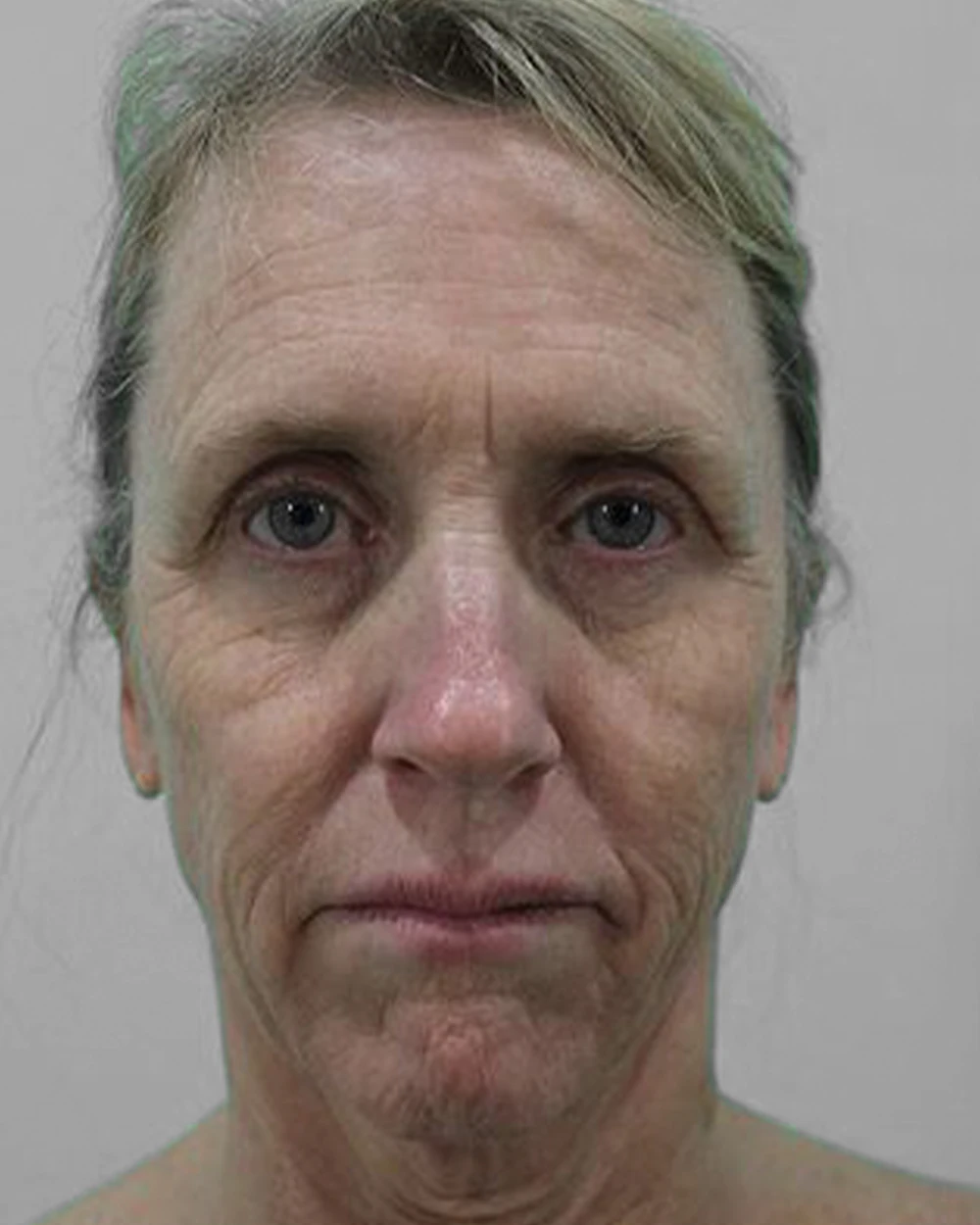
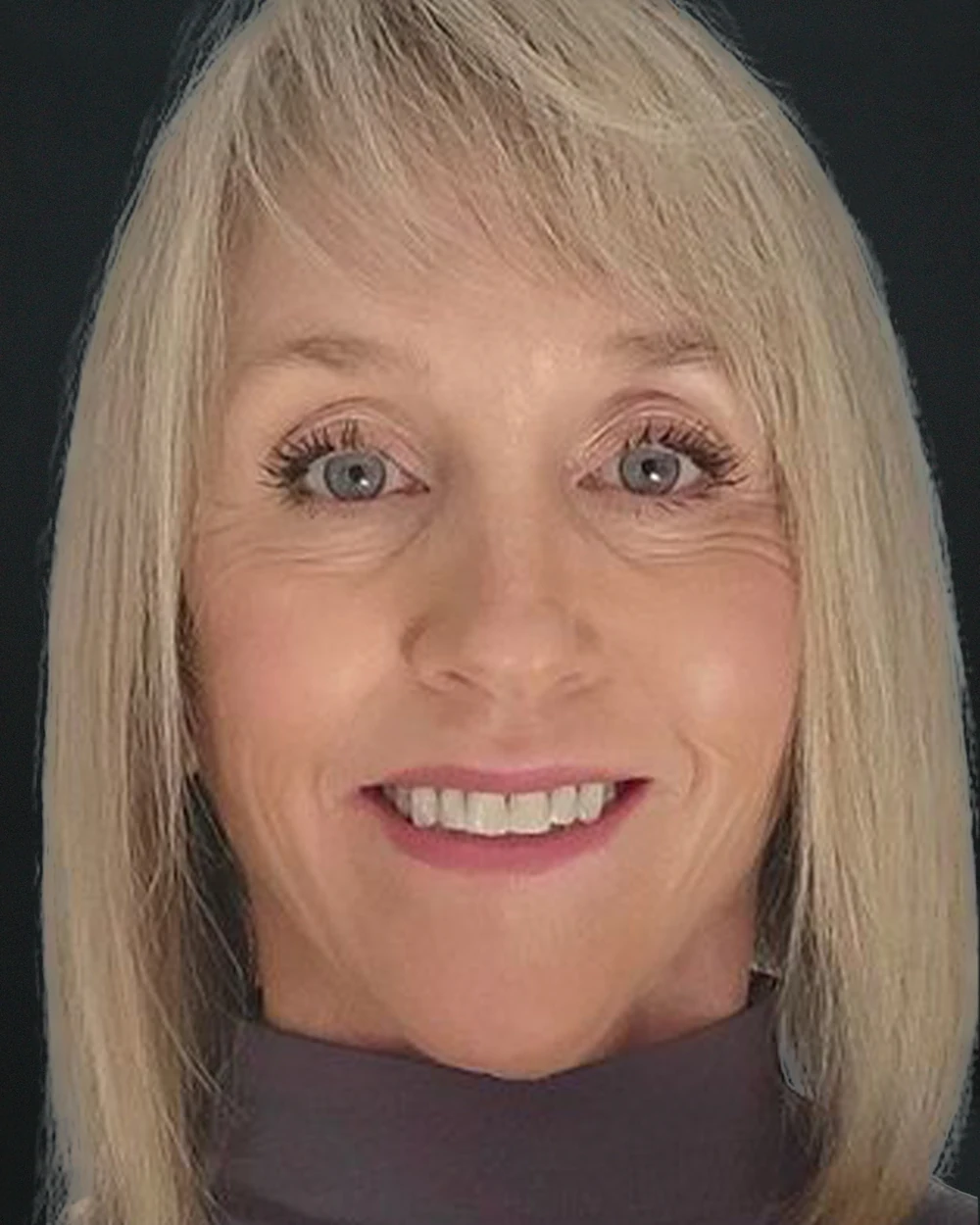 BeforeAfter
The recovery equation differs too, and here the bundle is genuinely gentler: redness and swelling for days, not the two to three weeks of social downtime a facelift asks of you, and no anesthesia. That is a real advantage and I never pretend otherwise. But downtime is a price you pay once for a durable correction, or avoid repeatedly for a temporary one. Which trade is smarter depends on your anatomy, and only an examination can say. Individual results vary in both directions.
One more asymmetry deserves daylight. If a deep plane facelift is done well, you will not need another procedure to look like yourself for years. A 9D package, by design, ends with a schedule for the next package. That is not a scandal. Skin maintenance is legitimately ongoing. It only becomes a problem when the subscription is dressed up as a substitute for the operation.
The cost logic behind the number
I will not put figures in this discussion, because prices change and every face needs a different plan, but I will teach you the arithmetic that the packages hope you will not do.
A device bundle is almost always presented against the cost of surgery in the United States, which is genuinely high, and against that anchor the package looks like the prudent choice. But the honest comparison is not one package versus one operation. It is the total of every session, every top-up of filler, every repeat series over the years you are trying to solve the problem, measured against a single operation whose result endures for many years. Run the numbers over a five or 10 year horizon rather than a single afternoon, and the bundle frequently stops looking economical, especially when it was aimed at a jowl it could never fix and the surgery ends up happening anyway, after the packages.
There is a second layer of the same logic for my American patients. Part of my practice exists because surgery performed to the same standard does not cost the same everywhere, and patients who cross the border to Tijuana pay a meaningfully lower share of what the identical operation commands in California. I mention this not to sell you a trip but to complete the picture: some patients choose a device package not because it fits their anatomy but because the surgery they actually need feels financially out of reach where they live. If that is the real constraint, the answer may be to re-examine where and how the surgery is done, not to spend the same money on treatments that cannot reach the problem.
Whatever you decide, apply one discipline: ask every provider, including me, what the total cost of the plan looks like over 5 years, not over one visit. The honest ones will answer without flinching.
When the bundle is the right answer, and when I turn patients toward it
I would rather send a patient away with the truth than operate on the wrong candidate, so let me argue against my own scalpel for a moment.
If you are in your late thirties or forties with good bone support, early softening along the jaw, and your complaints are texture, dullness, fine lines, or mild laxity, you likely do not need me yet, and a thoughtfully chosen sequence of skin treatments will serve you better than an operation you are not ready for. If your descent is real but your health makes elective anesthesia unwise, the surface tools are how we make the best of the situation honestly. If the downtime of surgery is simply impossible in your life right now, a maintenance plan can hold the line, provided you understand it is holding a line and not turning back the clock. And if what you want is the glow of your own face at its best rather than a structural change, devices are the correct instrument entirely.
I also decline patients whose anatomy is surgical but whose expectations are not. Someone who brings me a heavily filtered photograph, whether it came from an app or from a clinic’s 9D gallery, and asks to become it, needs a longer conversation before anyone touches her face. A facelift moves tissue with great precision, but it does not perform the erasure that software performs. Individual results vary, and the honest ceiling of any procedure, surgical or not, is your own face at its best.
What I ask of the device world is only the same honesty in reverse: send the true jowls to surgery, as the best non-surgical practitioners already do.
How to test any offer, including mine
Strip the branding and interrogate the plan. Whether the word on the brochure is 9D, deep plane, or anything else, the same 5 questions expose the substance underneath.
Ask exactly which treatments are included and what each one is supposed to accomplish, in plain anatomical language. Ask whether anything in the plan repositions deep tissue, and listen for a straight answer rather than the word “lifting” doing vague work. Ask to see before and after photographs at matched angle, lighting, and expression, taken months after the final session rather than days, and unretouched. Ask what the result will look like in a year, and what maintaining it will require. And ask who is accountable if something goes wrong, because energy devices and injectables carry real complications in untrained hands, and a package price rarely mentions the cost of managing them.
Credentials close the loop. Anyone can rent a device; the question is who is diagnosing your face before it is used. I hold a California Physician and Surgeon license, number A 42463, issued in 1986 and verifiable in seconds at search.dca.ca.gov, alongside my Mexican board certification, precisely so my American patients can check rather than trust. Apply that same test to whoever proposes your 9D package: not whether the machine is impressive, but whether the person prescribing it is licensed, examined you first, and named honestly what the plan can and cannot do. If you want my eyes on your specific anatomy, that is what a consultation with me is for, and I will tell you without ceremony if what you need is a laser and a good sunscreen rather than an operation.
The number is not the plan
Somewhere a clinic is already drafting the 10D brochure, and none of the anatomy in this article will have changed when it prints.
Your face does not know how many dimensions the marketing claims. It has skin, which devices genuinely help; volume, which injectables temporarily restore; and a deep structural layer, which only surgery repositions. Match the tool to the layer and almost every option on the menu, including the ones I do not sell, has an honest use. Match the tool to the brochure instead, and you will spend years and considerable money treating the wrong layer. Ask what the plan does to which layer of your face. That single question outranks any number anyone puts in front of the word facelift.